A habit as bad as taking drugs

BarcelonaThe British weekly The Spectator included the following statement from a doctor: “It is a disease. The habit is as bad as taking drugs.” What do you think they were talking about?
a) to have coffee after dinner
b) of reading in bed
c) of looking at the mobile before going to sleep
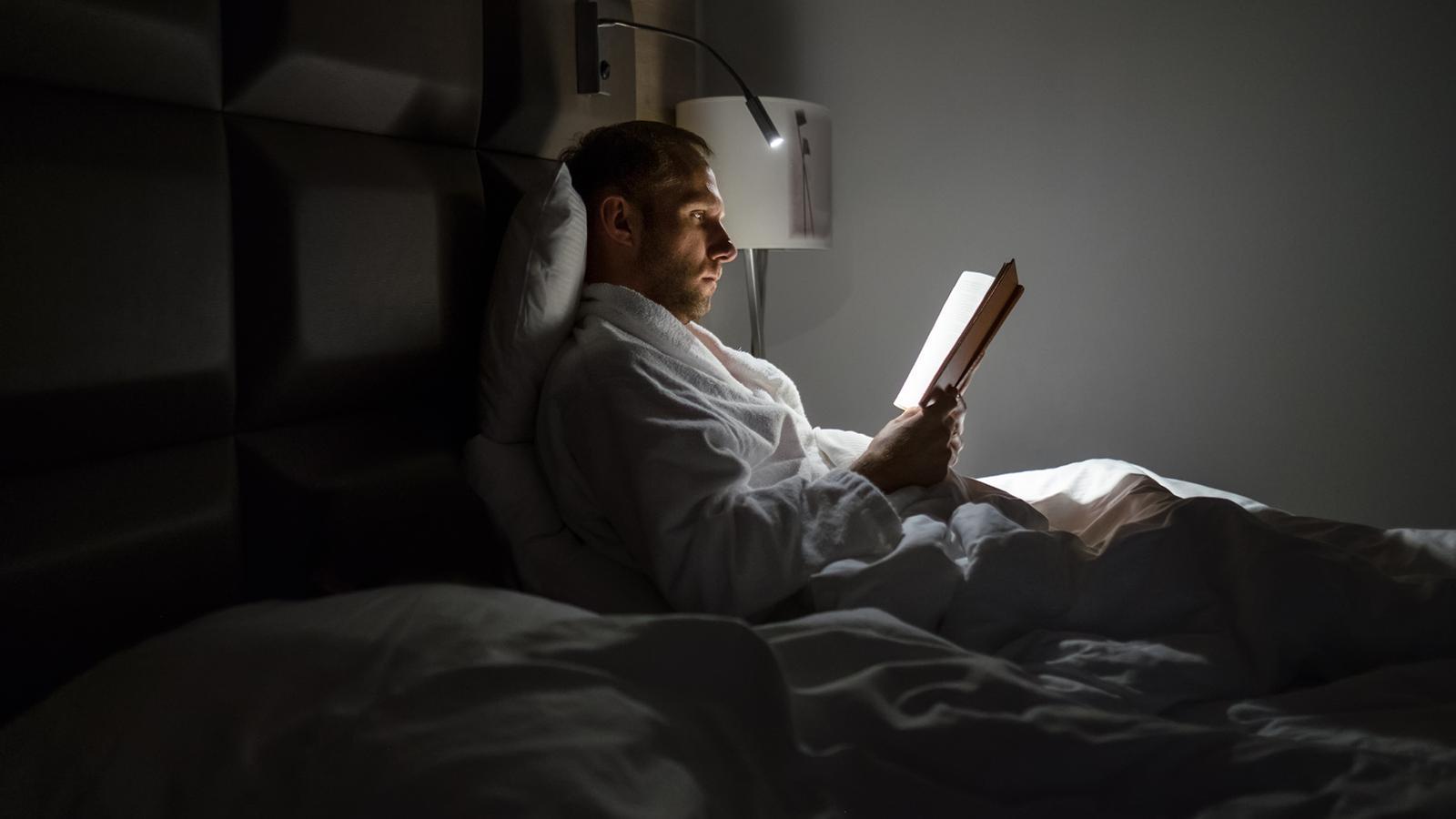
Against all odds, the correct answer is the second one. The year was 1903 and the magazine published an article debating the pros and cons of the habit of reading in bed. The arguments against it stated, in the first place, that reading in dim light and with the book in an uncomfortable position strained the eyes and that anyone who wanted to preserve their eyesight had to give it up. It was also argued that poor posture led to strain on the neck muscles and rheumatism in the shoulder. Finally, there was the risk of fire due to reading with a candle.
The arguments in favor did not deny these risks, but rather attributed them to the conditions and not to the habit itself, and maintained that, with good light and a well-printed page, there was no reason to think it was worse than reading in an armchair. The journalist observed that, for people with difficulty falling asleep, reading was a consolation and it would be too harsh to deny it to them. And he added, furthermore, an observation about the critics: those who claimed that this habit was an addiction usually fell asleep without difficulties, that is to say, they were speaking from privilege.
When electricity arrived in the bedrooms, the risk of fire disappeared, poor lighting ceased to be a problem, and the social alarm became pointless. The problem was the candle, not the book. As usually happens, it is easier to scold someone than to change complex conditions (such as bringing electricity to all houses, at the beginning of the 20th century).
The statements from that doctor today could be found almost verbatim in an Instagram post about the dangers of screens and teenagers. I do not believe that a hundred years from now anyone will recommend looking at a mobile phone to sleep, but the gesture is similar: when we do not understand a habit, we turn it into an illness and, when we do not know what to do about it, we forbid it. Forbidding, furthermore, has a cost. If in 1903 the doctor had been heeded, houses would have had the same risk of burning down from an accident with a candle, but there would have been many fewer readers. In my latest book, Analog Nostalgia (Ara Llibres, 2026), I explain that in the digital world a similar thing happens: keeping teenagers away from screens does not protect them from the risks (which exist), but rather leaves them without tools to learn to read and understand an environment that is already omnipresent in our lives. It is easier to want to forbid access to teenagers than to forbid multinationals from the pernicious designs of the networks they put on the market.
By the way, nowadays there is already some study showing that people who read in bed claim to sleep better. As if we still needed more reasons to read more and at all hours!
