"The Hollywood 'star system' begins with Guimerà's 'Maria Rosa'"
Sharon G. Feldman traces the playwright's North American adventure through seven actresses at the beginning of the 20th century
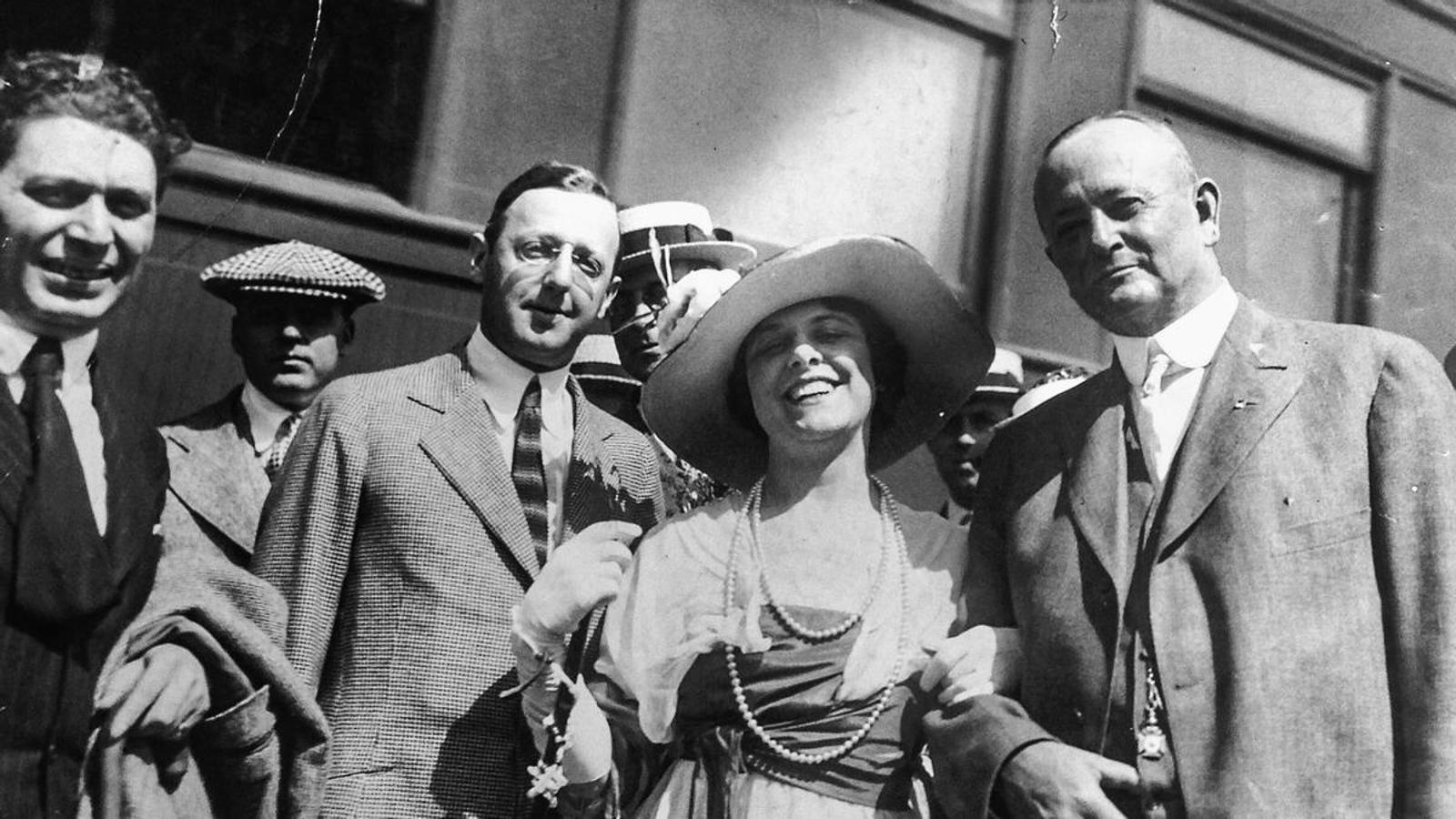

BarcelonaThe playwright Àngel Guimerà (Santa Cruz de Tenerife, 1845 - Barcelona, 1924) took practically two years to give his approval for Terra baixa to be performed in the United States. "I don't think he took this project very seriously and he didn't know who Mrs. Fiske was," explains Sharon G. Feldman, a professor at the University of Richmond (Virginia). For a decade, she has traced the journey of Guimerà's works in North America to confirm their impact on theaters at the beginning of the 20th century. The result is explained in Guimerà a Amèrica. Set dones per a un fenomen transatlàntic (L'Avenç; translated by Pere Bramon), a book that demonstrates that Terra baixa and Maria Rosa made a mark on the North American stage.
The first director to bring a text by the Catalan playwright to Broadway was, in reality, a woman. "Mrs. Fiske was a great actress and, together with her husband, they had a company and a rented theater, The Manhattan Theatre. They were a very powerful entrepreneurial couple and were fundamental to Guimerà's arrival in the United States," points out Feldman. Terra baixa arrived there from Mexico, when the Teatro del Renacimiento organized a special performance of the play to raise funds to help Galveston, which had suffered a devastating hurricane. Among the spectators of that production, performed in Spanish with a translation by José Echegaray, was Guido Marburg, who brought the play to the Fiske couple and eventually became one of the great defenders of Guimerà's work.

Marburg, together with Wallace Gilpatrick, translated the story of Manelic and Marta into English –which they retitled Marta of the lowlands– and persisted until the Catalan playwright agreed to grant them the rights to perform it. In the book, Feldman narrates how the first staging, starring Corona Riccardo, burst onto the scene "surrounded by celebrity and scandal" after the actress was wounded by a gunshot one afternoon before the performance. The success of Terra baixa, however, cannot be explained without the context of the United States at that time. "Back then there was no great theatrical tradition. Eugene O'Neill had not yet arrived, who would mark the beginning of modern theater. It was very common to see foreign productions in New York. Nowadays, however, seeing a Catalan play on Broadway is quite a milestone," says Feldman, referring to the recent premiere of The most beautiful body ever to be found in this place, by Josep Maria Miró, which she herself has translated into English.
A mirror of female desire
Guimerà's adventure in North America is linked to a series of names of actresses who saw in his works a mirror of desire and female liberation. One of them was Florence Roberts, the only one who produced and starred in both Terra baixa and Maria Rosa. Deeply rooted in California, she toured both plays throughout the Western United States. "They were actresses very much inspired by the ability of Guimerà's heroines to raise their voices, to rebel against social conventions, and to claim the right to decide over their own lives. They were looking for characters with a certain agency and deep emotions," Feldman emphasizes. Among them are also Bertha Kalich, the first Yiddish actress to reach the Broadway stage, and the soprano Geraldine Farrar.
"Farrar was a great diva, the absolute prima donna of the Metropolitan Opera. She had great ambition, and her friend David Belasco convinced her to work in cinema," says Feldman. Farrar had triumphed with Carmen on stage and was looking to reproduce a similar story in cinema. That is how they ended up at Maria Rosa. "She was a very generous, kind, and empathetic woman, but at the same time, she had a huge ego. When she saw that she could appear on movie screens in every city in the United States, even if it was a silent film, she said yes," explains Feldman. Farrar signed a huge contract with Hollywood, and in the summer of 1915, they began filming Maria Rosa. Afterward, she recorded Carmen and another film titled Temptation, all three directed by Cecil B. DeMille. "Because of this whole history, we can say that the Hollywood star system begins with Guimerà's Maria Rosa," the professor states.
Espadrilles on Broadway
In both theatrical and cinematographic productions, the artistic team adhered to realism and sought to reproduce the Catalan rural environment. In the first version of Terra baixa, for example, the actor playing Manelic (Hobart Bosworth, who years later would become a Hollywood star thanks to films like The Big Parade, by King Vidor) dressed in a sash and espadrilles. "After the war between Spain and the United States, everything that was Spanish was considered very exotic and aroused a certain fascination," notes Feldman. North American audiences, however, did not see Guimerà's works in their entirety, but filtered through two translations that blurred their rural identity and roots in Catalonia, with changes such as the character's name from Marçal to Ramon.

What impact did it have on Guimerà to be the first Catalan playwright to set foot on Broadway? According to Feldman, there is no record of it. "We have the box office receipts preserved at the Library of Catalonia, as part of Guimerà's personal collection, and we know that the checks reached him. The translators also sent him news and reports on the plays," explains the professor. "I like to think that he was perfectly aware of the success and that he was happy."
