"There is not a single Greek myth that can be narrated without making reference to a landscape"
Pedro Olalla traveled thousands of kilometers to show more than 700 mythological settings
BarcelonaSometimes, to understand where the world is heading, it is necessary to return to Arcadia. Pedro Olalla (Madrid, 1966) has been studying Ancient Greece for more than forty years and has lived in modern Greece for more than thirty. His relationship with the Hellenic country is not that of a tourist or an office academic, but that of someone who has walked the ground. A quarter of a century ago, Olalla published Atlas mitológico de Grecia, a work that has now been reissued by Eclecta. Although the ancient stories remain the same, the way of approaching them has changed radically: the digitalization of ancient texts and satellite tools have transformed the research and also this new edition. "It has only been 25 years since the first atlas, but it already belongs to another era," notes the author.
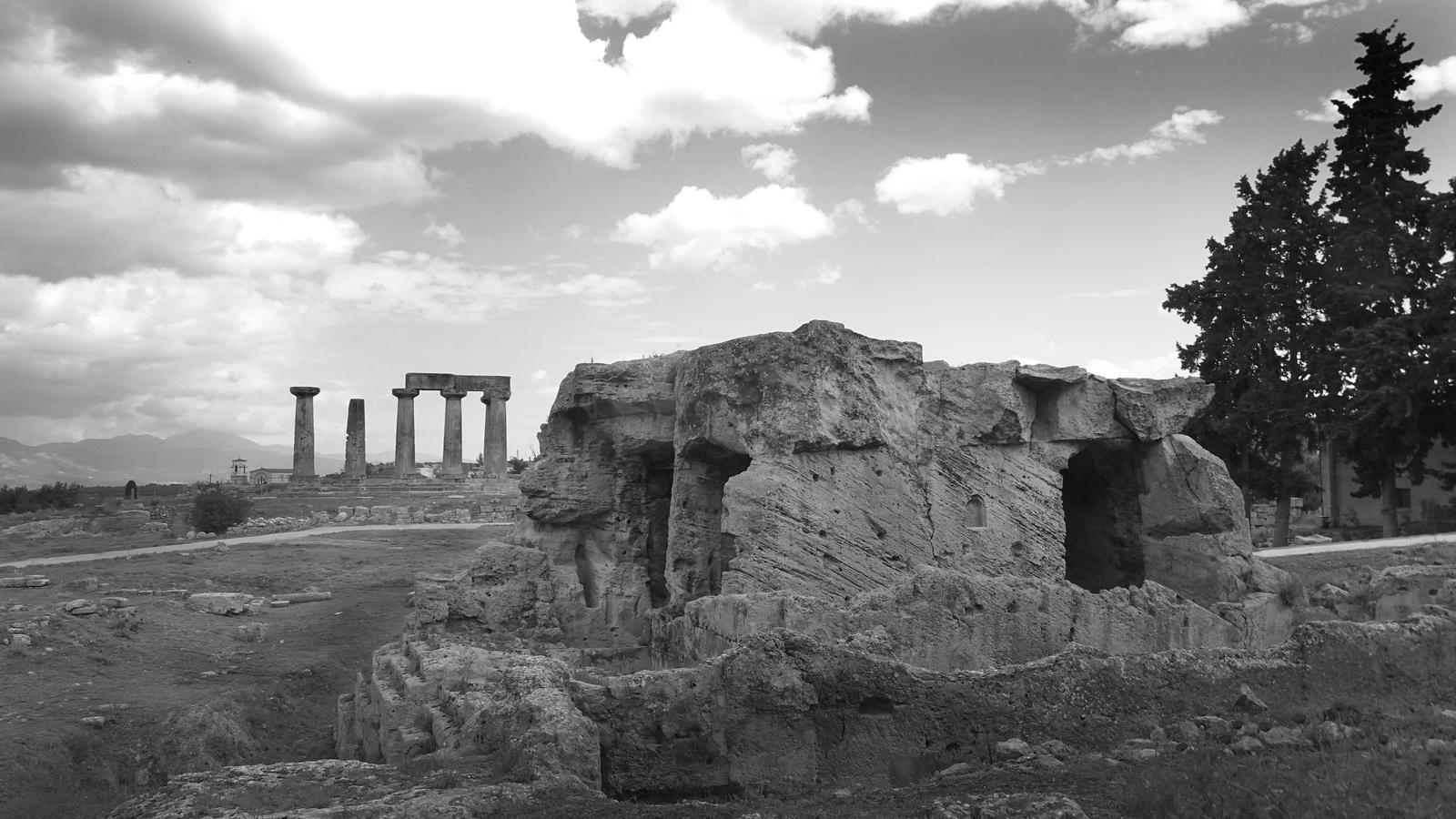
However, Olalla warns against the temptation of believing that one can understand mythology from a computer screen or by browsing Google Earth. For him, traveling the country on foot to follow the trail of the myths is the only possible starting point: "It is fundamental, because I am precisely trying to make the reader aware of the inherent relationship that exists between places and myths." All myths are born from a physical environment: peaks, rivers, caves, forests... To build this work, Olalla traveled thousands of kilometers through Greek geography with Greek army maps –when there was no GPS– and classical sources, seeking the exact coordinates of more than 700 mythological scenarios and more than 900 characters. With the atlas, one can follow Odysseus' journey step by step; climb the promontory from where Cronus threw his father's testicles and, even, delve into the realm of Hades, the king of the underworld. "There is not a single Greek myth that can be narrated without making reference to a landscape," says Olalla.
"Today we could easily have cartographic information through the internet, but if we did it that way, the experience would still be missing. The feeling would be lacking, having been able to share the emotion of being in the sacred cave of Rhea and on the hill where the goddess deceived Cronus by giving him a stone instead of the baby Zeus, the Corycian Cave on Parnassus, Mycenae or ancient Alifeira," details Olalla. For the Hellenist, myths are not abstract creations or simple literary works like The Metamorphoses, by Ovid, or the classical tragedies, but collective structures anchored to the landscape since the Neolithic and, in some cases, since the Paleolithic.
Myths in the future
"Myths achieve a very delicate operation: blurring the boundaries between nature, the human being, and divinity –he explains–. All religions have a foundation that refers to nature. Divinities are referenced to the cycle of life, to sacred trees, to the marshes of Artemis, or to the peaks of Zeus. The myth is the oldest chronicle of humanity, a memory that records real geographical changes, such as the birth of islands, the rise of sea levels, or great floods", says Olalla. Myths unite us with people who lived centuries ago. "There will be a time when myths will be interpreted with new tools and new evidence and will explain things to us that today we still ignore", the author adds.
Visiting these places nowadays allows us to recover a relationship with the environment that contemporary society has destroyed. Faced with real estate voracity and mass tourism, most of the landscapes that the atlas gathers are found outside the usual circuits, in remote places where it is still possible to feel the same solitude that the ancients experienced. "The original relationship with space was one of sacredness, not of predation like that of today, where we only see everything as marketable resources", reflects the author. For Olalla, the territory is not just a physical space; it is the stage where human history has developed.

"Now, if we talk about myth, one can think from Marilyn Monroe to Plato's cave or the State of Israel. But if we go back to the original character of the word, the myth for the ancients contained two ideas: mýo, which means to close, to hide, to encrypt a message, and zéo, which means to run, to traverse, to set in motion", details the author. Thus, the mythos was a coded or encrypted message that embarked on a journey towards the future. Although we have received the myths through written literary sources and not from orality, since the Neolithic many myths traversed millennia sustained solely by the spoken word. "They were collective stories with many layers and elements that were coded and set rolling so they would reach future generations", recalls Olalla.
Can classical myths help us understand contemporary phenomena? Although the atlas does not claim to be a more political analysis, like other of Olalla's works, it does offer tools for critical thinking. "Nowadays the battle continues to be for the narrative –he says–. The individual mission is to know how to confront these narratives, break them down and not take them as if they were primitive and immutable realities, but to be aware of their condition as a collective fiction designed to influence reality based on specific interests. The moment we lose the consciousness that a narrative is a mental construction, we lose the critical spirit".
For those who want to start stepping on the real Greece and flee from tourist clichés, Olalla is clear: Crete and Arcadia are the best starting points. Two spaces where nature, archaeological ruins, and memory still remain quite intact.

