Division for the future of the Center of Contemporary History of Catalonia: new impetus or risk of dilution?
The Museum of History of Catalonia argues that with integration into the institution, a center that has been losing resources and personnel over the years will be strengthened.
-
CAT -
CAST
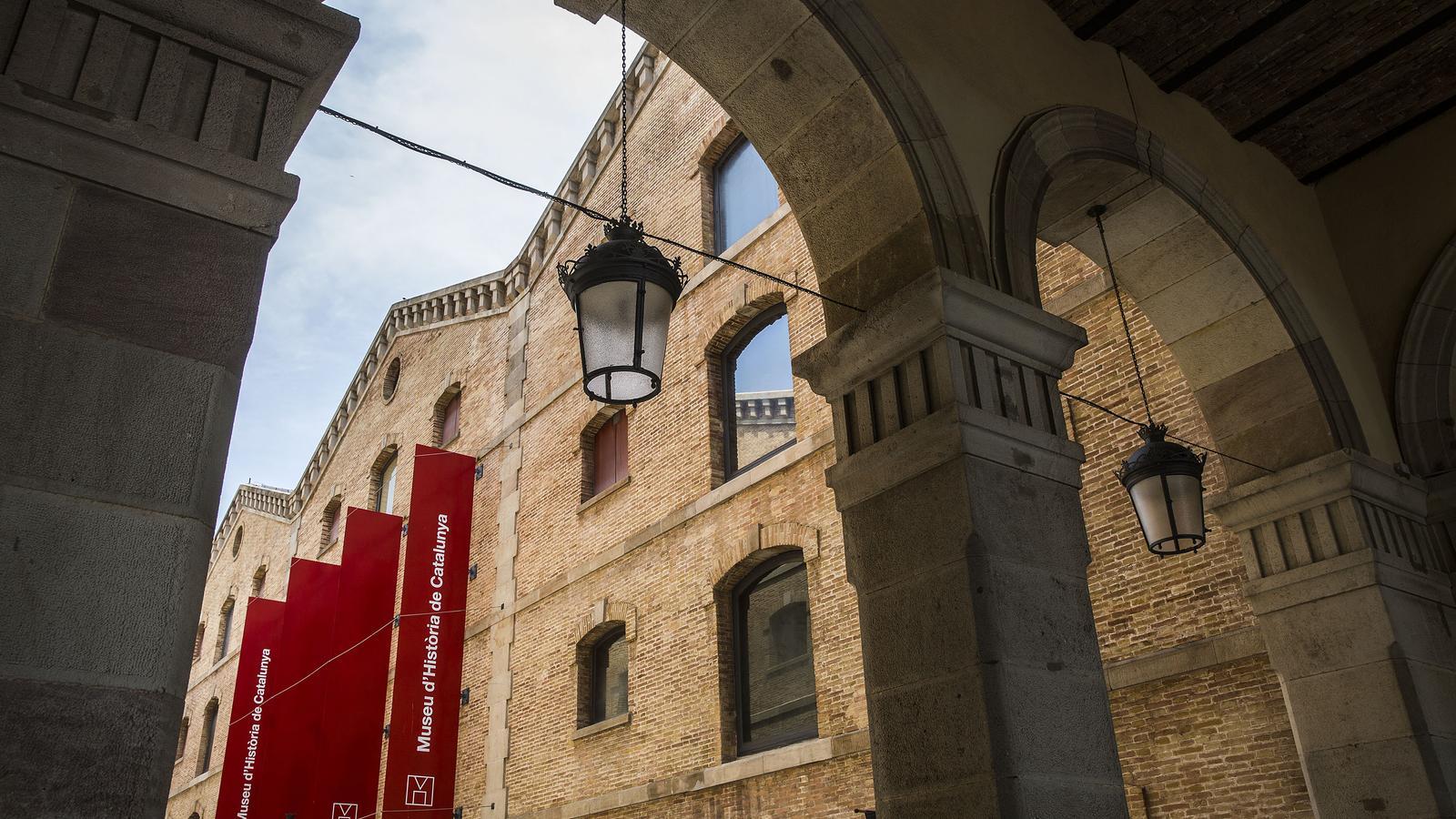
BarcelonaThe Center of Contemporary History of Catalonia (CHCC) was created in March 1984 with the aim of promoting the study and dissemination of historical research. The ambition of Josep Benet, its first director, was to recover, above all, the memory of the history of Catalanism. Another challenge was to help young researchers and promote the dissemination of their research. When the Museum of History of Catalonia was inaugurated, the CHCC moved to the same building. They shared the space but nothing else.
For a Center of Contemporary History of Catalonia, with a renewed project and future, at the service of the countryFour former presidents of the Generalitat —Jordi Pujol, Artur Mas, Carles Puigdemont and Quim Torra— and two former presidents of the Parlament —Carme Forcadell and Laura Borràs— have joined the manifesto in defense of the Center of Contemporary History of Catalonia (CHCC). The manifesto, titled For a Center of Contemporary History of Catalonia, with a renewed project and future, at the service of the country, began to be disseminated in December 2025 and argues that the CHCC should not only be maintained but also strengthened as a key tool for the study and dissemination of the contemporary history of Catalonia. Among the signatories are also former heads of the Department of Culture such as Joan Guitart, Ferran Mascarell, Joan Manuel Tresserras, Santi Vila, Lluís Puig and Àngels Ponsa.
Political ups and downs
So far, however, it has not been publicly explained what the transfer to the Museu d'Història de Catalunya implies. Like the Memorial Democràtic, in recent years the CHCC has had an erratic life depending on governments. It was initially linked to the Presidency, and later to Foreign Affairs and Justice. “The transfer to Culture and the integration into the Museu d’Història allow us to resolve an administrative mismatch and return to the original logic of the center,” states the director of the Museu d’Història de Catalunya, Jordi Principal. In this regard, he argues that it is not a break: “There would be no discontinuity, but rather it will be strengthened to consolidate a stronger structure.” Principal recalls that the center was born as a research body “autonomous from political fluctuations, from which it has not always been able to free itself, with the will to be rooted in the country and to disseminate knowledge to society.”
The director of the Museu d’Història de Catalunya assures that the integration will allow the resumption of “the initial spirit”. “The change is relevant, but the benefits are quite clear and important, because the center will not lose its identity or its brand and will continue to have its own budget; it currently has an allocation of 65,000 euros, in addition to chapter 1 corresponding to personnel, and its own resource management.”
Former minister Josep Maria Tresserres, who was one of the signatories of the manifesto, fearing that the center would be suppressed, considers the integration into the Museu d'Història de Catalunya to be a “very good option”: “I think it can precisely strengthen all the work that the center has historically done, such as the promotion and dissemination of research,” he says.
In its origins, the CHCC had developed a very ambitious program for research orientation, publication, and dissemination of contemporary history, with the aim of bridging the gap between the academic world and the public interested in history. This function was materialized in conferences, courses, publications, and outreach activities that sought to bring historical research closer to citizens. Principal intends to resume it and, above all, to reinforce the incorporation of young researchers who conduct research and to help disseminate and publish their findings.
Even so, the signatories of the manifesto fear that it will lose autonomy and the capacity to define its own research and commemoration policy. "This integration could transform the centre into an appendix of the museum," assures historian Josep Maria Roig i Rosich, who had directed the CHCC between 2008 and 2011. "When I took office as director, the commemoration policy was a bit erratic and I fought hard to take on this task, but this competence was also lost in 2010 with the change of government," assures Roig i Rosich. "All museums have a research centre, but the scope of work is not the same as a centre for historical studies," states the historian, who also fears that Josep Benet's library, which is very powerful and highly specialized in the history of Catalanism, will be diluted with the museum's library.
"The Josep Benet Library has been a shared library since 2010 and we will strengthen and energize it. It is a first-class specialized library," defends Principal. "The CHCC must gain muscle, open up more, and gain projection," adds the director of the Museu d’Història de Catalunya. "It will continue to maintain its own budget; it will also have an advisory council, and an executive management that will correspond to the management of the MHC, with which it will share strategies," says Principal. "The Centre provides documentation, research, and historical context; the Museum provides storytelling capacity, public experience, and social projection. At a time when museums have transformed into active spaces for knowledge production, the complementarity between research and dissemination becomes essential, and the Museu d'Història de Catalunya is a benchmark example," assures the director of Patrimoni, Joaquim Borràs.
