The hidden stories behind the "just in case" bags and the keys to return
The TNC premieres 'Inventory of Escapes', a piece about migrations and exiles led by Laia Marull

-
CAT -
CAST
BarcelonaTwo years ago, playwright and director Judith Pujol summoned creators Amaya Galeote, Shadai Larios, and María Velasco to the Convent de les Arts in Alcover. In terms of disciplines, they have little in common: Galeote is a choreographer, Larios specializes in object theatre, and Velasco has worked essentially in text-based theatre. Pujol presented them with the challenge of jointly creating a performance based on the idea of fugues in the present. The result, titled Inventari de fugues, will be performed from May 28 to June 21 in the Sala Tallers of the Teatre Nacional de Catalunya (TNC) with Laia Marull in the leading role.
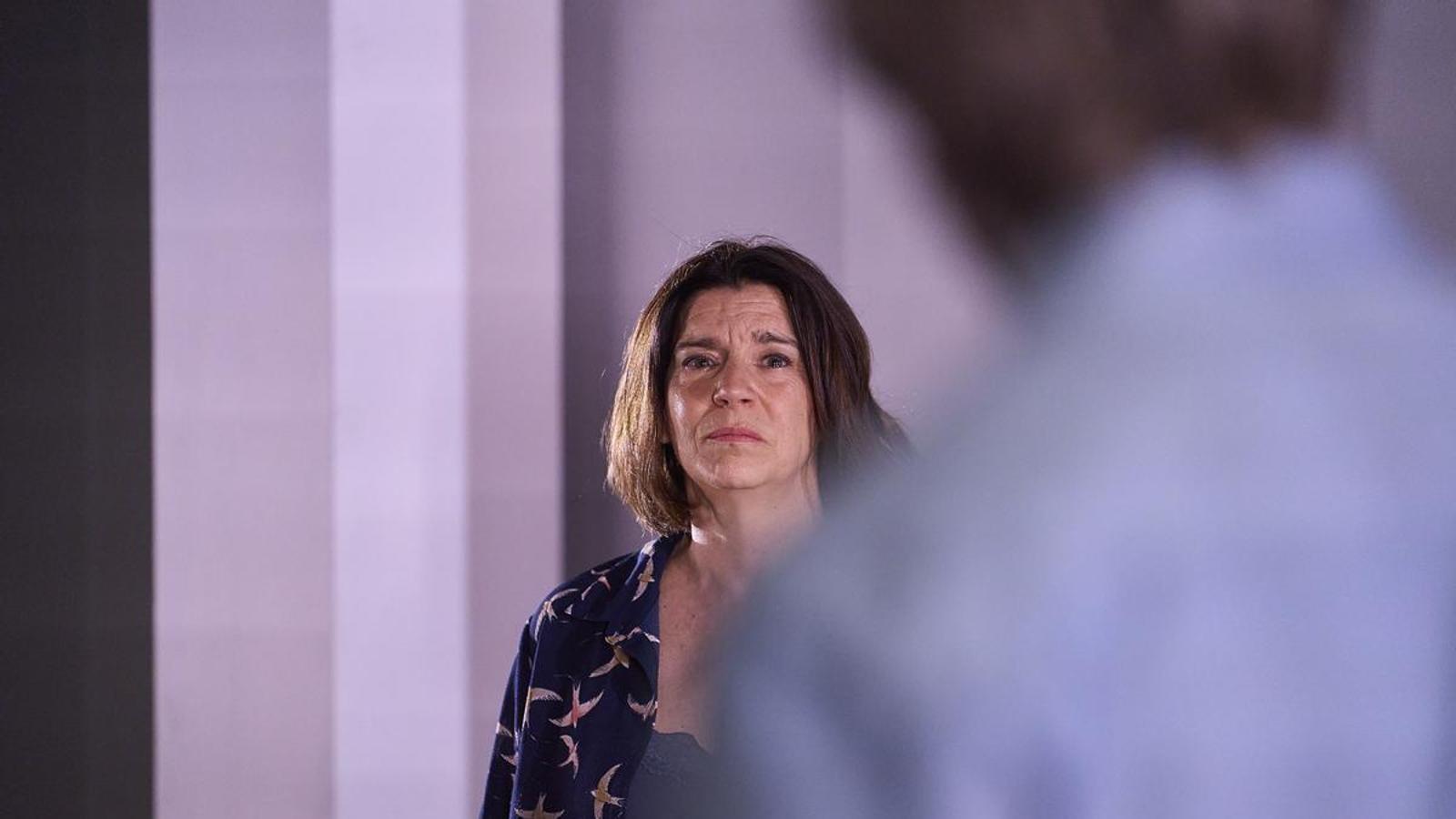
On stage, the actress embodies a woman who doesn't belong anywhere, a feeling "very significant of our times," says Pujol, who directed the piece. The protagonist will begin an inventory of fugues and will gradually unfold a series of stories of people who have had to flee, forced by an economic issue, a war conflict, or an environment of violence. Xavi Álvarez, Ricard Boyle, Dasha Lavrennikov, and Lara Salvador Peydro are in charge of bringing these characters to life, whose stories are linked to an object they have taken from their place of origin.
For this part of the production, Larios has conducted research into real stories that has led to the collection of 22 objects from different eras and places. "There are, for example, the 'just in case bags' that Palestinians leave at their doorstep and also the 'keys of return,' which they keep with the hope of being able to return to where they lived, even though their building has been bombed," explains Larios. The sixteen members of the Coral Sant Jordi give voice to all these objects on stage. Through the choir, the performance "speaks of the past, of the memory of objects, and the importance of moving from the individual to the collective," points out Pujol.
Absence and pain
According to the director, the show contrasts "the tension between bodies forced to flee for fear of dying and bodies that can choose to evade, to disconnect from reality." The protagonist is part of the second group of people and her journey will consist of discovering "why she has an obsession with fleeing" and reflecting on "whether she has the right to her personal escape," emphasizes Marull. Through her research, she will encounter the absence and pain of those who have had to leave out of necessity. "The main difficulty of the play has been to unite the protagonist's intimate story, who flees from the capture mechanisms of the 21st century, with the forced escapes of today," points out Velasco.
Another of the play's complexities has been the fusion of different scenic languages into a single show. "We have brought into play movement, object theatre, text theatre, and installation poetics, always seeking coherence and harmony between all the elements," says Velasco. "All the pain of the stories is transformed into a very complex and interesting beauty. Despite the tragic stories of death and exile, the characters have a certain light and vitality," reflects Lara Salvador.
In a way, Inventari de fugues acts as a personal escape route. "Among ourselves, we have created a community of resistance and reflection to escape the capture mechanisms of the present through theatre," highlights Velasco. In this sense, the show also functions as a wake-up call to reality. "We are at a time when we cannot remain silent – says the director. Enough with annihilating populations and forcing so many people to flee their homes."
