The press tycoon whose grandson was kidnapped
Axel Springer created a media empire in post-war Germany
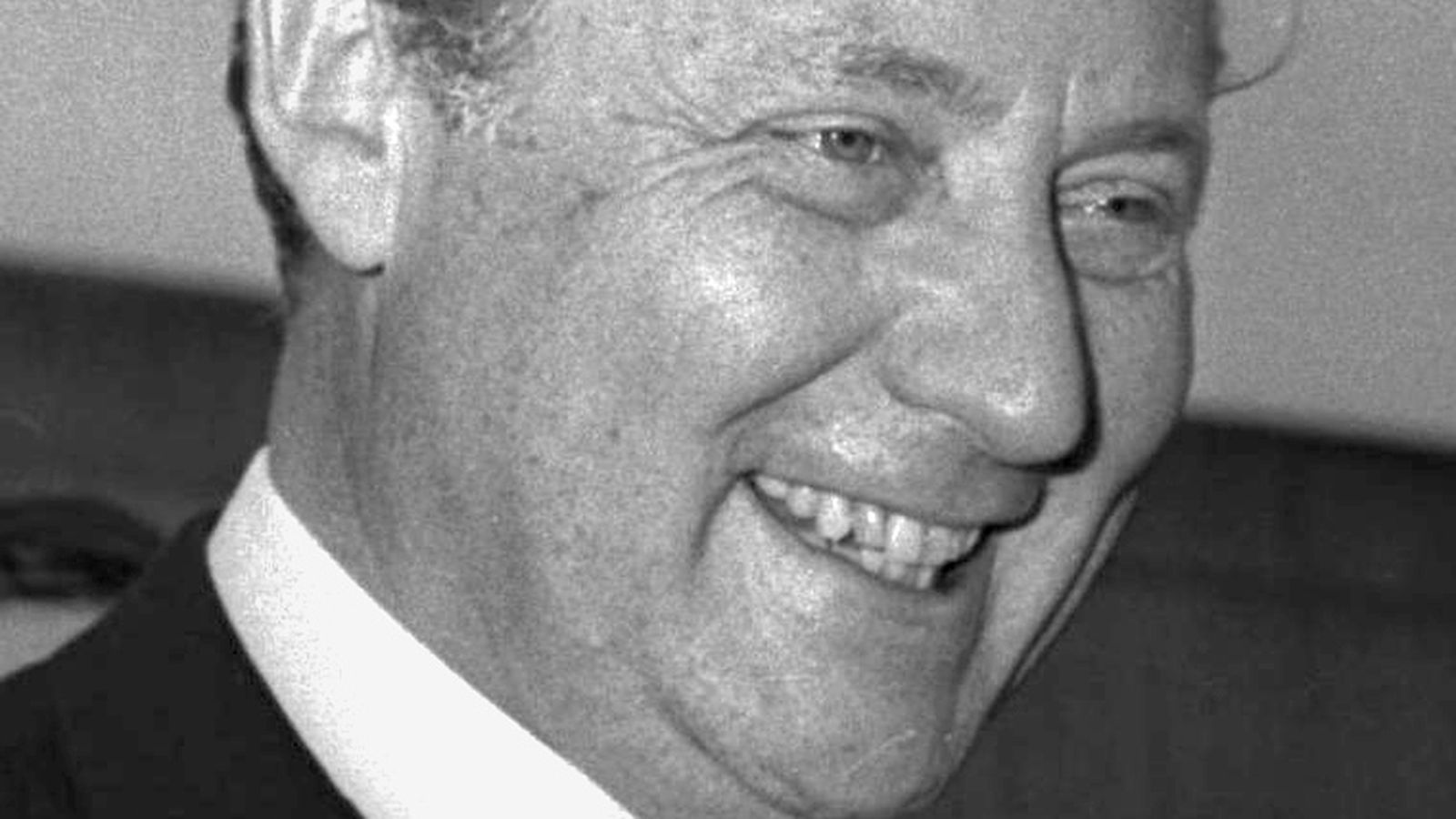
-
CAT -
CAST
Night of January 20, 1985. Location of Zuoz, in the Swiss canton of Grisons. Two masked men move silently through one of the rooms of the Lyceum Alpinum boarding school, where the children of Central Europe's great fortunes study. They wake a 19-year-old young man who was sleeping peacefully and convince him to accompany them when they show him a pistol. After hours of travel in a car confined to the trunk, they lock him in a room and force him to record a message for his family in which he asks for a ransom of 15 million German marks, quite a fortune (about 825 million pesetas at that time, or almost 5 million euros).
- 1912-1985
Who was this young man thanks to whom the kidnappers expected to obtain so much money? His name was Axel Sven Springer, and he was the favorite grandson of the great German press magnate Axel Springer, a rich and powerful man.
Your grandfather's business history began when, after gaining experience working in his father's publishing business and at a news agency, he decided to take the leap and start his own company. This was in 1946, just after World War II, when the country was devastated and under the control of Allied forces. Under these conditions, and after two years of advertising work, he managed to bring his first newspaper to light, the "Hamburger Abendblatt.
In 1952 he created his second header, the Bild-Zeitung, which was aimed at a low-profile audience and managed to be the best-selling newspaper in Europe – it surpassed five million copies. It was what the British call tabloid. Many years later, Springer went so far as to say that he found it very distressing to read this newspaper, a product filled with gossip, sex, crime, and sports in equal measure.
Setting aside popular press, already in his early years as a publisher, the ideological pillars that would define him began to emerge: anti-communism, defense of Israel and the United States, economic liberalism, and the will for German reunification. To highlight this last point, in 1959 he moved the company's headquarters to Berlin, right next to the wall that divided the city in two. The other major newspaper he acquired in the early fifties was The world, which aimed to be a quality read.
From then on, the Springer empire continued to grow and became the most influential media group on the continent. Its right-wing view of current affairs put it in the crosshairs of the German left at the time, which organized protests against the publications it controlled. The peak of the conflict came on May 19, 1972, when the terrorist group Red Army Fraction—also known as Baader-Meinhof after the surnames of its ideologues—attacked the printing house of the "Image and left 17 injured.

In the fifties, he also acquired the prestigious Ullstein Verlag publishing house and the newspaper Berliner Morgenpost, both of Jewish origin. Such rapid growth in the immediate post-war period aroused certain suspicions, to the effect that behind Springer was the financing of the United States, eager to shape the opinion of Germans. Suspicions that seemed to have some plausibility.
A complicated life
His personal life was also turbulent: due to his five marriages – the last one was with the caregiver of his children, thirty years his junior – and, above all, due to the suicide of his heir, Axel, who shot himself in the head during a severe depression at the age of 38. To top it off, someone set fire to two of the German magnate's properties.
By the way, how did the grandson's kidnapping end? The impossibility of collecting the ransom led the kidnappers to release him a few days after holding him.
Initially, the German police suspected that the whole thing was a simulation perpetrated by Axel Sven himself, but in the end, it turned out that the kidnappers were two young former students from the same school where he studied, and they had planned the kidnapping during a few days they had spent at the Hotel Ritz in Paris.
A few months after all this affair, in September 1985, the German magnate died as a victim of respiratory problems that he had been suffering from for a long time. At the time of his death, one out of every three newspapers sold in Germany came from his factory. Today, the conglomerate Axel Springer SE has annual revenues exceeding two billion euros and owns titles such as the aforementioned Bild and Die Welt, in addition to Business Insider, Politico, and Fakt.
