Inside a clandestine aesthetics center in Afghanistan
The Taliban ordered the closure of all beauty salons three years ago and now they have banned women from wearing makeup when they go to a wedding

-
CAT -
CAST
Special correspondent in Kabul“Which floor are you going to?” asks a girl to a woman who is walking with a child by the hand, carrying a large travel bag and waiting for the elevator in the building’s entrance. “To the sixth,” replies the woman. Coincidentally, both are going to the same floor, and both are also dressed in a strictly Islamic manner: black tunic and headscarf, and a mask covering part of their faces. Inside the elevator, they don’t exchange many words either: like everyone else, they comment that it’s too hot in Kabul these days. When they reach the sixth floor, they realize they are not only going to the same floor, but also to the same place.
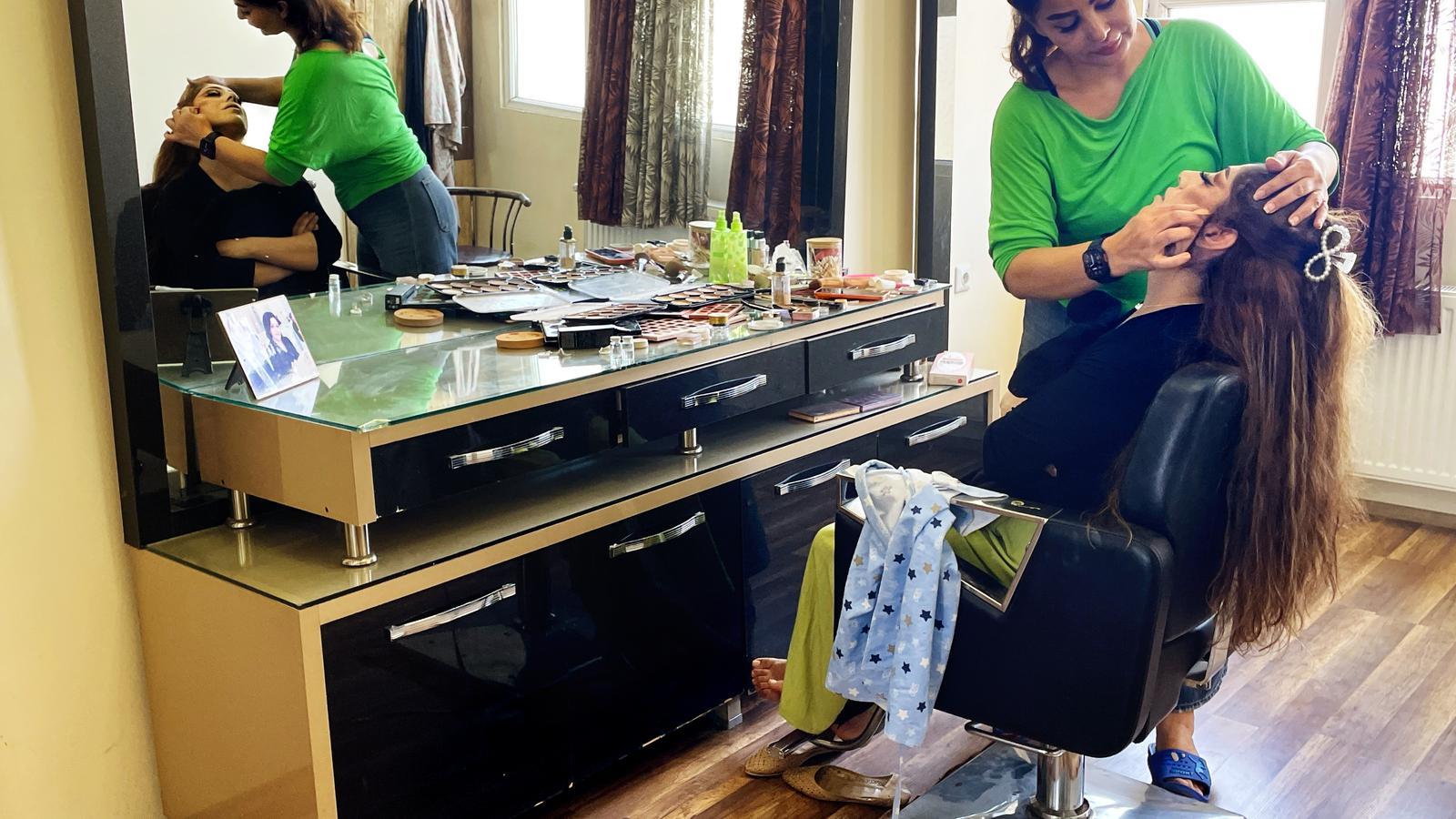
From the outside, it looks like a normal, everyday apartment. Inside, the layout is also that of a conventional apartment – three bedrooms, a bathroom, and a kitchen – but in two of the rooms, there are large mirrors on the walls and hairdressing chairs. Since August 2023, when the Taliban ordered the closure of all hairdressing salons and beauty centers for women in Afghanistan, many of these establishments have moved to private homes. Clients continue to go to them, but clandestinely.
In July, the Taliban further tightened their long list of restrictions and prohibited women from applying makeup, using perfume, or getting hair extensions when attending a wedding, which is very common in Afghanistan. It is at weddings that women try to present their best selves, in a country where they have few opportunities to go out and there are almost no places where they can have fun. They are not even allowed to walk in parks.
Despite the prohibition, in the sixth-floor apartment, there is a dozen women queuing to get their makeup done, perfumed, and hair styled. And some also want to get extensions. They are all going to a wedding that day. They are family of the groom or the bride, who is also waiting patiently to be pampered. None of them seems concerned about the new Taliban rule.
In fact, there is quite a bit of commotion in the apartment. The women are talking animatedly and some of their young children are running around. On the balcony, a generator is making a deafening noise, but it's the only way to have electricity to run the dryer. There are also large windows where natural light comes in, and from which you can see the mountains surrounding Kabul. In other words, it's not a gloomy, closed-off, and claustrophobic apartment, as one might imagine given that it's a clandestine place. The women seem to be completely relaxed: they have removed their veils and tunics, and are showing off long hair and Western clothing. Some are even wearing tight-fitting leggings that accentuate all their body shapes.
"The building's doorman will warn us if the Taliban come. That's why I chose an apartment on the sixth floor, to have time to hide everything before they arrive," explains the beautician, Yalda, while applying makeup to one of her clients. She explains that she used to have a nice beauty salon with a dozen employees in the Kabul neighborhood of Khair Khana, until the Taliban forced her to close it, even though she tried by all means to keep it open: she participated in negotiation meetings that were held then with the radicals, and in which the gender advisor to the United Nations mission in Afghanistan, the South African Mmabatlharo Nono Dihemo, was even involved. During those days, applying makeup and styling hair became almost a state affair. And rightly so. Beauty salons were the last refuge where Afghan women could continue to meet and feel a little free.
"The Taliban imposed surreal conditions on us for the beauty salons to remain open. They wanted clients to pray five times before we styled them, for us to apply makeup that could be washed off before prayer, and for us not to shape their eyebrows or put extensions on their eyelashes," explains Yalda. In the end, they ended up decreeing the closure of all centers.
Yalda explains that the Taliban have only raided her clandestine beauty salon once. And it was, she says, because someone betrayed her after one of her clients left the building and got into a wedding car parked right in front. "When the Taliban came, I started crying and said that the girl I had made up was my cousin," she recalls. They believed her.
On this occasion, the clients waiting to have their makeup and hair done have brought the dresses they will wear to the wedding inside trash bags. They will put them on right there, in the beauty salon, but they will cover themselves with tunics to go out. They will also cover their faces with a black scarf. In Afghanistan, it is tradition for women to wear excessive makeup at weddings, to the point that they look almost like wax figures. It is difficult for them to go unnoticed.

In another room, the woman waiting for the elevator with a child by the hand is attending to other clients. She is also a beautician and, in the travel bag she carried, she keeps all the material she needs to work: she tattoos and injects botox into lips. The clients are a mother, a daughter, and a sister-in-law. All three want her to tattoo a mole in the exact same place on their face: under the lip. The daughter, who is a 22-year-old girl who is seven months pregnant and already has a child just over a year old, also asks her to inject botox. And if she could ask for anything else, she would. Anything, before being locked up at home again.
