The Girona technology behind the supermarket packaging
The family company Comexi, with the third generation at the helm, manufactures the machinery with which a good part of the world's food packaging is printed and transformed

-
CAT -
CAST
Riudellots of the SelvaA bag of salad, some cookies, cat food, or the plastic label from a water bottle. It's hard to find a supermarket without some kind of flexible packaging. They are present, on average, in half of the products, even up to 80%. But behind these wrappers lies an industry practically invisible to the consumer, yet essential for products to be promoted on shelves. From Riudellots de la Selva, in the urban area of Girona, Comexi has been developing the technology for over seventy years that allows for the printing and transformation of this type of packaging, a global market where it competes with some of the world's leading manufacturers.
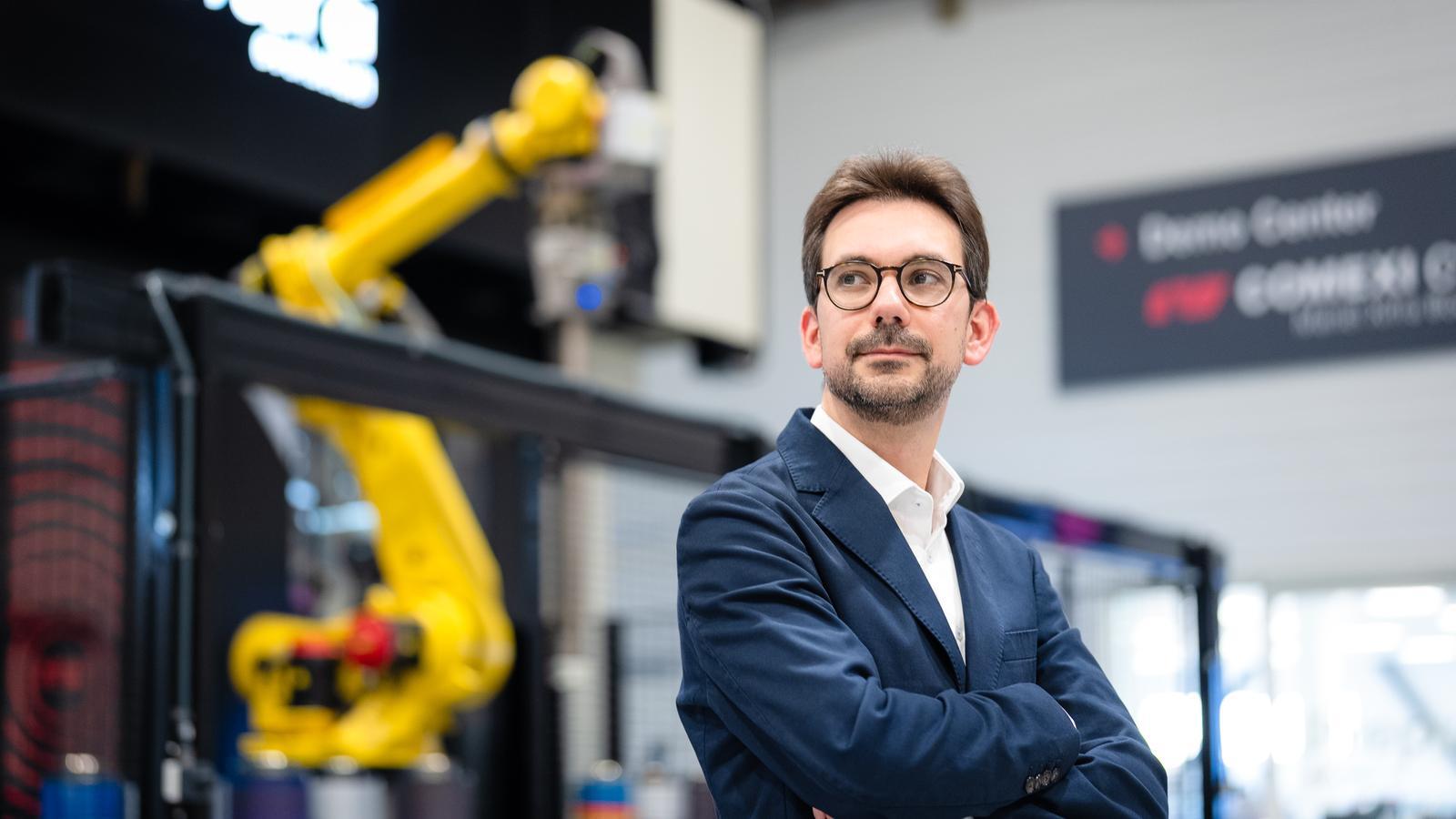
They export 95% of what they manufacture – with a large market share in the United States – they work for large multinationals and have set out to compete directly with HP and Fujifilm in digital printing; and in the same way that seventy years ago the first printing machines were named after Catalan peaks, now the meeting rooms are named after Taga, Puigmal or Montserrat and large photos of Girona and the Costa Brava welcome the visitor. "It is very important to know where you come from and who you are," argues Pau Xifra, executive president of Comexi and third generation in charge. In 2025 he took the reins of the family business with the aim of taking another step, and in June they inaugurated an expansion of 5,000 square meters for the plant.

Xifra emphasizes that, more than a generational change, Comexi has lived through different evolutionary stages since it was born in a small workshop in the Girona neighborhood of Vista Alegre in 1955. "My grandfather was a visionary", he recalls. Manel Xifra i Boada saw in the fifties what many others did not yet intuit. With the arrival of supermarkets, the product would stop being sold from the counter and would start being sold from the shelf. The packaging ceased to be just protection to also become a "silent salesman". Seventy years later, the third generation of the family continues to develop the technology that makes possible that everyday gesture of choosing one product over another.
"In the end, it's quite a niche market and in the 70s we were already exporting 50% of our production," details the current president of the company. If Manel Xifra Boada had the intuition to see packaging as a future industry, his son, Manel Xifra Pagès, understood that leadership is maintained not only with technology, but also with knowledge. During his time at the head of Comexi, he promoted the company's internationalization, but also a way of understanding innovation based on continuous training and the exchange of experiences with clients. From this vision, the Comexi CTec was pioneered, a center where operators, technicians, and manufacturers from all over the world learn, experiment, and share knowledge. "Companies advance when people share knowledge," summarizes Pau Xifra, who identifies this commitment as one of his father's great legacies.
Now the change in presidency has arrived at a time when the sector is reinventing itself again, and with the expansion of the plant that will serve to develop new digital printers. Digitization is transforming the way packaging is printed, new technological players like HP are entering a market until now dominated by specialized manufacturers, and Europe is demanding increasingly sustainable solutions. Xifra avoids the debate reduced to eliminating plastic. It argues that flexible packaging remains essential in many uses – especially in the food sector – and maintains that the challenge is not to do without it, but to move towards more sustainable and fully circular materials. "It would be very difficult today to sustain the global food chain without plastic-based solutions," he argues.
Growth vision
Swimming against the tide of the rest of the state's companies, they are coming from a 2025 with a turnover of 187 million euros (7% more) and the audacity to have tripled sales in the United States in a context of tariff crisis and climate of international trade uncertainty. Now the objective they set for themselves is to exceed 190 million and look up at competitors who surpass the barrier of 1,000 million euros. "Our German competitors invoice 1,100 million, and the Swiss 2,015 million. It's another scale. And in the future, with digital, we could compete with much larger companies like HP or Fujifilm – Xifra concludes. It's a future that is arriving, in which we have invested a lot, and we are very excited".
- 5,000 square meters The expansion of the Riudellots plant this 2026, which currently occupies 30,000 square meters and will allow investment in innovation and also 3D printers.
- 187 million euros The turnover in 2025, 7% more. The objective this 2026 is to exceed 190 million.
- 37 million euros Sales in the United States in 2025, which represent a significant portion of the business.
- 95% export Comexi is mainly dedicated to exporting its technology worldwide.
