The "modern socialist city" that Xi Jinping dreams of and that is already under construction
The new metropolis aspires to be the symbol of China's modernization, but still faces important challenges

-
CAT -
CAST
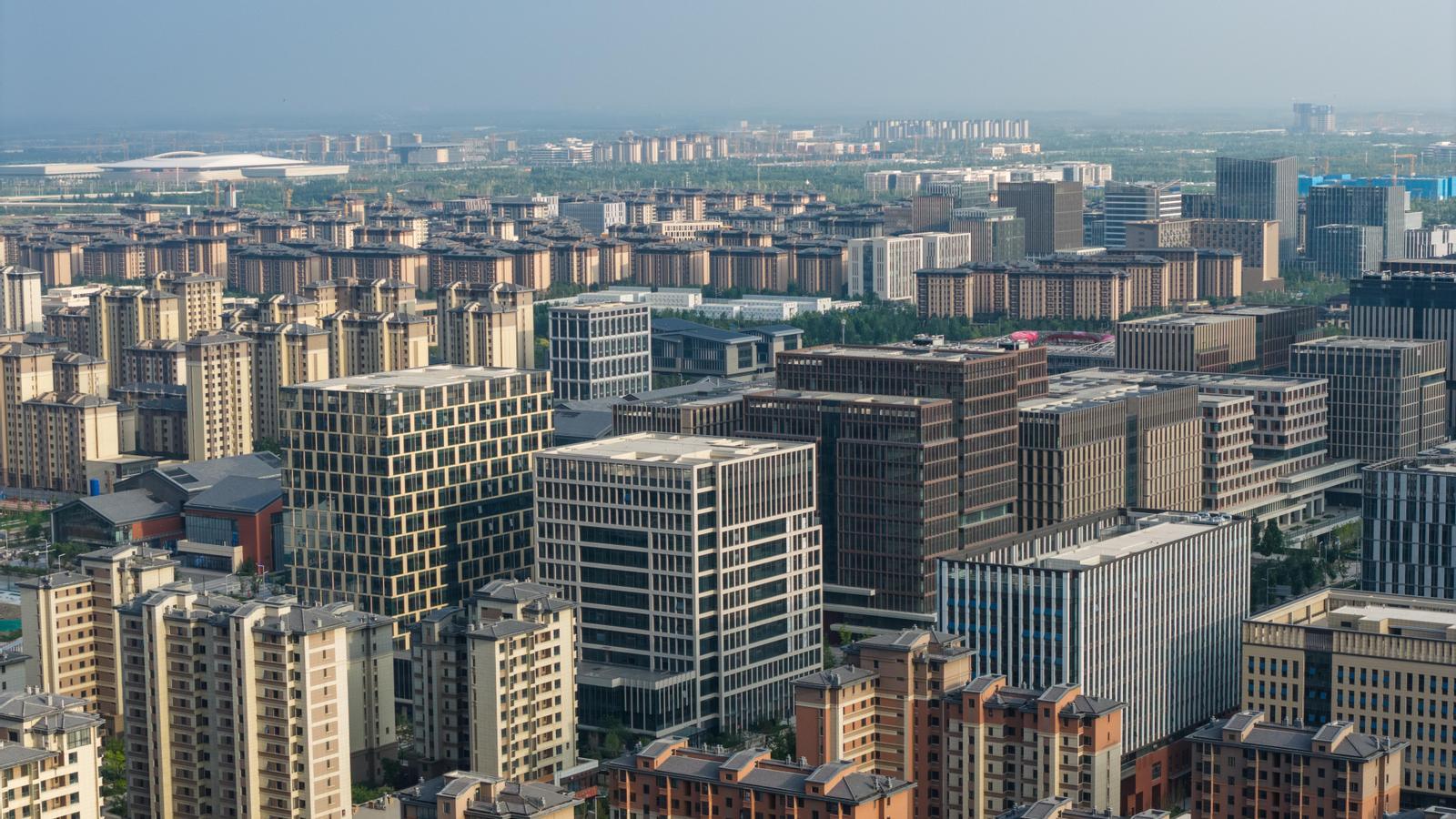
BeijingA zero-emission sustainable city, with large green spaces, advanced internet connections, and an industrial fabric dedicated to innovation, is the future dream of Chinese President Xi Jinping. And the dream is becoming a reality about a hundred kilometers southwest of Beijing, and the name of the new city is Xiong'an. The project began in 2017, but after some difficulties and delays, this year Xi Jinping has given it a new impetus. The objective, according to the propaganda of the Chinese administration, is that by 2035 the metropolis will be fully completed and become the model of a “socialist modern city”.
The idea of this new city arose to decongest Beijing and curb its growth, as the capital is a giant, densely populated city with nearly 22 million inhabitants. The new Xiong'an area was planned to relocate a large part of the administration and its officials. The city must also host headquarters of state-owned companies and official bodies, as well as public services such as universities and reference hospitals. The project aims to be a pole of attraction for research centers and technology companies. Initially, it will accommodate five million inhabitants.
It has been designed to become a model of the “city of the future”, the name by which it is known. For this reason, it bets on sustainability, with low CO₂ emissions and the desire to reach zero. 70% of the space is dedicated to green areas, and the city model where all services are within a 15-minute radius has been adopted to make life easier for its inhabitants. There is a firm commitment to home automation and service automation. It aims to be a pole of attraction for emerging and green industries. To achieve this, a large technology park has been invested in with the aim of attracting talent and innovation.
Beijing wants to turn Xiong'an into a major financial hub and leading industries. The urban space also has large cultural facilities. The new city is already connected by high-speed train with Beijing and with the new Daxing International Airport, inaugurated in 2019. Nothing has been left to chance because Xiong'an wants to be the image of China's future to show the conversion of the Asian giant into a technological and innovative power leaving behind the production of manufactured goods for export and the title of "factory of the world".
In China, the figures always dizzy with their magnitude and this project is no exception. It is planned in an area of 100 km, which was originally farmland and wetlands. For now, 111 billion dollars have already been invested in its construction and there are quite finished areas.
Between ambition and reality
Despite the great promotion and careful design, the project has encountered a lack of enthusiasm from its future inhabitants. Although there are very advanced areas where construction is finished, it remains practically empty. Officials are resisting relocation from the capital and, despite the innovative image, there is no interest in moving to a completely new area that has emerged from nowhere and is still under construction.
For now, it has been state-owned companies such as the Chinese Huaneng Group, an energy company, Sinochem Holdings, a chemical conglomerate, or Satellite Network Group, dedicated to satellite internet services, that have already moved to the city. And although in 2017 some of the big tech companies like Alibaba, Tencent, or Baidu also announced the opening of centers in the new city, they have not materialized. Four university campuses have also opened, but the universities in the capital continue to be the most prestigious and those that attract talent.
However, in China, the administration has many ways to pressure to make its projects a reality. This summer, Temu and Pinduoduo, two tech companies specializing in e-commerce, announced investments in the new Xiong'an area after receiving record fines from the administration for violating food safety laws and skipping administrative procedures. Both companies have committed to creating five thousand jobs in the area.
A large economic area
The new Xiong'an area is a very personal project of Xi Jinping. In the Chinese press, this initiative is compared to the creation of the special economic zones (SEZs) designed by Deng Xiaoping in the late seventies. These zones, created in Shenzhen, Zhuhai, Shantou, and Xiamen, were the starting point of the reforms and economic opening that transformed China.
Xi Jinping's initiative is officially presented under the slogan “a national project of millennium importance”. For the moment, however, it does not seem to capture the dreams of the younger generations nor to have a transformative economic impulse. That is why, this year, Xi Jinping has tried to give it a new boost with official inspection visits to the new Xiong'an area and pressure on the authorities to launch pilot programs to attract companies.
Xiong'an is conceived to be part of a large project that aims to develop an economic triangle that will encompass Beijing, the city of Tianjin (considered the capital's port), and the bordering province of Hebei. It is known by the acronym Jingjinji, the characters of the two cities and the province. Xi Jinping wants to turn it into the great economic area of the north of the country, which will encompass 120 million inhabitants.
