The Hungarian who made his country's industry great by canning meat
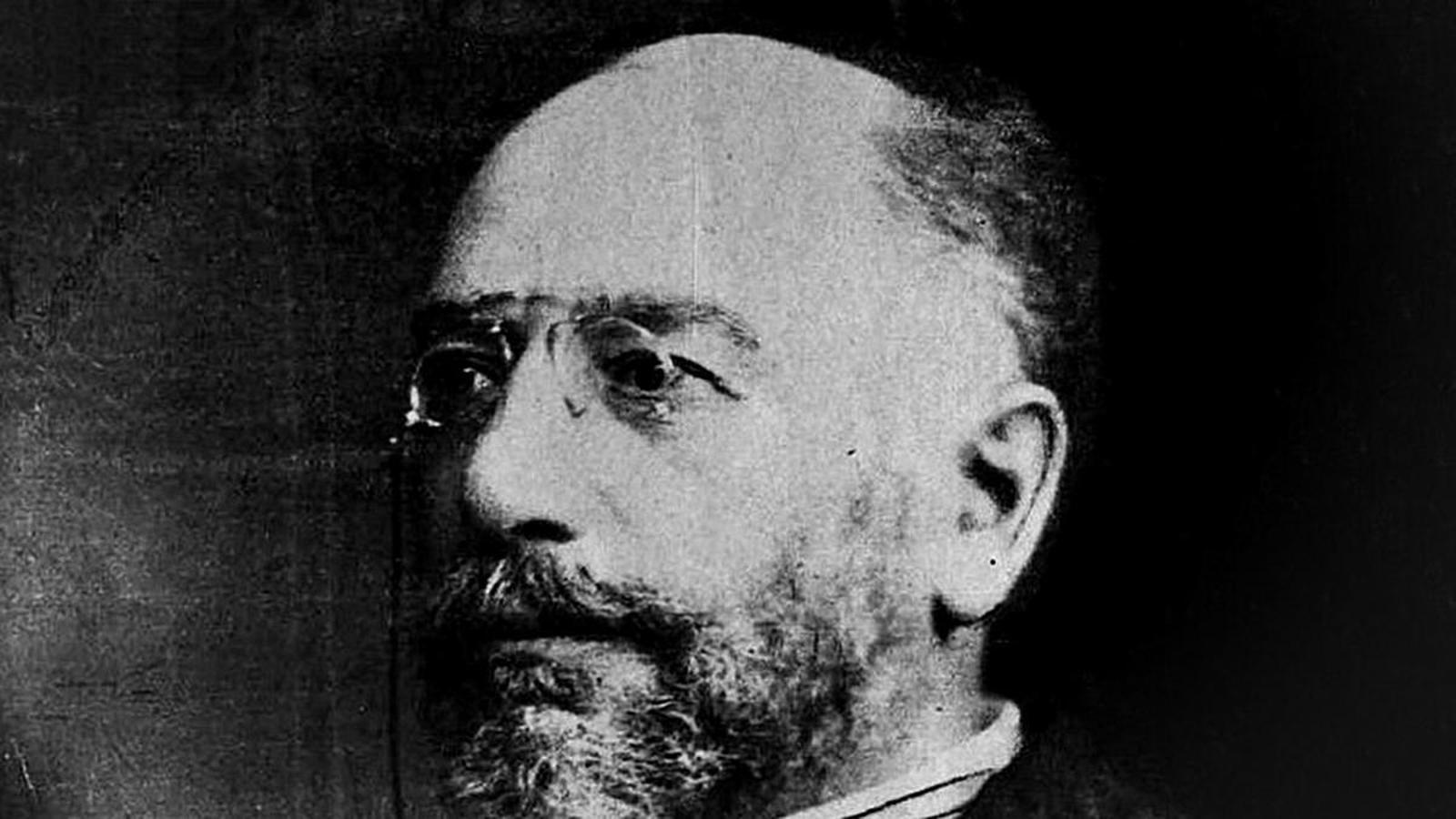
Manfréd Weiss and his brother Berthold drove the business modernization of Hungary before the First World War
-
CAT -
CAST
Until the forties, the Hungarian football league had been a matter of three: the vast majority of titles had been shared between Ferencváros, MTK, and Újpest Dózsa, the three great clubs of Budapest. But coinciding with the Second World War, a modest team from Csepel Island emerged, which was precisely called Csepel SC. It broke the prevailing hegemony thanks to its victories in 1942, 1943, and 1948. By the way, four years after the last title, during the 1951/52 season, Csepel SC had a young forward in its ranks destined to make history: his name was Zoltán Czibor, and some time later he would tread the Camp Nou to triumph dressed in blaugrana.
- 1857-1922
That Csepel SC managed to dispute titles against the great Hungarian football monsters had only one explanation: the club was directly linked to one of the country's strategic industries, metallurgy, with a large factory. The team had been founded by workers from the company Weiss Manfréd Acél- és Fémművek (Manfréd Weiss Steel and Metal Factory). The origins of the industrial conglomerate must be sought in 1892, when Manfréd Weiss, of Jewish origin, decided to move his business activities there, initially a cannery and canned food factory, but later also a munitions factory.
The young Weiss did not want to be a small merchant, as his grandfather and father had been, so he emigrated from his native Pest to Hamburg to work in colonial trade. His apprenticeship went quickly, because before he was twenty he was already in charge of a local business.
Coinciding with his father's premature death, Weiss returned to Hungary to join the family and expand his professional activities. The economic development generated by the Austro-Hungarian Compromise of 1867 (the kiegyezés, more self-government for the Hungarians) benefited the country's economy and also Weiss's small business and that of his brother Berthold.
Furthermore, between 1878 and 1882, the invasion of Bosnia and Herzegovina took place, which offered some unexpected opportunities. The demand for fresh meat by the empire's army was very difficult to satisfy, as the product did not arrive in good condition on the battlefields, so Weiss had the idea of sending it already cooked and packed in hermetically sealed cans, which prevented it from spoiling. The idea was so successful that after the war he set up Weiss Berthold és Manfréd Első Magyar Conserv Gyár (Berthold and Manfréd Weiss's First Hungarian Cannery), which sold its products under the Globus brand. Meat was only the beginning, as the company successfully tried to can a whole series of foods, including instant coffee, a precursor to the famous Nescafé that the Swiss multinational Nestlé would produce years later.
Diversification
The good relations with the army built during the war allowed Weiss to expand its product catalog, especially when he realized that there was not much distance between manufacturing cans and producing ammunition. This is how the family business got a foothold in arms manufacturing and also in heavy industry. The following years were of diversification, as Weiss contributed to the creation of the country's main textile industry and the Magyar Ipar- és Kereskedelmi Bank (Hungarian Industrial and Commercial Bank).
Another relevant change was a forced relocation of the factory because, following an explosion, the authorities ordered the factory to be moved to Csepel Island, which at the time was not part of the municipality of Budapest. Shortly after this, Berthold preferred to dedicate himself to politics and left the company's reins to Manfréd.
The new phase was marked by what is known as social policies, because Weiss was very concerned about the welfare of his workers. During his tenure, within the company, he created a maternity ward, a nursery school, a hospital, housing for workers, a widowhood and disability fund, among other essential services. World War I caused the company to multiply its production and the number of workers to climb to nearly thirty thousand. At the end of the war, the communist regime nationalized the company, which drove Weiss to a frustrated suicide attempt. He died shortly after, a victim of a stroke.
