Finland goes from celebrating Google's investment to putting the brakes on data centers
The felling of 250,000 trees by the tech giant ignites indignation in the country, which is preparing a reform to limit the access of these infrastructures to the electrical grid

-
CAT -
CAST
CopenhagenThe contrast with just two months ago is evident. In September, the Finnish government enthusiastically received Google’s announcement of a 13 billion euro investment, the largest in the country's history. The project planned to expand existing facilities and build new data centers related to artificial intelligence development. The conservative Prime Minister, Petteri Orpo, pointed out at the time that “these investments are very important to us, as they mean many new jobs for Finns,” at a time when the Nordic country has been dragging years of economic stagnation and an 11% unemployment rate, the highest in the European Union.
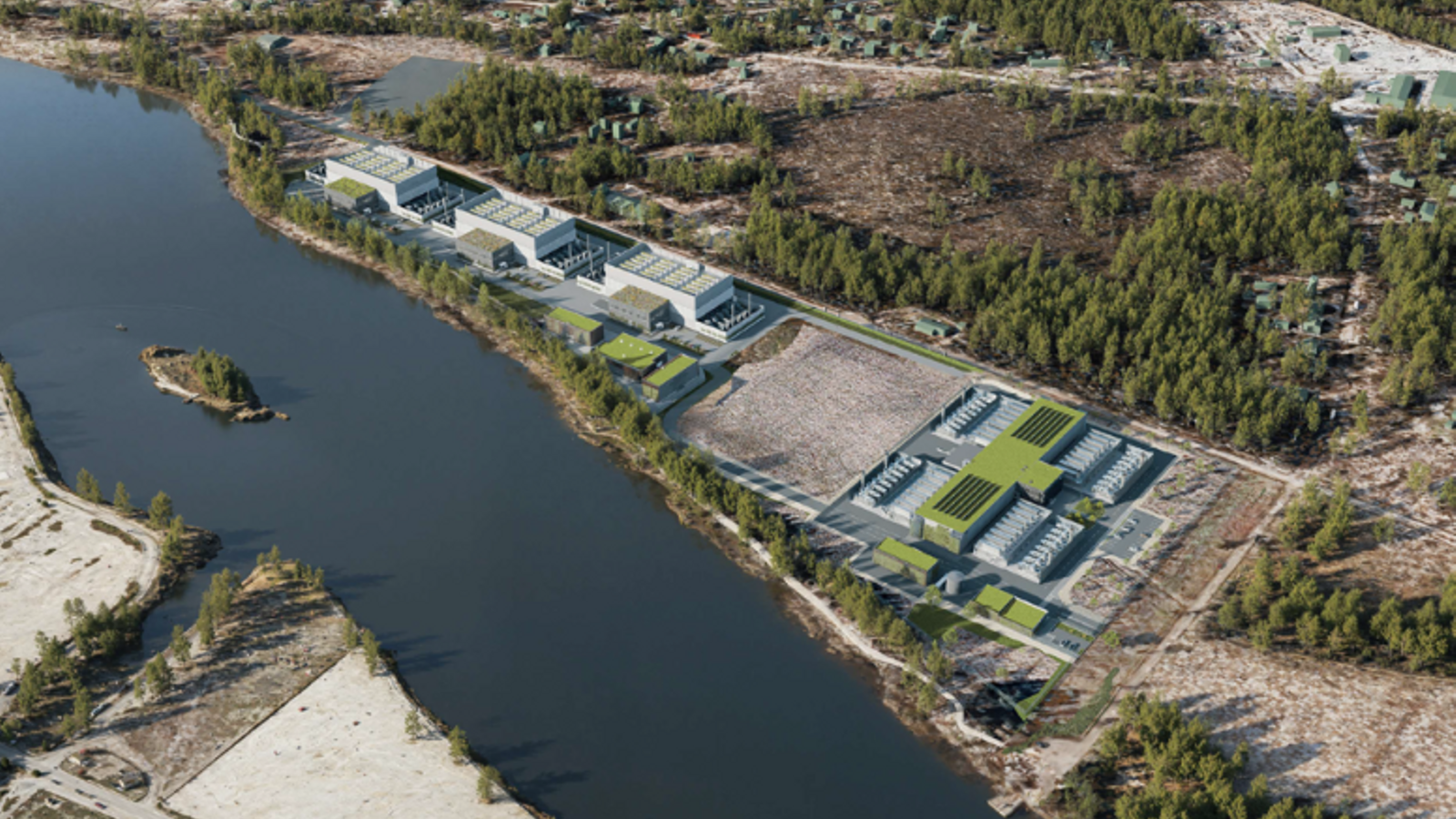
But the initial idyll with Google has turned into a climate of confusion and outrage over the way the American tech giant is carrying out its plans on the ground. Images of the land where Google plans to build the new data centers have been repeated across all the country's media. They show a forest that has been completely razed; only black peat and muddy water remain, an almost lunar landscape that stretches across 330 hectares near Muhos, and another 200 hectares in Otanmaki, both cities in the center of the country.
The most serious issue is that the company allegedly cut down trees and began construction work without having the necessary permits or having presented the environmental impact studies required by law. The work has been paralyzed since October 23, but the damage is already done. As outrage grew among the public, images of the logging have become a symbol of the excesses and the environmental cost of the expansion of data centers, an industry in full swing in Finland, where there are nearly 140 projects announced and pending approval.
Following the controversy, the police announced an investigation into Finland Oy, Google’s Finnish subsidiary, for alleged environmental crimes due to the suspicion of cutting down 250,000 trees and for alleged irregularities in drainage and water management during the excavation of trenches. Faced with the accusations, the Google subsidiary has been forced to provide explanations. Its regional director, Antti Jarvinen, apologized for the magnitude of the deforestation, but argued that the company had acted in “good faith” and without having full knowledge of Finnish environmental legislation.
Explanations that did not convince Hanna Halmeenpaa, president of the Finnish Association for Nature Conservation (SLL), who in statements to the public broadcaster Yle was blunt: “In my opinion, the law has been deliberately broken or gross negligence has been committed,” she stated.
An avalanche of new data centers
Beyond Google, Finland has managed to attract major tech giants, such as Microsoft, TikTok, and Meta, which have also set their sights on the country to install their data centers. It is no coincidence. Finland boasts conditions that are particularly favorable for this type of infrastructure. Low temperatures facilitate server cooling, the low population density guarantees ample land availability, and access to cheap electricity from renewable sources makes the country the perfect place to build this type of infrastructure.
But following the Google case, the debate over the impact of data centers has become unavoidable. Until now, the government had supported investments in data centers and had downplayed concerns about their high energy consumption, arguing that these infrastructures would contribute to boosting the local economy. All this, despite the fact that the electricity grid operator Fingrid predicts a 40% increase in electricity consumption over the next five years due to the proliferation of data centers, a fact that raises concerns about potential impacts on rising electricity prices and putting the electricity supply at risk. Forecasts estimate that data centers will consume between 12% and 19% of total electricity by 2030, while they currently account for between 2% and 3% of consumption.
In this scenario, citizens are demanding more control. In September, a citizens' initiative was launched calling for stricter legislation for the construction of new data centers, which has already gathered 95,000 signatures and will be debated in parliament.
Furthermore, a few months before next year's legislative elections, the government has also begun to backtrack on its policy of attracting data centers. The executive branch is preparing a reform of electricity legislation that seeks to end the first-come, first-served grid connection assignment system and establish four priority levels. With the new mechanism, large data centers would be relegated to the bottom of the list for connecting to the power grid, behind essential services, small and medium-sized enterprises, or renewable energy projects, unless the data centers commit to producing a portion of the energy they consume themselves.
For all practical purposes, the reform may cause some of the nearly 140 data centers projected in Finland to be delayed, moved to other areas of the country, or end up being canceled. The new legislative model follows the example of Denmark, which this summer approved similar regulations to put a brake on the expansion of these infrastructures. Norway has also begun to follow the same path.
