"If I were rich, my addiction would be compulsive shopping"
The presenter Alba Riera explains her relationship with money and work
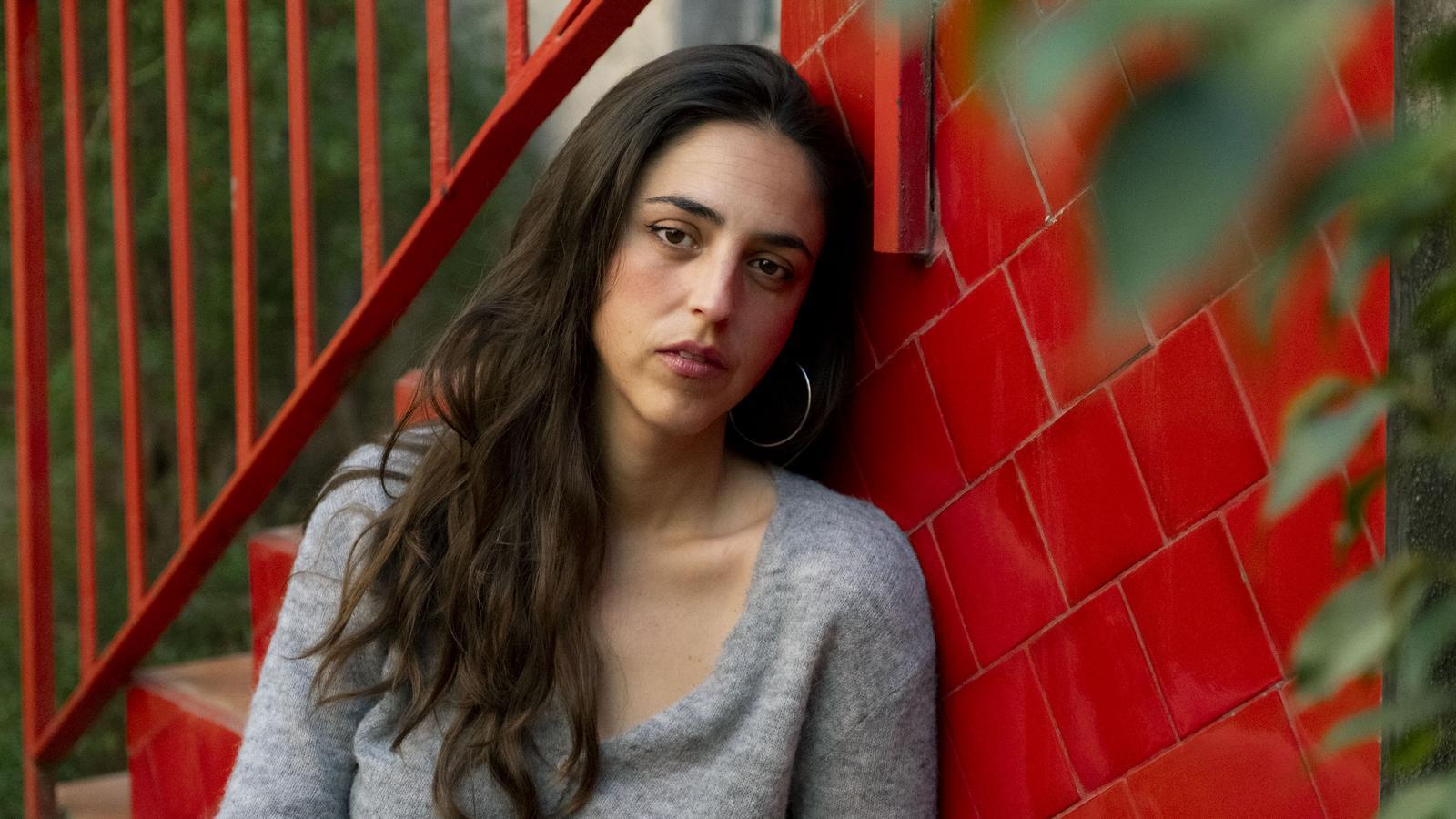
It's no wonder that presenter Alba Riera (Barcelona, 1991) likes to communicate. From her mother she got her way with words, and from her father, the virtue of not being afraid to give her opinion in public.
Even as a child, she discovered she had the gift of gab to persuade: "When I wanted something, I would write a letter to my parents or call a meeting for them." Even in class: "I used to do exchanges. I would do a smaller part of the work in exchange for giving the oral presentation that no one else wanted to do."
: “The moment it happened I shat myself and said: ‘Shit, I’ve become too obsessed, I don’t want this anymore’”. But now he assures that he would be happy to live forever doing Her goal was to be a presenter, and she has achieved it with one of 3Cat's most listened-to podcasts, La turra: "The moment it happened, I pooped myself and said, 'Shit, I've become too obsessed, I don't want it anymore.'" But now she assures that she would be happy to live forever doing La turra. In fact, she devised it. "I thought: 'What program is missing in Catalan that I can do well?'" Regarding her salary, she assures that, although she believes she could earn more, she can't complain.
She does, however, denounce the role of social media: "Our generation has been stupid, because we have turned them into part of our job, and this has not yet been reflected in absolutely any contract." Riera says she has distanced herself from advertising brands on social media: "Although with fashion and beauty, and I'm very sorry, I still fall for it."
Impulse buying
In fact, this is her weak point: “I hate not having money saved, so I try to have some. But at the same time, I’m also a spender, especially on clothes, where I spend a lot of money.” In this regard, she shops when she is nervous: “I buy to relieve my anxiety, and then I have to return many things.” And although she has it under control, she is clear about her obsession: “If I were rich, my addiction would be compulsive shopping.”
From a young age, she was already vain: “I wanted to grow up to be able to buy clothes and have a lot of them.” It is also a family matter. Grandmother Irene was also vain, she had a jewelry store: “Nothing I liked more than being taken there to spend the afternoon, surrounded by jewelry and pearls.” She has always been vain, but since she has been working in front of the camera, the aesthetic pressure has intensified: “I have more dysmorphia. Before, I was more sure of myself.”
Regarding personal finances, she admits she is not very savvy: “I’m sure I’ve lost a lot of money in my life, with prices I haven’t set for my work or with jobs I’ve accepted for less.” She worries about money, but she is not interested in material possessions. She currently lives in a rented apartment owned by her family: “As long as I can stay in my aunt’s apartment, I won’t buy an apartment, because any difficult financial situation wouldn’t be the same to deal with family as with a real estate agency.”
The moment she suffered the most financially was when her mother died: “I remember a family financial readjustment, seeing my father suffer a lot, because there were three children and one adult. I remember feeling anguish. Moreover, they were not married, so my father didn’t receive a penny as a widower, only small aids for us.” It was a difficult time: “I had a hard time and thought, ‘I don’t know how we’ll manage, because Mom won’t come back.’ I compared myself to people around me and envied them a little.” “It was a feeling of injustice. Although, viewed in perspective, very victimizing, in reality, because I lacked nothing,” clarifies the presenter.
In fact, at home, they always taught her not to compare herself: “My father told me that friendships with people from very different social classes are complicated. This doesn’t mean they shouldn’t exist, but they usually lead to a lot of frustration because the pace of life is not the same.”
