They can say no: the quarantine of the 14 Spaniards from the hantavirus cruise is voluntary
The law does not allow forcing isolation on people who do not show symptoms and are not a public health danger
-
CAT -
CAST
BarcelonaThe 14 Spaniards on board the cruise ship MV Hondius will spend their quarantine at the Gómez Ulla Military Hospital only if they agree and do so voluntarily. As happened with the COVID-19 crisis, the current legal framework prevents mandatory confinement if no symptoms are present, as is the case with this group, without a court order. Therefore, the Ministry of Health is preparing a legal report to support, if necessary, the possibility of imposing mandatory quarantines on the 14 Spanish passengers on board the ship if they refuse to isolate themselves.
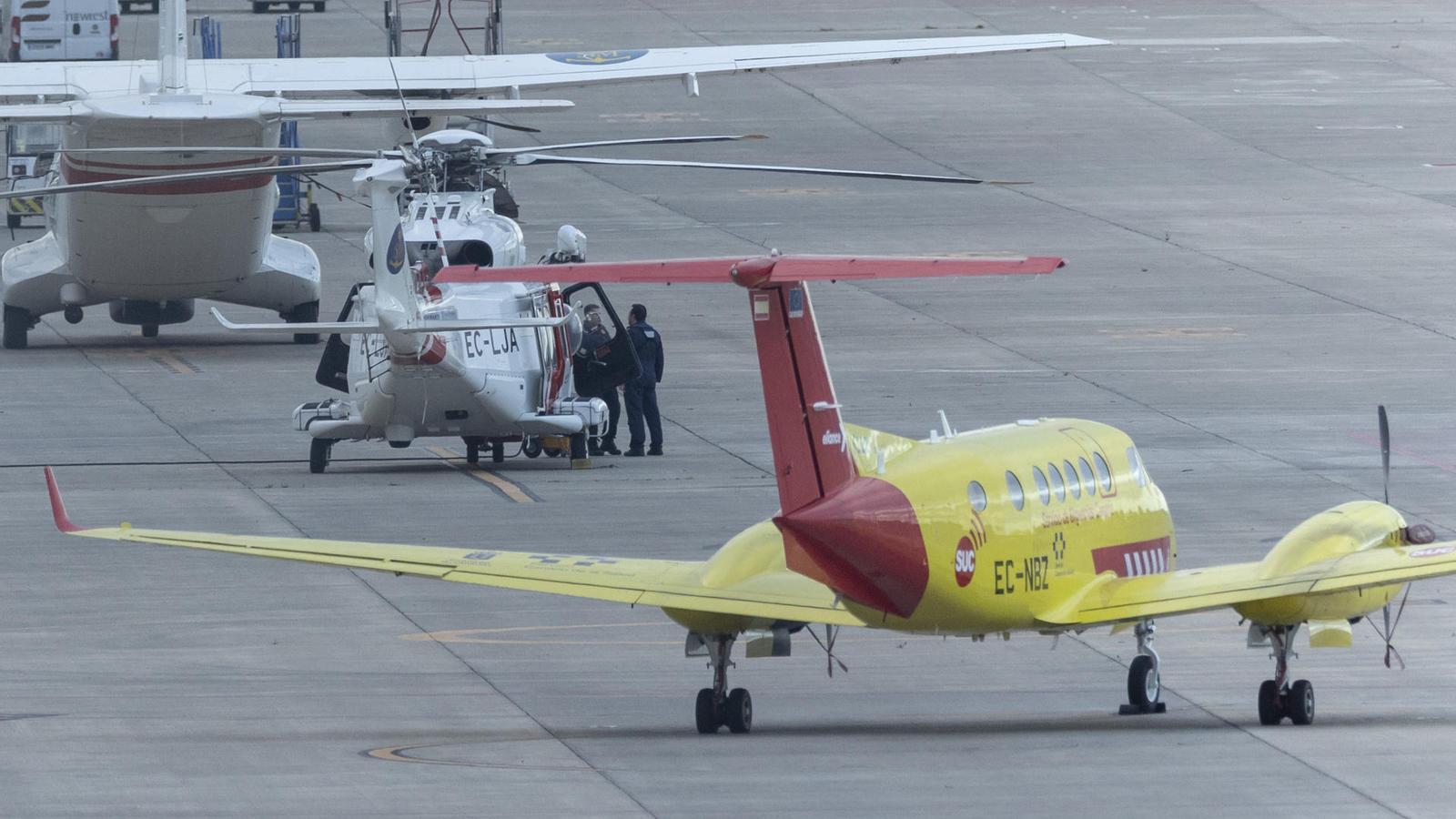
At this point, no one knows what will happen to these passengers once the ship docks at the Canary Islands port, where Health Abroad personnel will assess them before transferring them by a medicalized plane to the Torrejón de Ardoz base. The Spanish government has everything prepared so that, once in Madrid, they will be admitted to the medical center, but with the law in hand, they can decide to go home or even not respect the isolation period advised to curb infections.
The Minister of Defense, Margarita Robles, has contradicted what the head of Health, Mónica García, announced on Wednesday, and has questioned the mandatory nature of quarantines. Furthermore, she explained that patients are not expected to be admitted to the infectious disease units of the military hospital, as did happen with Ebola patients in 2014. Simply, they are expected to be in individualized rooms, according to Robles, who has assured that both ministries are working on the preparation of the medicalized plane that must take the group of passengers from Gran Canaria to Madrid. The question is what will happen from then on if these people remain asymptomatic as they are now. Hantavirus has an incubation period that ranges from one week to six weeks, but for now, the authorities have not indicated the duration of the quarantine.
Robles has insisted that they will undergo quarantine at the hospital "whenever they voluntarily wish," as it is a measure that restricts freedom and can only be ordered by the courts. At this point, Minister García has appealed to the "common sense and responsibility" of the Spanish passengers and has assured that if they do not wish to enter Gómez Ulla, the Spanish government reserves the right to apply the necessary legal measures for them to do so.
In statements to Cadena SER, the head of Health explained that law 3/1986 on special public health measures grants health authorities the power to apply exceptional measures to protect public health and control communicable diseases. "We will give them PCR tests and all the necessary tests, and we will be evaluating the quarantine together with international experts," she pointed out.
The Minister of Territorial Policy and Democratic Memory, Ángel Víctor Torres, also said this Thursday that the quarantine for Spanish passengers will be mandatory "in cases determined" by scientific authorities. "It is not a capricious decision, it is a decision of a scientific nature," said Torres.
What laws does Health rely on?
The Public Health law to which the executive has referred allows health authorities to "adopt measures of recognition, treatment, hospitalization, or control" when there are indications of "danger to the population's health." It also provides that, to control communicable diseases, they may take "appropriate measures" to control the sick and their contacts in case of transmission risk. The same regulation imposes on administrations the obligation to manage risks to the population's health, and specifically empowers the State for the surveillance of external health and disease prevention at the border.
Furthermore, the General Health Law attributes exclusive competence to the State in matters of external health, as well as the power to coordinate all administrations in situations of national or international risk.
This regulation expressly provides that, "in the face of an imminent and extraordinary risk to health," health authorities may adopt all appropriate preventive measures, including the quarantine of infected or exposed persons. This law gives the central government the capacity to make these decisions, and adds that preference should be given to the voluntary cooperation of citizens, that mandatory measures involving risk to life cannot be imposed, and that, among the available options, those that least harm free movement, freedom of enterprise, and other rights will be adopted.
During the covid-19 crisis, the Spanish government had to resort to declaring an exceptional state of alarm to decree mass confinements, as the text of the 1986 law does not include such a drastic and widespread measure, and it allowed the executive to take sole command of crisis management. Since the pandemic, the debate on modifying this 40-year-old law has been raised, but the lack of political consensus has prevented its updating to avoid new controversies in case an epidemic were to force the restriction of fundamental rights again, such as the prohibition of mobility.
Civil protection assures that "there will be no possibility of contagion"
This Thursday, the first details have also emerged about how the evacuation of the MV Hondius will take place once it docks in the Canary Islands. The Secretary General of Civil Protection and Emergencies, Virginia Barcones, has assured that "there will be no possibility of contagion." The 14 Spaniards on board will go directly to the Gómez Ulla hospital, while passengers and crew of other nationalities will be transferred to the airport to fly to their countries.
On board there are citizens from nine countries of the European Union (EU) including Spain, and from three more countries adhering to the European civil protection mechanism. These countries will decide in the coming hours whether to send a plane to evacuate their citizens or to join a joint mechanism for evacuations.
There are also citizens from 11 non-EU countries, who will also respond during the day whether they will send their own plane to collect the affected individuals or join a collective mechanism. For the moment, according to Barcones, the United States has shown willingness to send one, and Great Britain has also shown willingness to do so.
