Does Sánchez exculpate Morocco by presenting itself as a victim?
We are happy to meet again at the start of this new season. Happy and especially responsible, because a 2026/27 course awaits us that calling it "exciting" would be correct but frivolous. Because it will be a serious course
-
CAT -
CAST
We are happy to meet with you all as we begin this new season of daily analysis at l'ARA. Happy and especially responsible, because the 2026/27 academic year awaits us, which would be correct but frivolous to call "exciting". Because it will be a serious year. Just look at the crisis in Ceuta, the start of the school year with the same conflict it ended with, the expectation that the Supreme Court will finally apply the amnesty law and President Puigdemont will return, the possibility that Pedro Sánchez will advance the elections, the municipal elections in May, which will mean a first confirmation of the support that Aliança Catalana has in the polls and in conversations, the midterm elections in the United States, and that's without mentioning the open wars in Ukraine and Iran. And this is only what can be glimpsed, not to mention what Rubén Blades said, "life gives you surprises".
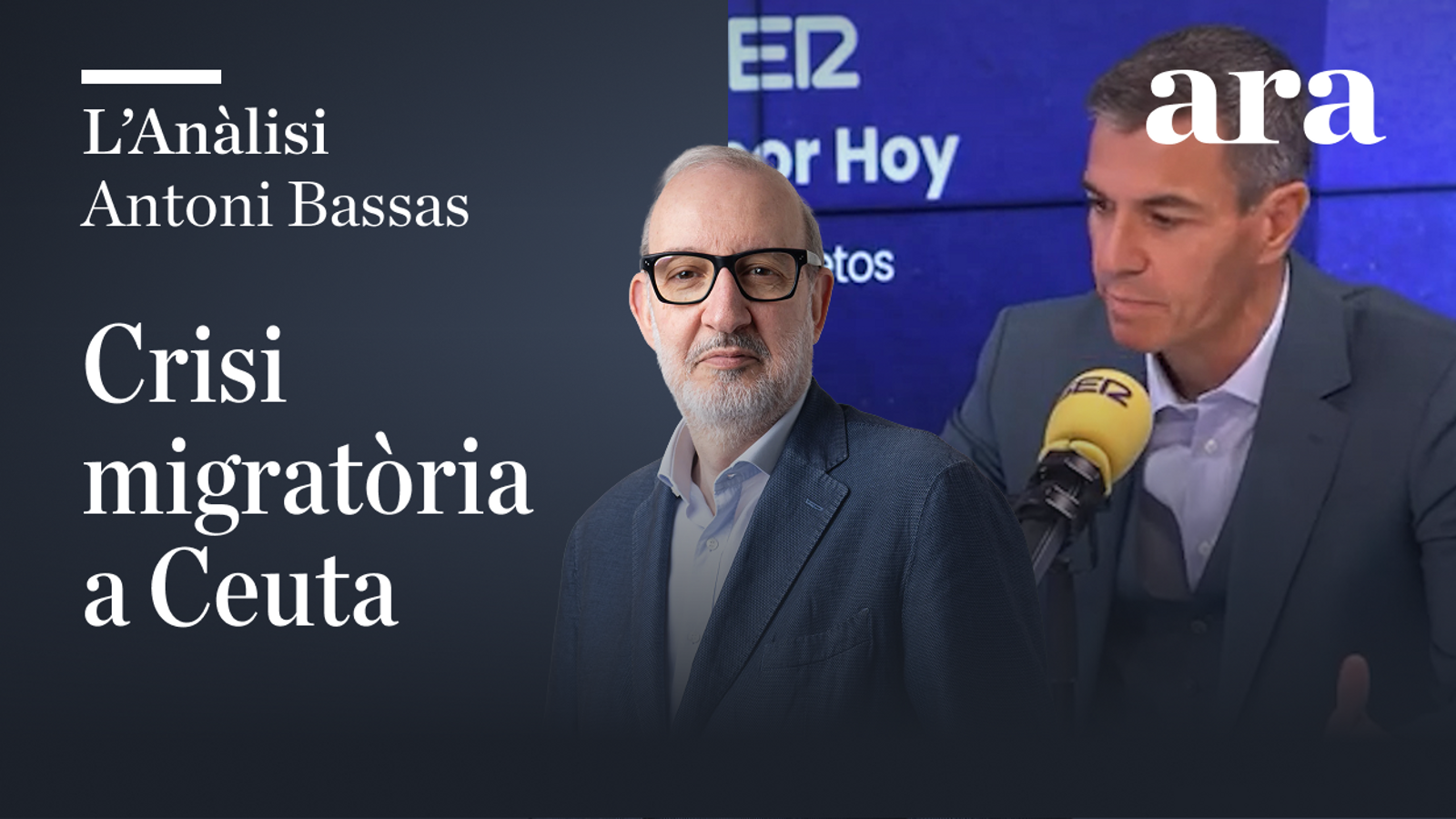
Of all this indigestible menu, let's deal, for now, with what's on today's agenda. This morning Pedro Sánchez went on the SER and ruled out that Morocco was responsible for the massive entry of people into Ceuta a month ago:
“I, naturally, see no information from the State security forces and bodies, nor from the National Intelligence Center. I would also tell you that, from any intelligence center with which the Spanish government usually collaborates, there is no information that provides any indication of the participation, in one way or another, of the Moroccan authorities”.
The Spanish president went even further, attributing the massive entry to the "spread of lies and disinformation" originating from "Russia, Israel and a reactionary international" which, according to Sánchez, fueled the mobilization of thousands of people towards Ceuta through social networks and disseminated by "criminal organizations and mafias".
So, for Spain, as of now, Morocco was not responsible for the crisis. Let's assume not, but everyone could see that neither the Moroccan army nor the Moroccan police did anything, quite the contrary, to prevent the escape. In any case, the question is: If it wasn't Morocco, who was it? And Sánchez's multifactorial answer leads us to what we have called "hybrid warfare" or "grey zone", the concert of wills of states, through the back door, with political, economic and criminal groups capable of destabilizing.
Does Sánchez exonerate Morocco because if it had been Morocco (the historical cause of crises with Spain), the Spanish secret services would have been exposed? Since the images from Ceuta have gone around the world and scandalized the European Union, and since the Spanish government's reaction has been incredibly clumsy, is it easier for Sánchez to accuse "gray zones" and subscribe to the idea of "hybrid wars"? Today, the Spanish president said he will not move forward the elections, which would be in July. We'll see, because in the PSOE there are many candidates from the municipal and regional elections of May 2027 who fear that they will be the ones to pay the price.
We haven't forgotten about the start of the school year, the new funding, or the return of President Puigdemont. But we'll talk about that tomorrow.
Good morning.
