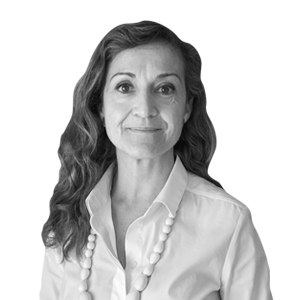
Rafael Aranda, Carme Pigem i Ramon Vilalta: "We are interested in Architecture with a capital A: not merely building, but understanding the world, getting to the source of things"
Founders of RCR Arquitectes
-
CAT -
CAST
Our interview takes place in Olot’s old Barberí foundry, converted into the studio and beating heart of RCR Arquitectes. Rafael Aranda, Carme Pigem and Ramon Vilalta discuss returning to Olot, the decision to always work together, landscape as an ally, the Pritzker Prize as freedom and responsibility, and their Vila as a cultural and life project.
We are in the old Barberí foundry. What does it mean to you?
— Rafael Aranda: We are in an old bell foundry, an artistic foundry. For many years we called it Barberí, but it seems that the correct name is Barberi, according to the records. In the past, bell casters would travel to the place where a bell had been commissioned in order to make it. They did not build it and send it over. Rather, they moved to the spot and built it on-site. This family came to Olot to make bells and ended up settling here.
— Ramon Vilalta: News of the family can be traced back to 1554 through baptismal records. It seems that they started a lineage that has survived to this day. This space is not the foundry’s original location. It used to be on another street. This building actually dates back to the beginning of the 20th century, around 1904. These streets began in Olot’s city center and led to the outskirts.
How did you get there?
— Ramon Vilalta: We visited the space and found it dilapidated, derelict. Vegetation was coming in through the nave. But it stole our hearts. We couldn't get it out of our heads. For years we didn't think we could afford it, but eventually we were able to and we started fixing it up. And here we are, now.
— Rafael Aranda: We had previously occupied an apartment in the center of Olot, in the Firal. We had always dreamed of working in a place close to the landscape. We had considered building a place or looking for a house in the surrounding area, in closer contact with nature. When we saw Barberí, we understood that everything was possible here: having the feeling of being in a landscape while maintaining the convenience of being near the city.
Was returning to Olot after completing your degree at the Escola del Vallèsone of your most important decisions ever?
— Carme Pigem: Yes, for sure. But it wasn’t a very deliberate decision. It came naturally. We simply finished our studies and returned home. It has been a defining factor for everything we’ve done since, but at the time we didn’t see it as a great strategic move.
— Ramon Vilalta: We didn't give it a second thought. It was straightforward. While at school, every week we would go back to Olot for the weekend.
— Rafael Aranda: We weren't like many classmates, who had no problem staying in Barcelona city for the weekend. I must have spent one or two weekends there over six or seven years. I was looking forward to the weekend so I could come back here. There’s something special about this place.
— Carme Pigem: The weekend after graduating, we returned to Olot for good.
Has Olot given you roots and wings, like the title of your exhibition currently on display at the Museum?
— Ramon Vilalta: Yes. Over the years you appreciate more the notion of feeling indebted to the place where you were born and raised. At the same time, this place also gave us an opening to flourish, to grow some wings.
— Carme Pigem: We’ve learned about the world from here. It’s a part of who we are, of our outlook on things. But it hasn’t been a narrow view. Olot has always had a very strong artistic strand: the link with the landscape, the School of Fine Arts, the indianes[printed fabrics], the Museum of the Saints... There was a culture of landscape and the arts. Our understanding of the world stems from here.
— Rafael Aranda: We returned to Olot with a desire to make the most ambitious architecture that we possibly could from here. We were interested in Architecture with a capital A: not only building, but understanding the world, getting to the source of things.

And staying in Olot gave you focus...
— Carme Pigem: Very much so. We were fairly cut off from the social life of our profession: get-togethers, networking, events... We worked here. At first we worked 365 days a year, morning, afternoon and night. We didn’t deliberately mean to isolate ourselves from the world. It was an obsession to work, to learn, because we saw that we knew very little. Olot allowed us to do that. There is a lot going on in big cities and it’s easy to become distracted.
— Ramon Vilalta: You have to try out stuff and see if it appeals to you. We’ve never drawn much of a line between work and personal life. Nowadays there’s a lot of talk about separating one from the other; we’ve never felt that way. Architecture was life.
— Rafael Aranda: And while returning to Olot was important, doing so together was equally important. Back then it would still have been possible for each of us to set up our own practice. But from the get-go we believed that it was more important to stay together.
How do you work as a group of three?
— Rafael Aranda: At the beginning, each of us had our own drafting table. It was natural in an architecture school: each of us worked on our own board. But there came a time when we realized that the three of us had to be around the same table. That was a major change.
— Carme Pigem: It happened after a trip to Japan in 1990. We had won a national competition and a Japanese company had us over. They set us up in a small work space and we realized that this worked out very well for us: working side by side in a single space. When we returned to Olot we decided to set up a single table for the three of us. It’s been a success. You don't have to make special arrangements to meet up anymore: you’re always working and any moment is good to share.
— Ramon Vilalta: Early on we would pass the drawings from one table to another, we worked with tracing paper, with layers. But the shared table made something else clear: sharing does not mean losing, nor having to compromise to reach some middle ground. We see it the other way around: something superior must come out of the dialogue. The whole is much more than the sum of the parts.
— Carme Pigem: There is also a very practical element. Architecture is a very long process and there are times when fatigue sets in. When one becomes tired, someone else can put their energy into it. Some things mean less of an effort for some. This mutual support works from a creative and also a practical standpoint.
How did the Escola d'Arquitectura del Vallès leave its mark on you?
— Rafael Aranda: In a big way. For us it was almost an extension of high school. You didn't walk into a large institutional building but, rather, prefabricated pavilions connected by covered exteriors, somewhere between Sabadell and Terrassa, a somewhat remote location, with some woodland nearby. We had the feeling of being in a community.
— Carme Pigem: I remember missing the registration deadline because I struggled to find the address. I looked so haggard that they said: "Nevermind, we'll register you anyway".
— Rafael Aranda: There were also young teachers, with hardly a generational gap between them and us. Some had only graduated a year before we started our degree. That made a big difference. There wasn't so much the idea of great figures casting a very big shadow.
— Carme Pigem: And it was a very special time. The end of General Franco's regime gave rise to an extremely exciting period, of wanting to build, of wanting to make the world better. In Barcelona, the pre-Olympic atmosphere was in full swing. We studied architecture at a time of euphoria and lots of energy.
Álvaro Siza once said that "The place is the most difficult client". Shall we talk about landscape?
— Carme Pigem: For us, the place isn’t a difficult client: it’s the greatest ally.
— Ramon Vilalta: We always say that, if you listen carefully, the place will speak to you. Architecture must engage in a dialogue with the place. Dialogue is the word. It should not be subservient to the place or imposed upon it. The greater the symbiosis with the place, the more powerful the outcome.
— Carme Pigem: The place is an ally because it forces you to reveal its potential and mitigate its problems. This makes every piece of architecture unique. When we talk about landscape, we are not just talking about an immaculate mountain. The place may be an existing building, an urban environment, a culture, a memory. It is very comprehensive.
— Rafael Aranda: The place has an objective dimension, with parameters that you can study, but it also has a feeling. We believe in the genius loci (the spirit of the place). You have to get a feel for the place. We’ve traveled to places trying to feel what they were asking of us. And that's what we tell the young people who attend our workshops: an architect must learn to feel.
Is this idea of feeling the place at the heart of the Vila project?
— Carme Pigem: It is. The Vila is a place to live an experience within a space.
— Ramon Vilalta: If we manage to go beyond ourselves and embrace many people across the board, the Vila can become a catalyst for a cultural moment in Catalonia. The idea is to travel far together.
— Rafael Aranda: There are schools of architecture that don't look at the place: they build buildings. We have come to the conclusion that what we like is making landscapes. Even though we make buildings, we view them as landscapes, because we understand architecture fromthe landscape as a whole.
— Ramon Vilalta: It is an architecture that’s not linked to the place as an object, but as an ecosystem. It embraces the place, dialogues with it, blends with it. When the environment is natural, as in the Vila, architecture ceases to be an inert space: there’s light, nature, animals, and people. And people are not spectators; they are part of the space. A space is alive when people are there.
— Carme Pigem: Space is where life develops. None of us can escape it: school, home, the street, the park... We live life from space to space. That is why the quality of spaces directly affects a person’s quality of life. We are often unaware of this.
— Rafael Aranda: There is a fundamental idea in the Vila: the value of the unbuilt, of air, of emptiness. The Vila must explain the value of emptiness, the space made without the need for enclosure.
After being awarded the Pritzker Prize, were you able to continue doing non-monumental architecture? Does the Pritzker bring a lot of pressure?
— Rafael Aranda: It does, yes. But sharing the award between the three of us also helps a lot. When we received it, we asked ourselves: “So, what now?” You can get drunk on recognition like that.
— Ramon Vilalta: Tom Pritzker called us before it was made public and said he hoped the award would be positive. But these things can weigh on you.
— Carme Pigem: It weighs on us in a very practical way, especially: every day we get five or ten email messages asking for all kinds of stuff. You need to be forever assessing what you agree to do and what you turn down. 90% of the time you have to say no. You also feel a responsibility: if they have recognized what we’ve done, we need to show consistency. You cannot lower the bar. But it’s also given us freedom: it has allowed us to secure work and be more selective.
— Rafael Aranda: It gives you the freedom not to be obsessed with finding projects.
— Carme Pigem: We haven't changed, but other people’s perception of us has changed. It’s also helped us with the Vila, because it has opened doors for us. We are happy and proud of the Pritzker, but it also weighs on us.
— Ramon Vilalta: We have always worked with one word: balance. Not as something static, but dynamic. You can go to the extreme, but you must have the ability to return to the center.
— Rafael Aranda: And if something passes through the filter of all three and we agree on it, it gives us peace of mind.

If you had to say what each one of you contributes, what would that be?
— Carme Pigem:It’s difficult, because we’re always changing. You don't always contribute the same thing.
— Ramon Vilalta: It also depends on the moment. But it is true that we are very different and that the balance comes from there. What is important is that this difference doesn’t separate us, but generates something in common.
In this workshop you have a space that you call the space of dreams. What is it?
— Ramon Vilalta: It was an area in the workshop that was very damaged, with a shattered tile roof. We raised it a lot and also lowered it downwards so that you see nature and the garden from the inside, and the space broadens your horizon. It is a place to go far, to be inspired, to discuss topics. The space opens you up. That is why we call it the space of dreams.
Does it all start with a dream?
— Ramon Vilalta: Yes. If you don't dream, you stay within the boundaries of what you already know. Only when you dare to take risks and do things the way you feel can you go further. We haven't really focused on doing what we saw others do, but rather what we felt. This has given us a way of perceiving the world. In the end, there is no single reality: each person constructs their own reality from the moment they are born.
You have worked in Taiwan, Mexico, Asia... Since you claim that place is also culture, how do you approach a project in a very different cultural setting?
— Rafael Aranda: Having learned to understand the place over here makes it easier for us to go to other places and try to feel what they are asking of us. But this requires depth. When we enter a culture, we try to educate ourselves, to understand its parameters. We are very interested and passionate about it.
— Carme Pigem: We like to discover stuff and educate ourselves. As architects, we haven’t specialized in schools, hospitals, or any single program. We have enjoyed working on very different things and in different cultures because this enriches us. If you build a winery, you learn how wine is made. If you work in a particular country, the connection is much deeper than if you go there as a tourist. We’re not interested in a superficial understanding of things. We like to go to the root and understand them thoroughly.
— Ramon Vilalta: When you delve into different cultures, you search for their essence and, ultimately, essences are found. Culture makes us all different and there’s value to that. But there is also common ground. Working in such different places has enabled us to understand the world and what goes on.
— Rafael Aranda: The projects we do belong to the place where they are located. They carry our soul, but they respond to that place. We are not an office that applies a catalogue of resources. Each project has a life of its own: materiality, details, language. Everything stems from the world that the project demands.
Is the attitude the same whenbuilding a corporate office, a station, a house, a chair, or a book?
— Rafael Aranda: It is. For us there is no separation between interior design, architecture, or making an object. It is a whole.
— Ramon Vilalta: The essence is the same. The scale changes and the instruments change, but the attitude is very similar.
Has the scale of the projects ever overwhelmed you?
— Carme Pigem: Not the scale.
— Rafael Aranda: We have tried to understand every scale. The territory, a beach bar, a chair... Each scale requires certain parameters. There are architects who are very good at one scale, but struggle at another. We have tried to move in all of them.
— Ramon Vilalta: The Escola del Vallès gave us a generalist education. We learned to move in the territory, on large scales, but also in the detail of a chair.
— Rafael Aranda: The Escola de Barcelona was also steeped in this tradition of designing by the square centimeter. We don't like to err by turning design into gesture, but we know how to get to the square centimeter.
Is comfort overrated?
— Carme Pigem: (laughs) It's true that we’re not the architects who make the most comfortable things. But we’re austere individuals in our way of life and this shows in our architecture, too.
— Rafael Aranda: If water can come out without any visible element, all the better. We like this idea: an essential solution, almost archaic, but with the sophistication necessary for it to work.
How does technology enter into your architecture?
— Ramon Vilalta: In Barberí there is a lavatory that encapsulates this idea very well. It is technologically sophisticated, but you can’t see it. As you approach it, water spouts out of the wall towards the garden. The technology is there, but it is not apparent. We like to make the most of it without making it obvious.
— Carme Pigem: We’re interested in technology, provided it allows us to achieve more of the essence we’re looking for. Very essential things may have few features, and technology can help to provide them without being obvious. Technology must be subservient to this essence.
Materials are central to your architecture: steel, volcanic soil, textures, colors. What do you look for in a material?
— Carme Pigem: We are drawn to stuff that’s alive. We don’t like plain colors, aseptic paint. We like roughness, materials that dialogue with nature. Steel began to interest us for a number of reasons: for the color, for its precision –we work in millimeters– and because it allowed us to do almost everything with a single material: structure, enclosure, furniture.
Why is it important to work with few materials?
— Carme Pigem: Because if there is only one material, you won’t be distracted by it. You don't have red, white, yellow, one thing here and another there. The material creates an atmosphere and allows you to feel the space better. We're not talking about monotony: a material can express itself with many nuances.
— Ramon Vilalta: We're also interested in time bringing the material to life. We don't like inert materials. We like the patina of time to transform them.
— Carme Pigem: It's the honesty of the material.
— Rafael Aranda: Authenticity. And from there comes serenity. With these concepts, not much more is needed.
What would you like the Vila to be in thirty years?
— Ramon Vilalta: It’s caught us at a mature time and we would like for the Vila to transcend us. For it to be a shared, creative movement, of research on space and on the value of architecture in society. Architecture is a difficult discipline to understand and do, but it can have a much greater impact on collective life. We would like the Vila to generate a peak, a creative moment, in terms of our country, that enriches the territory and opens up new solutions.
— Carme Pigem: I would like every visitor to feel transformed by the experience of the place. Maybe “transformed” is too big a word; rather, for it to leave a mark, to be a significant life experience. It has already happened with some courses: there are people who come for a week and experience it as an important life event.
— Rafael Aranda: Everyone who has been through our workshops and our environment tells us that they leave with a part of this experience incorporated into their lives. The space makes them think.
But many young architects today live in cities where they can barely afford a room. Isn't the world going against these values of silence, emptiness, openness, and time?
— Carme Pigem: Yes, sure. But the world must change a lot.
— Ramon Vilalta: We must call it out. It's a time of struggle. The world is taking a very important leap forward and all this is up for debate. But we must rebel.
Resistance?
— Carme Pigem: Yes, resistance and rebellion. We haven't followed the path that was laid out for us. You don't always have to. You can look for other paths. And these other paths needn’t be sophisticated or elaborate. They often involve going back to the source, to what is simplest, to what is essential. Every time there is a problem, we add a rule or a protocol. Maybe we should erase half of them and go back to the original source to find answers that suit us all better.
— Ramon Vilalta: It's a rebellious attitude. Today's world challenges you. You can let yourself be carried away or you can rebel against this inertia. More than ever, rebellion is necessary.
What message would you convey to architecture students today?
— Rafael Aranda: That ideas are the most powerful thing. That dreams are possible. This has always guided us. It wasn't easy to return to Olot when Barcelona was building the city [for the Olympics] in 1992 and there was so much professional energy there. But we came here and started dreaming a lot.
— Ramon Vilalta: And believing that changes are possible.
— Rafael Aranda: We also tried to be very free. We wanted to gradually achieve degrees of freedom. And that is not easy, not now or before.
Is it more difficult now?
— Ramon Vilalta: Perhaps. But you shouldn't just look at whether it’s more difficult or easier. You have to look at what dimension you want to give to what you do. For a long time, we put aside money instead of getting better wages, to have freedom. We wanted to be able to choose, to be able to decide whether or not to do something, and to do it the way we believed it should be done. That was basic.
— Rafael Aranda: Our structure has been built on this freedom. We never intended to be a big firm. We can decide what we do and what we don't doat any time. After forty years, that entails some precariousness, but we like it. This also gives us freedom.
— Ramon Vilalta: The Vila’s message is that dreams are possible. It depends on your determination, the love you put into it and how far you want to take an idea. It is also very important to be accompanied in this process. A single person probably cannot sustain that vision in the same way.
— Carme Pigem: We have been extremely lucky. But we’ve also worked very hard. Luck has always found us working. And we have been extremely lucky to have found each other and to have been able to share this journey.
