“I read this book and it blew my mind,” explains Kris. When he was young he read The Great Railway Bazaar, the travel book by the North American Paul Theroux, a classic of travel literature. “He set off on foot from the house where he was in London and reached India and Siberia, connecting different trains. And he tells us about the journey by talking to people, explaining who he meets. It seemed wonderful to me, when I finished reading it I told myself that one day I would take trips like this,” explains Ubach. “If you use public transport a lot, you meet more people. That's how it is, it never fails,” he concludes.
Kris Ubach: Finding a second home in the Neapolitan neighborhoods
The photographer and journalist from Mataró, after visiting half the world, has fallen in love with Naples, where she has not stopped returning
10/08/2026 - 13:02 h

-
CAT -
CAST
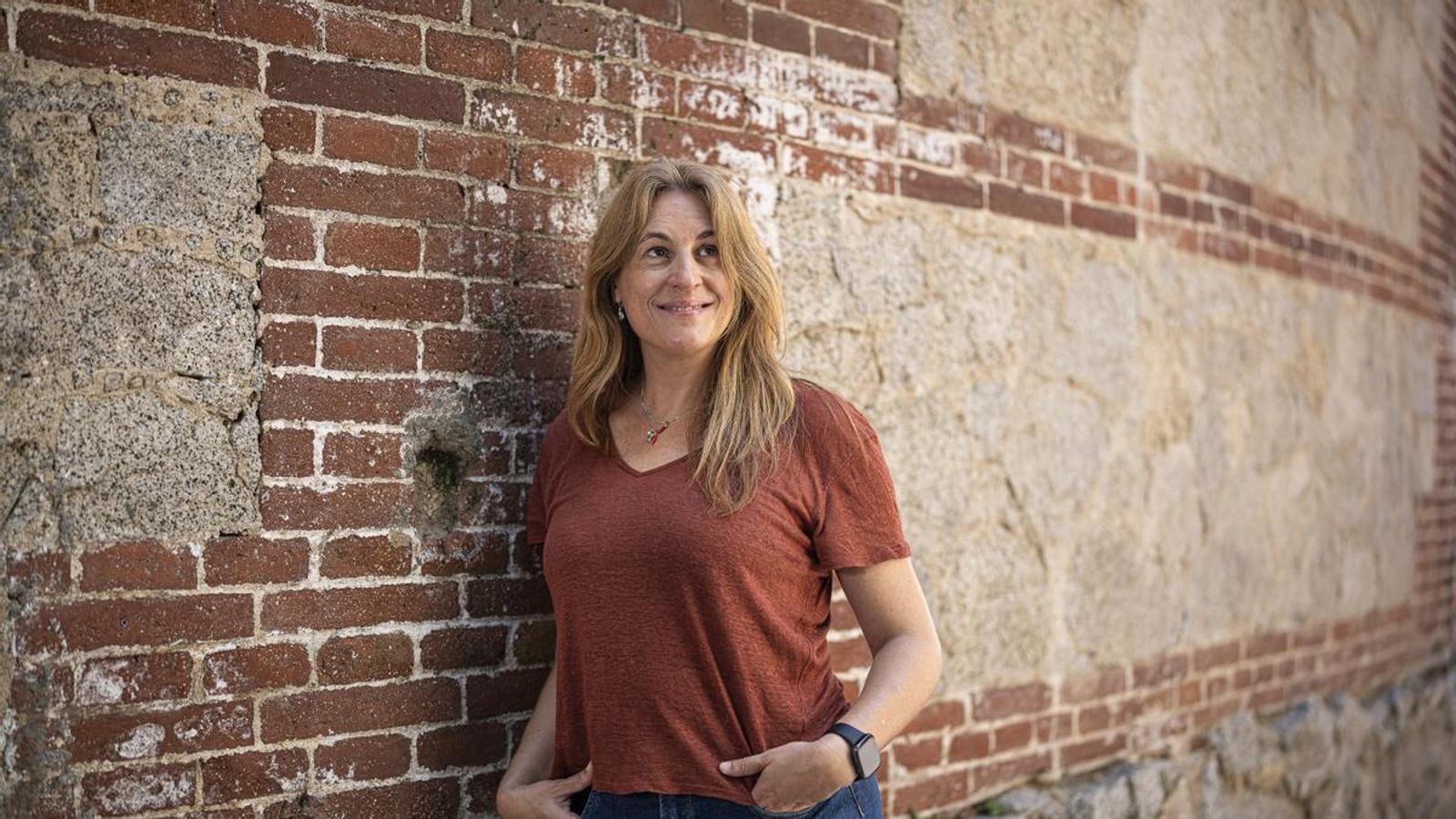
BarcelonaKris Ubach awaits us in the center of Mataró, where she lives. Not far from where she has a coffee, there is the memory of what her life as a lawyer, a career she studied, could have been. “I wanted to tell stories. I wanted to be a journalist. But you know those talks at the Institute to help you choose a career? Students from different careers came to explain their experience. And two guys who were studying journalism told us it wasn't a good idea. And they influenced me,” she admits, laughing. “So, I studied law. I thought choosing a career was a decision that would condition my whole life. When you're young, you think that way. Luckily, afterwards I've been able to make my own way,” she explains. “As a child, I had seen that film, TheGoonies, at the cinema. I saw it twice in a row. I wanted to have adventures. I read about pirates and adventurers. At 19 years old, I went to the United States with a boyfriend I had. At home we had always traveled, but of the four sisters we are, I was the one who became an adventurer,” she recalls.
As she knew a girl who published in El Periódico, Kris saw that a door was opening. “In the mornings I worked as a lawyer at the Col·lectiu Ronda in Mataró and in the afternoons I studied photography. And I took photos for some travel reports for that friend,” she adds. Her life changed completely. With the compensation she received when she left law, she went to Sicily alone: “I rented a car to drive around the island. I sat down to talk with the grandmothers, taking advantage of the fact that I speak Italian. I talked with the fishermen, with everyone. Then I went to Slovenia and Croatia when there wasn't much tourism yet, around 2001. And with the material I had, I went to the magazine Rutas del Mundo to offer it. And they bought my report on Slovenia, which was the cover story.” She wouldn't change her life anymore, publishing for years in many travel publications, such as the magazines Altair, National Geographic or Viajar.

Kris is talkative. And above all, she knows how to listen. That's why, on her travels, she wove complicities with the people she met. “I wanted to go further and further and discover new realities. The culmination was when they called me to go to Antarctica. Since I had done a report on the Northern Lights in Norway, for a time whenever there were trips to cold places they called me. I even published a book on how to take photos in extreme conditions, with so much experience. So, even though I get seasick, I was brave, I took medicine to avoid seasickness at all costs and I was able to go to Antarctica. You can't go any further. Being there was overwhelming. I had done it. I cried with emotion”.
A second home
And it's true that it couldn't go further than Antarctica, but the world remained an open book that was very worthwhile. When the Capgrossos de Mataró went to participate in the Govinda festival in India, where human towers are also built, she was invited to document everything for an exhibition and a book. A trip that would change many things, as she would meet her husband and end up bonding with the group. She also enjoyed photographing people. Faces. Culture. It was the step before discovering the city that had marked her the most. She had known Polynesia and the fjords, but she didn't need to go so far to fall in love with a corner of the planet. It was crossing the sea in a straight line from Mataró: Naples.
“Italy had always attracted me. But curiously, I had never been to Naples until I was offered to do a report on the city's nativity scene makers. It was 2018,” she recalls. “I arrived in the city and thought that somehow, I belonged there. It was just four days, but I felt welcomed. Some people see it as dirty, noisy… but others fall in love with it immediately. As soon as you went two streets away from the tourist area, you discovered a different, original world. When I took my mother, who was from Barceloneta, she was moved. In the Neapolitan neighborhoods, she recognized things from her childhood. Those people sitting at the doorstep, the clothes hanging out… a world that we have lost. Of course, there are problems, but I like the resilience these neighbors have to always live,” she explains. Since then, she has returned many times. “I needed it. I always say that the more you travel to a place, the more you have to discover. I had published a book about the Pyrenees that had gone very well and when the publisher told me that a new one was needed, I didn't hesitate, it would be about Naples,” she says. “In a four-page report, you can't explain such a rich city well. With a book, I was able to walk the city and visit nearby islands and towns. I met with the curators of the Archaeological Museum, with a street artist who makes Maradona murals, with a volcanologist who explained the Phlegraean Fields to me, which are a greater danger to the city than Vesuvius… Half a million people live knowing that one day they might have to flee. They don't seem worried,” she says. Each return has been a learning experience in which she has fallen in love with a city where she doesn't know if she would live, lest the enchantment be broken. “Many times it's not about understanding everything. It's about being moved. I'm not religious, but seeing the miracle of the blood of San Gennaro I was very moved,” she concludes. Surrounded by Neapolitans, she felt like one of them.
Reading Paul Theroux's Great Journey

