The World Cup: is it about football or fashion?

-
CAT -
CAST
Once upon a time, footballers seemed to have only one dimension: when they weren't sweating it out on the field, they were always seen in tracksuits. People programmed solely to perform athletically, as if there were no boundary between athlete and person. And when they appeared in street clothes, they conveyed the same discomfort as men who only dress up for weddings: outfits that seemed to wear them rather than the other way around. Times that, seeing the national teams' arrivals at the World Cup, seem absolutely past. But this transformation has taken several World Cups to crystallize.
A defining moment was the 2006 World Cup, when England replaced the usual tracksuits with Armani suits. The decision came just eight years after David Beckham became the scapegoat for England's elimination at the 1998 World Cup. Officially, for kicking Diego Simeone; between the lines, for embodying a masculinity too closely linked to fashion and celebrity culture. As the World Cups progressed, concern for aesthetics was no longer suspected of diminishing athletic performance. Armani's tailors, still too formal and impersonal, brought footballers closer to the idea of celebrity.
However, if one country has crystallized this change, it has undoubtedly been France, especially since the 2018 World Cup. Unlike other countries such as Spain, France does not categorize fashion as a frivolity, but as a first-class economic activity and an expression of national cultural heritage. Furthermore, that World Cup coincides with a generational shift that brings new ways of understanding aesthetics. Cases like Beckham's cease to be exceptions to become shared characteristics. And while in 1998 the English returned home stigmatized, the France of 2018 won the World Cup without their styles being perceived as a threat to sporting performance. Fashion ceased to be a cause for mockery to become a source of male legitimacy.
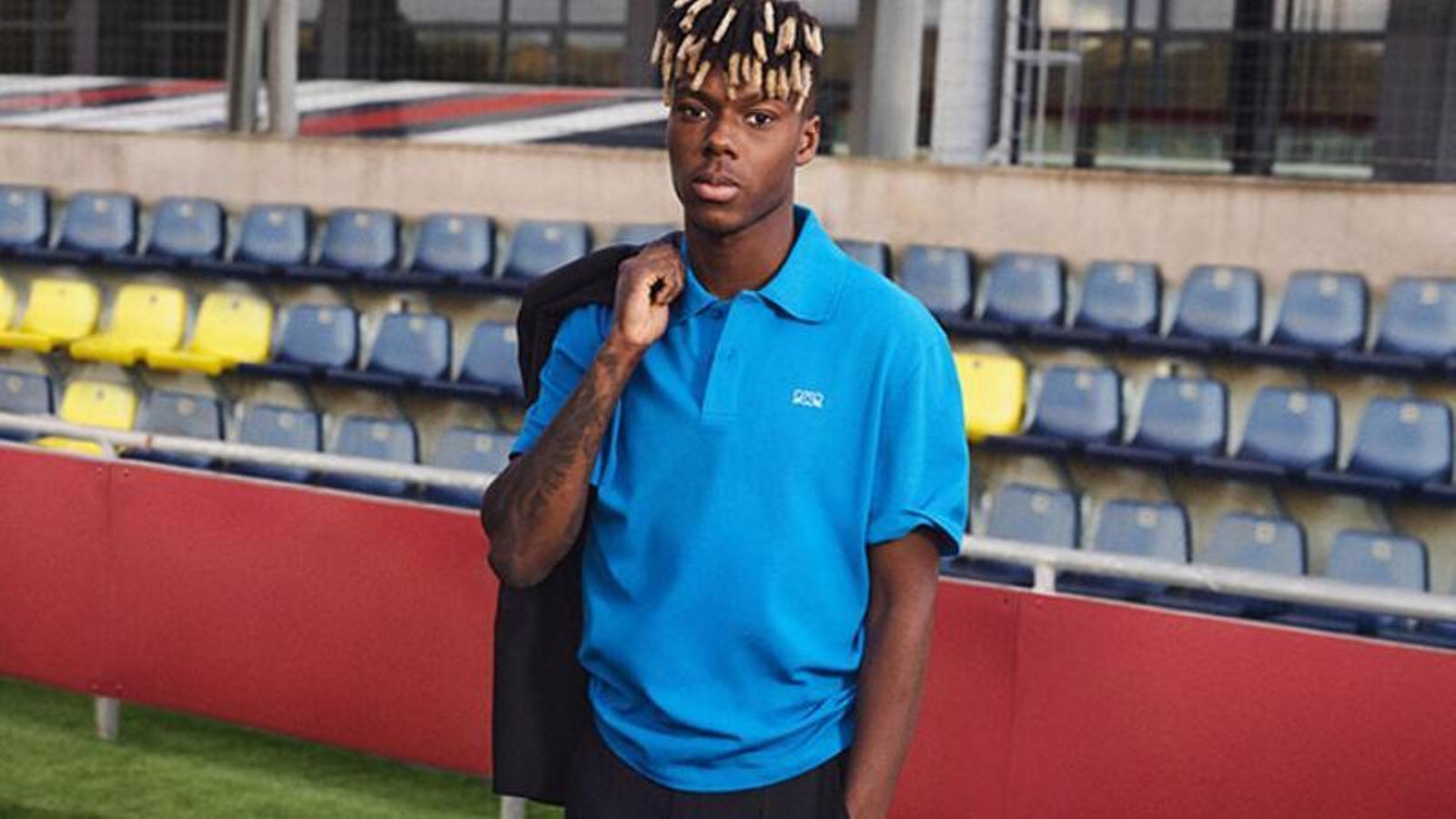
This year, the players of the Spanish national team have, for the first time, swapped their tracksuits to appear impeccably dressed by Loewe. The Democratic Republic of Congo has broken the sobriety of the tailored suit with leopard print details, connecting them both with their national symbols and the culture of SAPE ("Société des Ambianceurs et des Personnes Élégantes"). These styles have ensured them a triumphant return after 52 years without competing in a World Cup. The French, on the other hand, have gone a step further: they have appeared with completely individualized outfits. The most striking feature is that they have shown off some of the most luxurious bags, traditionally associated with women. Among the most notable are Koundé's Louis Vuitton Keepall, Thuram's Chanel Maxi Flap, and Dembélé's Hermès Haut à Courroies, a precursor to the Birkin, one of the most exclusive bags in history. A significant fact if we consider that, today, leather goods are, above clothing, one of the most solid economic pillars of luxury.

This new aesthetic, however, makes a deeper fact visible: the crystallization of a new masculinity, embodied by one of its main proponents, the footballer. What David Beckham aroused suspicion about in the nineties, today is displayed without complexes. It remains to be seen whether this new aesthetic freedom will broaden the margins of masculinity or, simply, generate new forms of aesthetic and classist pressure linked to consumption and image.
