When you're a child, some films leave a mark on you. “Dances with Wolves really marked me. But before that, Greystoke, the Legend of Tarzan had already done so, a 1984 film partly shot in Cameroon, a place where I've spent a lot of time in my life and which is key to my life's project. This idea of someone taken from the wild, the idea of paradise lost... it all moved me. It connected me to my lost childhood paradise, which was the farmhouse in Collserola where I grew up with a peasant grandmother, listening to her stories of a rural world that no longer exists,” he recalls. “If I have sought out isolated societies, it's partly because of all that,” he concludes.
Joan Riera: searching for lost paradise in isolated tribes of Sudan
This anthropologist from Vallès specialized in isolated communities was able to realize his dream of meeting the Nuba people
03/08/2026 - 13:00 h

-
CAT -
CAST
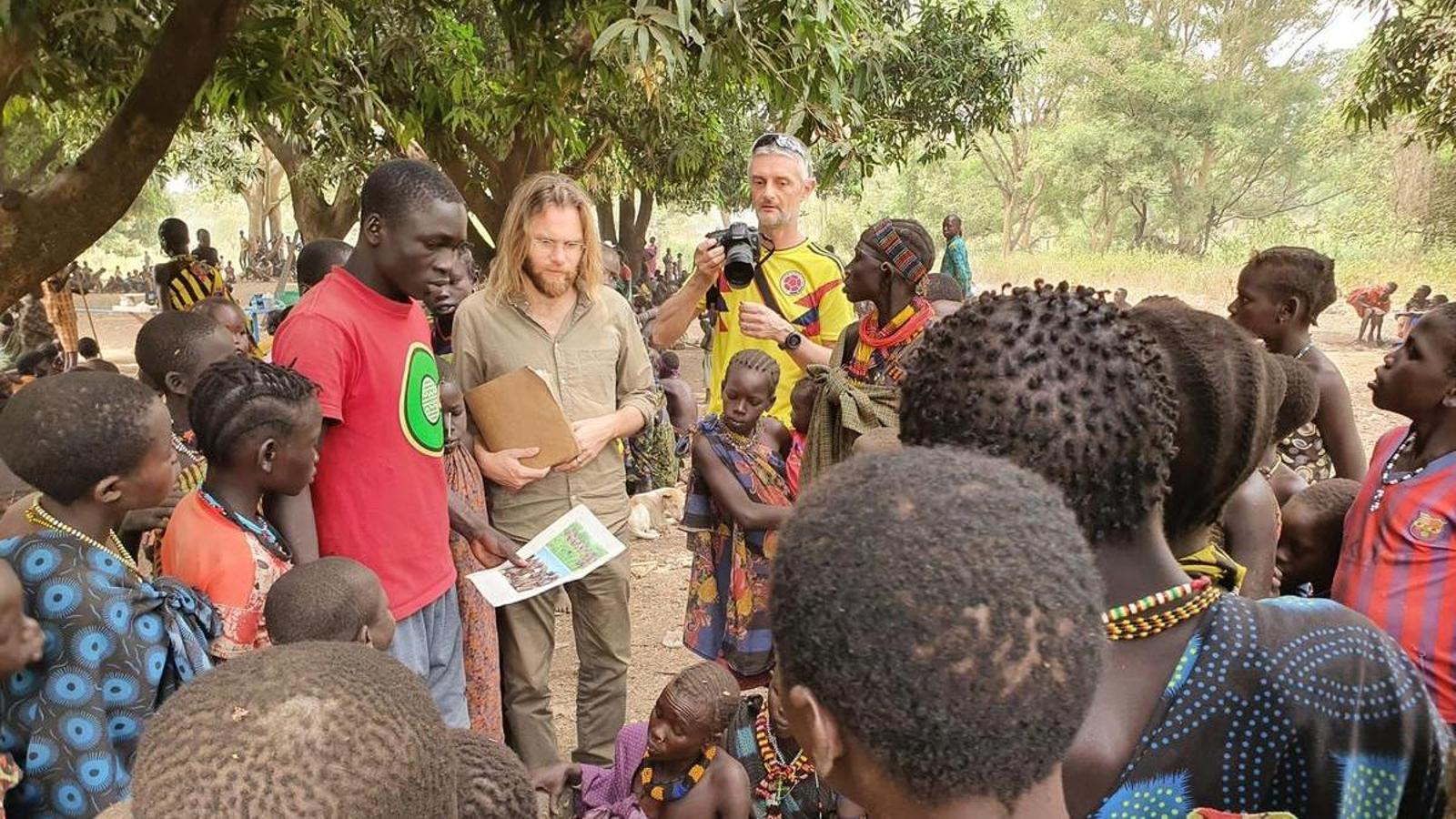
BarcelonaJoan Riera doesn't stand still. The world is very large, as is his curiosity. When he speaks with ARA, he already has a trip to Equatorial Guinea ready to trace the steps of the Spanish colonial era and interact with the local population. Then he leaves for the Democratic Republic of the Congo. This anthropologist from Vallès has specialized in studying and visiting isolated communities. "My father had a great interest in African art and its influence on contemporary art. And this led us to go to Cameroon when I was young. We established a relationship with those countries, to the point that my father would end up buying a house and staying there to live," he explains. It would be logical to think that it was during those periods in Africa that he decided he would be an anthropologist. But listening to himself, Joan has discovered that it is not exactly like that. "I believe that my love for anthropology, for other people and the worlds that end up being born thanks to my grandmother. A farmer's daughter who raised me as a child in a farmhouse in Cerdanyola, in Collserola. She used to tell me stories of a rural Catalonia that I no longer knew. I believe that those nights in her bed listening to what she told me, whether they were tales or lessons on how to know the land, were key." An umbilical cord connects a Catalan farmhouse with the rituals of populations living very isolated in southern Sudan, one of the trips Joan was most eager to take. And which he has finally been able to do and it has moved him.

Joan studied anthropology. He did fieldwork, finding his way to live as he likes. He has published travel guides, taught, and finally, has entered "the world of organizing trips with an ethnographic and coexistence perspective with peoples. And this in parallel with cultural recovery projects. What gives meaning to all this is trying to collaborate with communities that, through contact with other cultures, are losing their own. And trying to document their world and, if possible, promote its recovery," he reasons. Joan now lives near San Sebastián with his Basque partner. And he amusingly explains how on trips to remote places in China, when he meets a Catalan traveler, he is always excited to speak our language. It may seem like an anecdote, but it isn't. "We must defend indigenous languages. It's like inverting the circle, since tourism can often destroy local cultures. We try to do the opposite. Try to use tourism positively for recovery. I don't think tourism is negative. I believe that the phenomenon that most determines cultural changes are economic interventions. The imposition of new agricultural techniques, schooling... missionaries or officials who enter these communities can do more harm than tourism. Tourism arrives, visits, photographs, and leaves. The other stays, remains, and breaks with their way of interpreting reality," he defends. Especially in Africa, in recent years he has also come to know Amazonian peoples or tribes in Indonesia.
Being able to know the Nuba
When I was 10 years old, Joan made his first trips to Africa with his father. “Initially it seemed hostile to me. The heat, the mosquitoes... it wasn't easy at first,” he admits. He was a blond boy in a new environment. But the fascination for other cultures prevailed. “When I was 13, my father gave me a book about the Nuba, people who inhabit South Sudan. Those images stayed with me forever. They are the peoples documented by the German Leni Riefenstahl, the well-known photographer who had made documentaries during Hitler's time. Her images of great fighters, strong, imposing, became famous. Seeing those people who went naked with fantastic architecture was incredible. I needed to go there,” he admits.
And he succeeded. The opportunity to go there came thanks to a retired Australian woman who sold a farm to fulfill the trips she had always dreamed of taking at 82 years old. Joan would be her guide. “You have to enter through South Sudan, a state emerging from decades of war. And cross the border with Sudan, where they have had civil war since 2024. We didn't know if we could enter, but it was possible. The Nuba live in the province of South Kordofan, near the border. It's an area of great diversity. Within a few kilometers, you have many different ethnic groups. In fact, the Nuba as such, do not exist. Nuba means black in the local Arabic dialect. The term defines more than 50 different ethnic groups living in a region that must be like Vallès Occidental and Oriental. Some maintain their pre-Christian or pre-Islamic religions, as they hid in those remote mountains centuries ago, remaining quite isolated for centuries,” he explains emotionally. “There is still part of their traditional architecture, with houses that have sex, be it female breasts or male members. Fortunately, the army of Sudan has not entered the area for years, which has allowed it to be a magical place. It is one of the last places in the world where things go at their own pace due to isolation, although logically, it has changed a lot. Western clothes are worn, war refugees from other areas have arrived, and they have contact with the Nuba diaspora in Canada or Australia,” he adds. But there, in Kordofan, talking with the local population, Joan became that child again who listened to his grandmother's stories. In fact, he is already thinking about when he can return.
'Greystoke', a film that marked a generation

