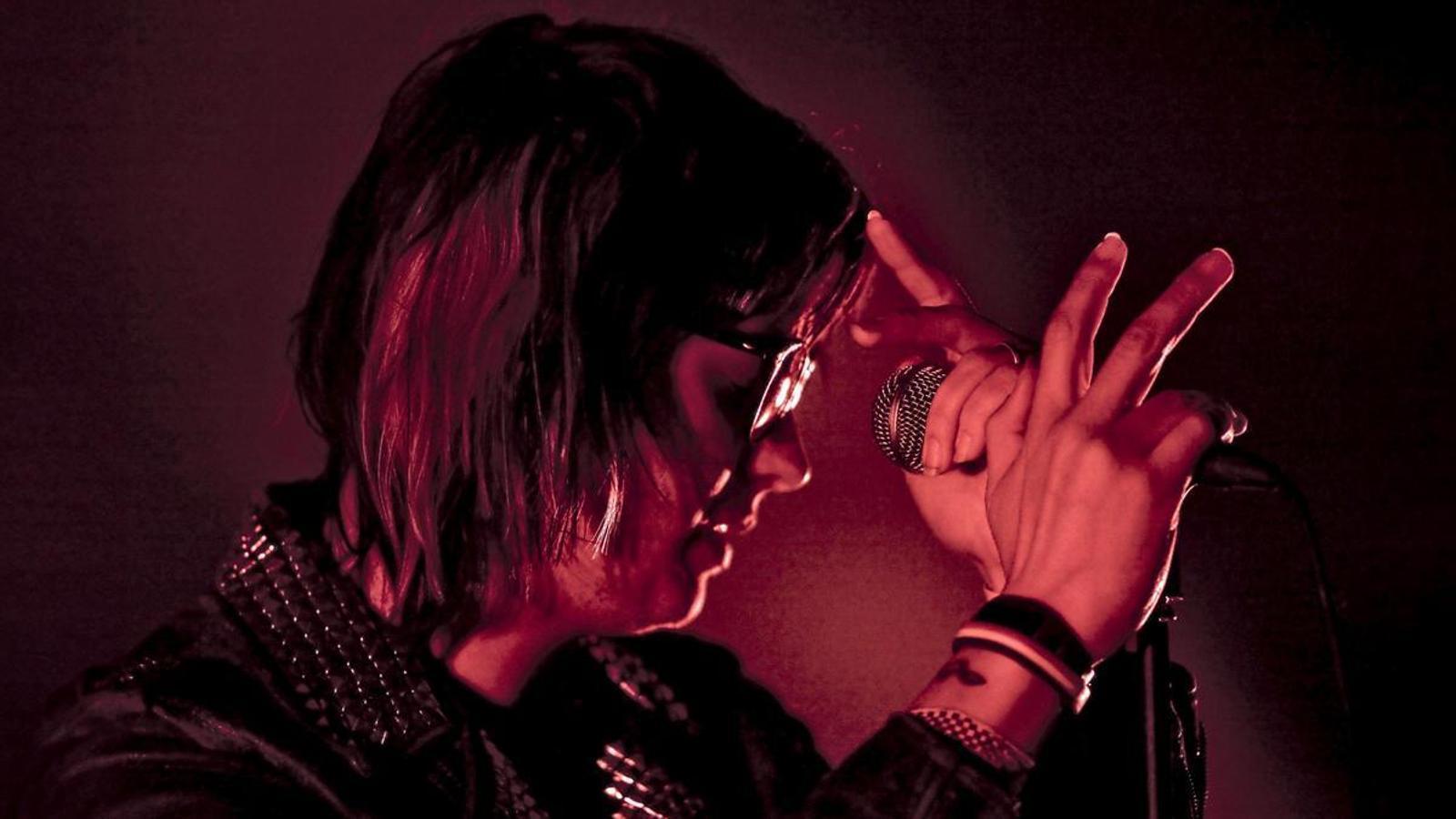
We analyze the work of the New York quintet, which revolutionized the rock circuit at the beginning of the century, and which returns to Barcelona to present its umpteenth reinvention: ‘Reality Awaits’
7 min
The singer of the North American rock band The Strokes, Julian Casablancas, at the Music Openair Festival in St. Gallen (Switzerland)ENNIO LEANZA/ EFE
BarcelonaOn November 13, 2003, Rolling Stone magazine published its issue 935. On the cover, The Strokes, who were releasing their second album, Room on fire. Music journalist Neil Strauss was in charge of the main interview with Julian Casablancas, the visible, and handsome, face of the New York band. It had only been a year and a half since the group had exploded. They were the advanced heirs of the local scene of the seventies, concentrated in the legendary concert venue CBGB, in the East Village, and of bands like Television. The Strokes were the best reality of the new wave: they had released a majestic album, Is this it, and were the center of all eyes. Everything was going well. Or so it seemed, because Strauss, who years later published the complete interview with the singer in the book Everyone You Hate Is Going to You (Contra, 2012), found himself in front of someone decadent, exhausted, erratic, and visibly affected by alcohol consumption. The journalist described the meeting as "The worst interview of all time".
Things were not going as well as they might have seemed: it was not known that the Strokes were a band in decomposition, a point they have dangerously approached several times over the last quarter of a century. But they recovered, they have always recovered, and with the perspective of time it has been shown that possibly one of their greatest virtues has been, precisely, that of surviving, continuing, and persisting. Even in the worst moments.
The New York band The Strokes, one of those with the greatest international impact, in a 2006 image.EFE
However, there must be something more, because in October 2026, almost a quarter of a century later, they are still standing, headlining major festivals and with a trajectory that, although it has not been immaculate, has consolidated them as one of the greatest rock bands of all time. In this case, as happens with so many groups of their size, the songs speak for themselves. And not only that: their almost innate ability to know which trends to embrace and where the band had to go every time they entered the studio has also been key. Getting it right, also failing, but always aiming with precision. That is why, today, they still connect so well with young people and make this question pertinent: are The Strokes the most intergenerational rock band, and perhaps the greatest, of the 21st century? Let's talk about it.
A dazzling start
On July 30, 2001, the world discovered The Strokes, formed by Julian Casablancas, Nikolai Fraiture, Albert Hammond, Jr., Fabrizio Moretti, and Nick Valensi. It is the release date of their debut album, a record that immediately rose as the great salvation of rock. It was not a genuine mission: it seems that rock has to be saved from time to time. The fact is that the specialized press latched onto this record as the great hope for good taste against such uninspiring trends as nu-metal, which dominated the charts at the time. Is this it is a record that passes by in a flash, a thirty-minute blast of melodies as catchy as a tick. An elegant, yet gritty, energetic, and at the same time, languid record. But above all, it is an unquestionable catalog of songs: Someday, Hard to explain, New York City Cops and, above all, Last Nite, a memorable and generational anthem, one of those songs that survive everything and everyone. All in all, it was a mixture of Velvet Underground, Television, Blondie, the Ramones... all the essence of New York was on that record.
The press elevated them to superstar status in the blink of an eye. Before the United States, they triumphed in England: the NME rated Is this it with a resounding 10 out of 10, defining it as "one of the best rock calls to arms ever." In The Guardian they hit the nail on the head even further with the prediction: "They look like rock stars, they talk like rock stars and they act like rock stars.” And yes, that is exactly what they were: planetary-scale rock stars. Their aesthetic helped: young people between 20 and 23 years old redefining the rock fashion of the moment and recovering the spirit of the downtown of Manhattan's glorious years.
But before we go on: where did these guys come from? To put it bluntly, they were literally five posh kids from New York with airs. This thing about being strays and losers, like in the seventies, was a thing of the past. They all came from good families, from high-society backgrounds, children of people with mountains of cash: heirs to art dealers, businessmen, or even a songwriter of super-hits for people like Whitney Houston or Julio Iglesias.
After spending eighteen months on a world tour, passing through North America, Europe, Japan and Australia, and performing more than 150 concerts, they were completely burned out: “We were shattered. When the tour finally ended we didn't even want to see each other,” explained Hammond Jr.. But, alas, the wheels of the industry stop for no one: at a time when rock was playing on the radio again, with them and other illustrious names like The White Stripes, The Hives or The Libertines, it was necessary to take advantage of the momentum. The record label, RCA, forced the machine, and from there to the release, only two years later, of their second LP, rushed and with all the pressure in the world.
The Strokes backstage at the Tower Theater in Philadelphia, October 10, 2003. From left to right: Albert Hammond Jr., Fabrizio Moretti, Nick Valensi, Julian Casablancas and Nikolai Fraiture.TONY CENICOLA / New York Times / Europa Press
But, surprise, Room on Fire continued to sound fresh, modern and incontestable: they had avoided the typical second-album slump after a successful debut and had added new instant classics, such as 12:51, What ever happened or, of course, Reptilia. It was with this song that Joan Delgado, drummer for Cala Vento, discovered them when he was only thirteen years old. “At that time, these types of bands didn't reach a boy from Torroella de Montgrí, but suddenly they popped up for me on YouTube and a new world opened up,” he explains. Since then, he has followed them religiously.
The initial magic trident was completed by First Impressions of Earth, in 2006, a work that perhaps dropped a couple of rungs in level from the first two, but still showed a band in shape and capable of manufacturing indisputable hits. With one, You Only Live Once, they went viral before that concept even existed, and they reached a generation that hadn't yet discovered them and that took the message and the acronym of that song (YOLO) as a mantra of pop existentialism.
But the goose that laid the golden eggs said enough. This is it. They were one of the three or four biggest bands in the world, but they couldn't be squeezed with that intensity. The atmosphere was unsustainable, with a backpack accumulating weight since 2001. Furthermore, one must add the tensions over creative control and substance abuse, all of which were triggers that led them to take an indefinite break. They had lived too fast, too much on the edge. After six years, the magic had ended, at least for the moment. Then their side projects began, some that have left continuity and good records, such as The Voidz, the chaotic, dystopic and messy project of Julian Casablancas or the pop albums of Albert Hammond Jr., always good and solvent.
Death and resurrection
Let's fast forward to May 29, 2015. The years, and the hard life, have taken their toll on Julian Casablancas. He keeps his charisma intact, but the time he has spent as a pop star, with everything that entails, added to his behavioral problems, weighs heavy. He is performing with The Voidz, on the esplanade of the Forum of Cultures in Barcelona. It is dusk and a completely wild version of Vision of Division, from the Strokes' second album, is playing. It even seems like Casablancas is struggling to stay on his feet. From the audience, someone is recording with their mobile phone and captures the completely stunned face of his bandmate, Albert Hammond Jr., in the face of the dantesque spectacle.
It might look like the image of a band in destruction. But no. After a six-year hiatus, the New Yorkers returned to make a couple of albums together. The second phase of the band featured Angles and Comedown Machine, two scattered, messy, and to a certain extent exotic albums. With some moments of brilliance (Under Cover Of Darkness, Machu Picchu, All The Time) but irregular and, in general, unsuccessful.
The Strokes on the main stage during Tempelhof Sounds 2022 at the former Tempelhof Airport site in Berlin.Daniel Lakomski / Imago / Europa Press
And at this point, the big question is: why do they remain important beyond nostalgia? Because of their inseparable commitment to giving their sound another twist every time. The Strokes could have made the same record their whole lives, but they preferred their artistic ambition to outweigh the monetary one. And even so, they have not only maintained their popularity, being headliners at Coachella or Primavera Sound, two of the most prestigious festivals in the world, but they have connected like no other band of their generation – for example, the Arctic Monkeys – with the young audience.
Throughout 25 years they have been erratic at times, but they have always kept three very important factors high in the world of pop: the aura, so fashionable these days, the restless will for constant change and the innate ability to make infectious melodies. And the best example was The New Abnormal, the 2020 record after another long hiatus. They had the pretension to continue making mass music, without refusing to evolve with the techniques of the moment and knowing how to look at the context with perspective. "Managing to make their best record after so many years is not within reach of practically anyone, and it has happened to The Strokes," explains Joan Delgado, from Cala Vento. For him, The New Abnormal "even surpassed their first records", and what is certain is that it managed to please a whole new generation: "Young people no longer care about Reptilia or Last Nite, but they do care about The Adults Are Talking. They have managed to reconnect," assures the drummer regarding one of the hits on the record. No one from their cohort can say that: not Arctic Monkeys, not Muse, not The Killers... no other big mass band of this style has managed to maintain a connection with the new generations as they have, moving away from what had worked for them and embracing new recording techniques in the genre, from the synthesizer to autotune.
The Strokes concert at Primavera Sound, in 2022.PERE VIRGILI
Now they return to Barcelona to present Reality Awaits, an album that just came out this summer and that pushes the commitment to sounding different to the extreme. For the moment, it has not been particularly well-received, but with these people you never know: most of their albums have not made an impact at first and have ended up being classics.
Catalan connection
In the same venue as Nirvana, Oasis, or Radiohead. The Strokes made their debut in Barcelona performing, with their first album, at Sala Razzmatazz. It had been little more than half a year since they had released Is this it and, with practically no internet, in a world where everything moved much slower than today, their popularity in Catalonia was just beginning to bloom.
At that time, knowing The Strokes was synonymous with being well-informed and connected to what was brewing in the international independent music scene. It was through a friend from Madrid that Marc Andreu, a historic musician of Barcelona's indie scene, discovered the band and did not hesitate to go see them on their first visit to the city, on March 15, 2002. “It was very exciting because you could feel that we were at the beginning of something, that something very big was about to happen there. Grunge was over, Brit-pop was dying, and people were starting to get a bit bored with it,” he recalls. That first visit was short, fast, and intense: 14 songs without encores. “They played the first album in its entirety, which is perfect, but just as fascinating—remembers Andreu—was their look, it was incredible: the Converse, the skinny jeans, the hairstyles. Everything was very cool”.
As usually happens with big pop bands, it was the last visit by The Strokes outside of an arena or large festival in Barcelona. The New Yorkers have returned three more times to Barcelona and this October they will debut at the Palau Sant Jordi.
But beyond their visits, whether with The Strokes or their other projects, there is a quite unexpected connection between Julian Casablancas, the band's singer, and Catalonia, more specifically with Sabadell. Julian is the great-grandson of Ferran Casablancas, the historic and beloved textile entrepreneur from the Vallès region. In fact, during his visits to Catalonia, Julian has made a point of feeling at home, and has shouted Long live Sabadell during his concerts. The grandparents of The Strokes' singer left the country just before the Civil War and settled in New York. There they had a son: John, Julian Casablancas' father, who was known for having founded the Elite modeling agency and, consequently, the supermodel concept of the 90s.