The investigation that exposes Robert Capa
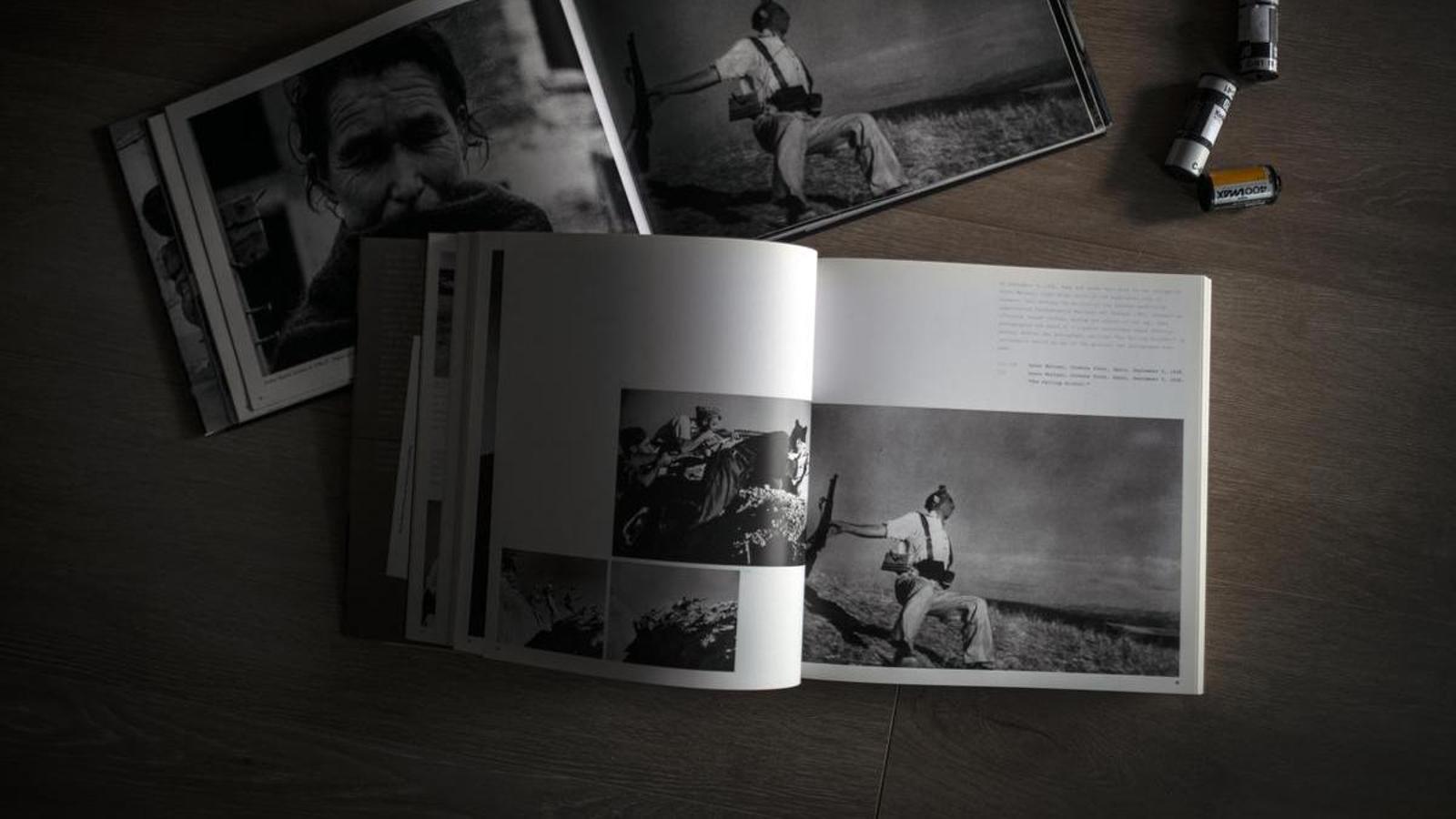

For ninety years, the photograph Death of a Loyalist Militiaman has been attributed to Robert Capa. The image of a republican combatant at the moment of being struck down consecrated the Hungarian photographer. The precise instant it portrays, with the militiaman losing his balance but not yet having touched the ground, gives it a drama that condenses the cruelty of war. The rifle seems to slip from his hand and the barren landscape further accentuates the tragedy of the soldiers. An atrocious and lonely death. It is impossible to identify his face, and the slight lack of sharpness of the image allows one to intuit the urgency of a photographer who triggers the shutter at the same moment they are startled by the horror of the scene.
Now a new investigation by archaeologist and historian Fernando Penco consolidates the suspicions he already formulated in 2014: behind the camera, there may not have been André Friedmann, the real name of Robert Capa, but Gerda Taro, his partner and associate. Both photographers agreed to work under the same brand. Friedmann and Gerta Pohorylle, who would later adopt the name Gerda Taro, invented the figure of Robert Capa as if he were an American photographer to more easily sell their material to newspapers and magazines. Since the photos taken by both circulated with the "Capa" stamp, it was impossible to identify who was pressing the shutter. After Taro's death in July 1937, Friedmann appropriated the brand and spent his entire subsequent career identifying himself as Robert Capa. The novelty of this investigation is based on the analysis of the cameras. It has been determined that between August 1936 and February 1937, Taro worked with a medium-format Reflex Korelle acquired with her first salary at the Alliance Photo agency. It produced 6x6 centimeter negatives. Friedmann, on the other hand, used a 35-millimeter Leica, with rectangular negatives. Taro would not begin to work with Leica cameras until February 1937.
Death of a Loyalist Militiaman was taken in September 1936. The original negative is not preserved, but the first enlargements have allowed it to be deduced that the photograph came from a square negative. This characteristic rules out Friedmann's Leica and points towards Taro's Reflex Korelle. Fernando Penco argues this based on two clues. Taro appears photographed with that camera in Villa del Río a few hours before the couple moved towards Espejo, where the image would have been captured. Furthermore, within the series of about forty photographs from that day, the square images are attributed to Taro and the rectangular ones to Friedmann. The evidence does not allow us to categorically state that it was she who fired the camera. Friedmann (or Robert Capa) always explicitly assumed authorship of Death of a Loyalist Militiaman and we cannot rule out that he used his companion's camera momentarily, although this cannot be proven either. But if the photograph was taken with the device that Gerda Taro was wearing around her neck that day and the rest of the images in the same series are hers, continuing to attribute the photo to Robert Capa might be too bold.
