Saving the orangutan: the photograph that provokes immediate empathy
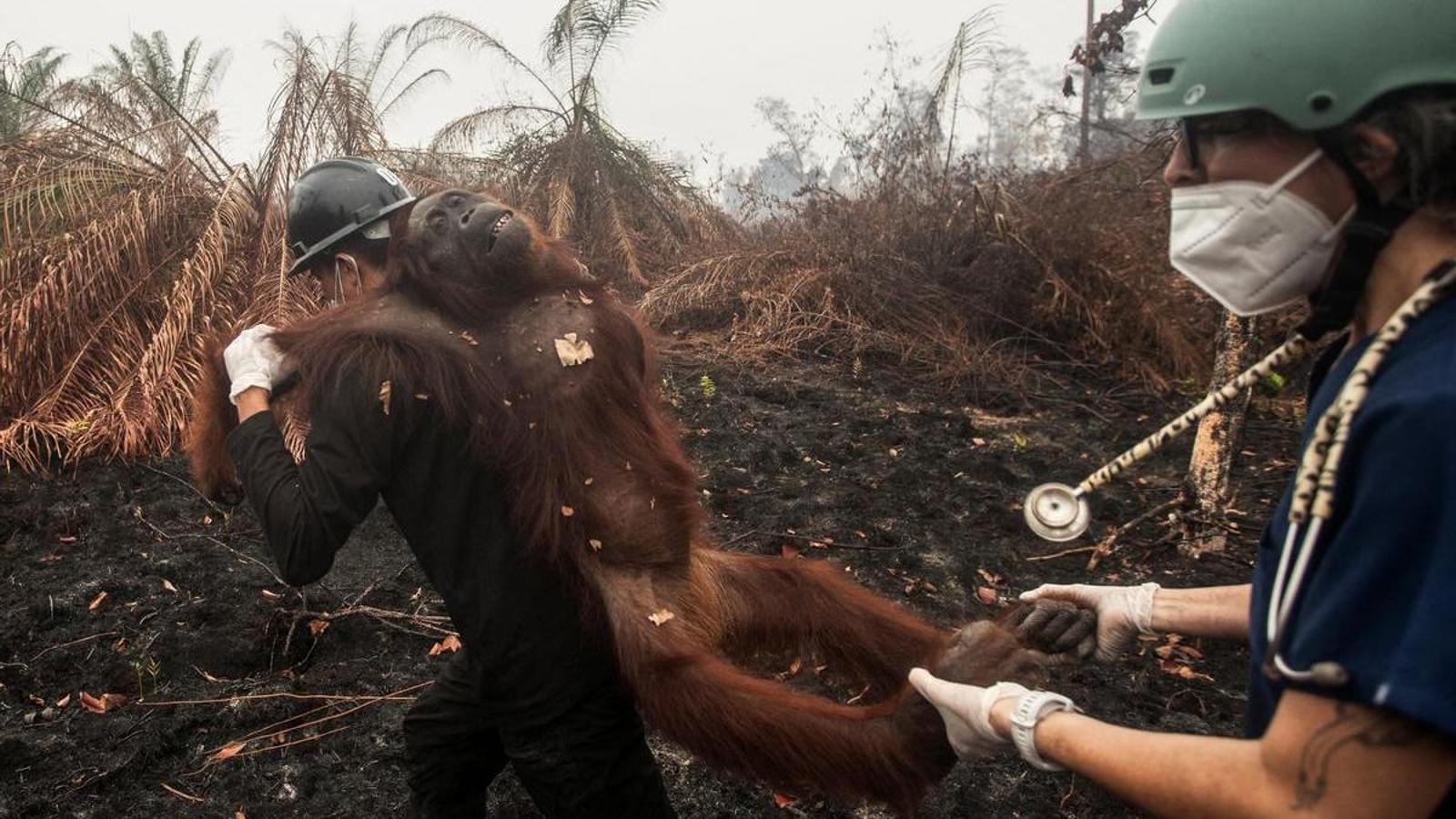

If it were a man instead of an orangutan, the image could look like the Normandy landing. It has the drama of a war scene. But the Reuters photograph, by Victor Fidelis Sentosa, is from Borneo, in Indonesia. A member of the rescue team and veterinarian Karmele Llano, head of the YIARI foundation, transport an adult female during a rescue operation in an oil palm plantation, in the village of Laman Satong, in the Ketapang region. The rehabilitation center has been taking in dozens of orangutans for months as severe forest fires ravage their natural habitat. The fires, which began in July and are expected to last until November, mainly affect the islands of Borneo and Sumatra, and are the worst the country has suffered in a decade. In 2015, fires in Indonesia already caused a major environmental and health crisis, with pollution that spread to other countries in Southeast Asia.
The El Niño phenomenon may greatly aggravate the situation this time, but the cause of the magnitude of the fires is the human transformations that have affected the territory. Indonesia has some of the most important tropical rainforests on the planet, but the expansion of industrial agriculture –especially oil palm plantations– has led to the extensive burning of vegetation to prepare agricultural land. These soils end up accumulating large amounts of organic matter and carbon, and when they dry out they can burn for weeks, even underground.
In Borneo and Sumatra, orangutans live in the wild and are in danger of extinction. They are animals that spend much of their lives in trees: they feed there, use them to move around, and build their nests in them to sleep. Deforestation forces them to migrate to agricultural plantations, where their survival is more difficult.
The photograph has an almost pictorial quality. The orangutan looks like a human victim. The animal's posture—with its head tilted back—, the expression of suffering, and the abandoned body remind us of the iconography of the Pietà of the Renaissance and the Baroque. One body supporting another in the throes of agony. The orangutan's face is the only thing we can see clearly.
The image provokes immediate empathy. When the gestures are so human, we are automatically moved by animal suffering. One only needs to look at the way the orangutan clings with its feet to the veterinarian's hands, who holds it with great care. It is how two people would hold hands. It seems to be the link that demonstrates the closeness between species.
From a more global perspective, the image can be disconcerting: on one hand, the human species is the one that causes the suffering and contributes to destroying the living conditions of these animals; and, on the other, it is people who must organize themselves to help save them. In between, the system of enormous dimensions as a structural cause of the disaster, which does not fit into the photograph.
