Some elephants return to the Pinnawala elephant orphanage after bathing, in Sri Lanka.
400 elephants dead per year: the silent war in Sri Lanka
Without space or resources in the forest, thousands of wild specimens that inhabit outside protected reserves break daily into villages and crops in desperate search of food
29/11/2026 - 16:08 h

-
CAT -
CAST
BarcelonaIn Sri Lanka, the millenary coexistence between the population and elephants has transformed into a daily battle for land. In just one century, massive deforestation for agricultural expansion has reduced the island's forest cover from 70% to just over 34%. Without space or resources in the forest, nearly 7,000 wild specimens that live outside of protected reserves break into villages and crops daily in a desperate search for food. The result is a shared tragedy: since 2019, an average of 138 people and 402 elephants die every year in direct clashes, train accidents, or electrocutions. In communities like Galgamuwa, daily life has been completely restructured –from the modification of school schedules to the suppression of nightlife– to avoid the animals' peak activity times. This photo essay is a documentary testimony of this collision: a visual portrait of the fault line where human pressure on global ecosystems irreversibly alters the balance between species and evidences the profound changes that the planet is undergoing in this century.

1 de 13
The orphanage

2 de 13
A sick elephant
Neighbors, members of the Sri Lanka army, police officers and wildlife officials use an excavator to turn a sick wild elephant during its treatment in Ambanpola, Sri Lanka.

3 de 13
Transit
Tourist police officers stop vehicles on the road while some elephants cross near the Pinnawala Elephant Orphanage, to avoid incidents between the elephants and the humans.
4 de 13
In defense of the elephant
A child writes on a banner during a protest against the killing of elephants in Sri Lanka, in Colombo, on April 2, 2025. Since 2019, an average of 138 people have died each year in Sri Lanka in encounters with these animals; this is the second highest death toll in the world.
5 de 13
Protect the species
Inhabitants of the area and wildlife agents feed a sick elephant in Ambanpola.
6 de 13
A lethal conflict
Electric fences illuminated at night protect agricultural land from wild elephants in Galgamuwa, Sri Lanka. Galgamuwa is on the front line of one of the deadliest human-elephant conflicts in the world.
7 de 13
The tourists
A tourist leaves after taking a photograph with a wild elephant on a road in Habarana, Sri Lanka.
8 de 13
Ambapola
A wild elephant crosses a railway track near Ambanpola.
9 de 13
The human presence
Wild elephants cross electric fences to enter villages near Ambanpola.
10 de 13
A symbol
Domesticated and decorated elephants participate in a Buddhist cultural procession in Kandy, Sri Lanka, on August 4, 2025.
11 de 13
Animal exploitation
Mokshan, a 21-year-old elephant caretaker, prepares his domesticated elephant, Chuti Manike, 20 years old –used for tourism–, for a bath in Sigiriya, Sri Lanka.
12 de 13
Manike Mage Hithe
Mokshan, a 21-year-old elephant keeper, bathes his domesticated elephant, Chuti Manike, 20 years old –used for tourism–, near Sigiriya, Sri Lanka.
13 de 13
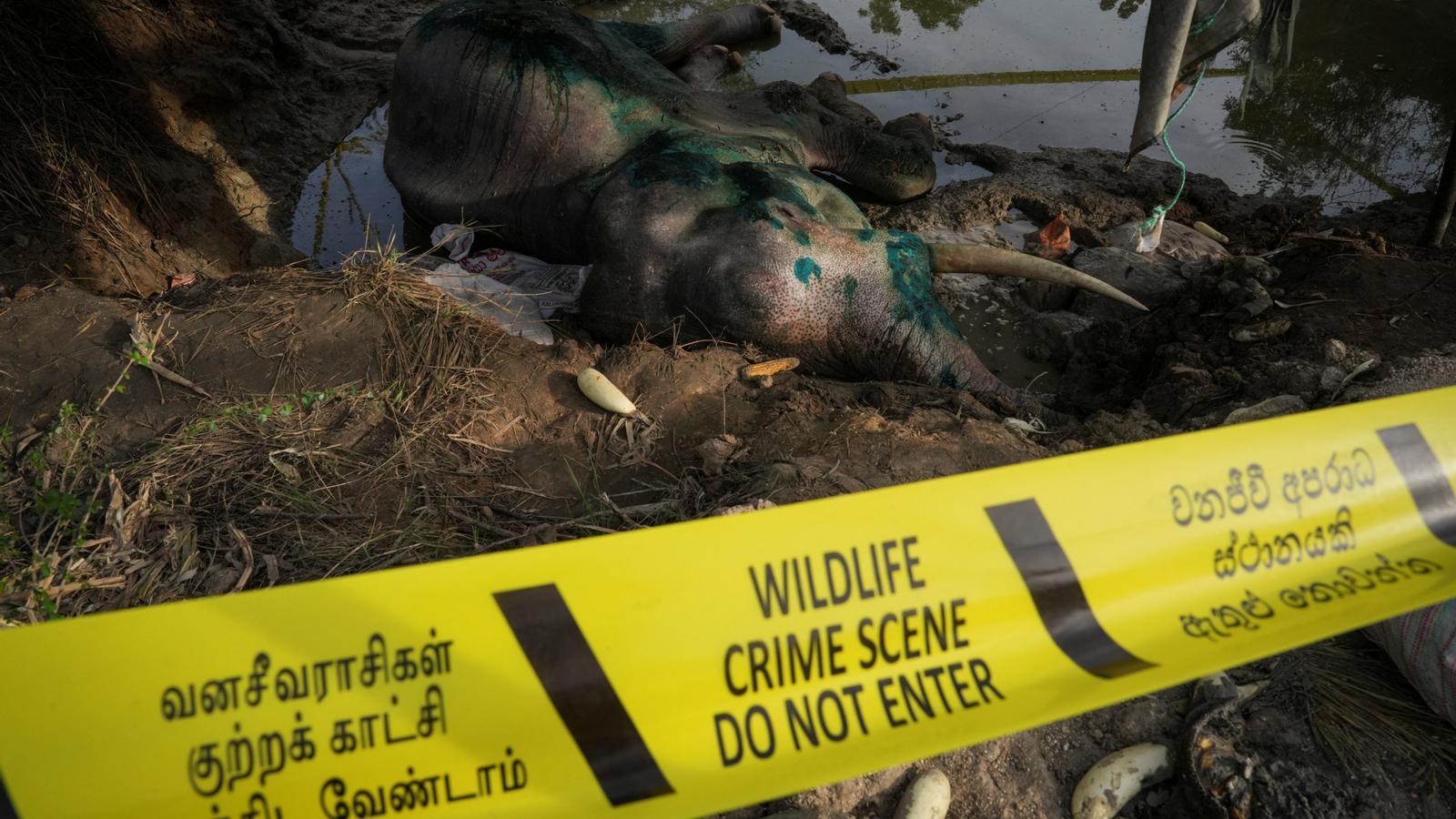
The crime scene
The corpse of a wild elephant cordoned off with police tape in Ambanpola, Sri Lanka.
