The regime of Iran hardens the repression against women
Two women from Tehran explain to the ARA how they resist after the massacre of January and the attack of the United States and Israel

-
CAT -
CAST
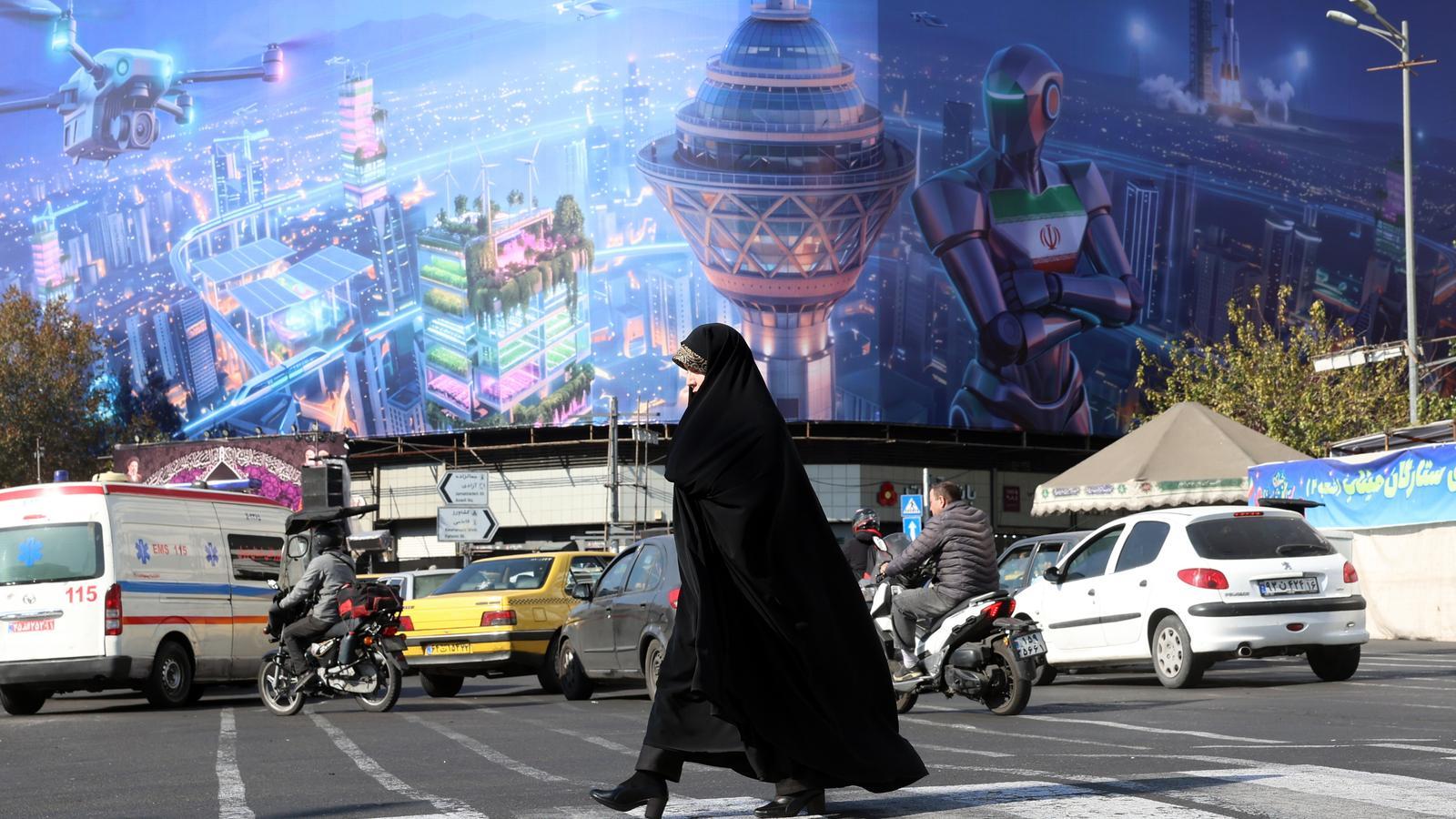
BarcelonaParastoo Ahmadi received 74 lashes on Monday for singing at a concert without wearing a veil. Taraneh Rahimi, 21, was sentenced to death on Thursday for participating in the January protests. These are just two examples of how the Islamic Republic of Iran has hardened its repression against women. Four years after the Woman, Life, Freedom movement revolt, 2026 began with huge demonstrations against the high cost of living and ends with the ayatollahs' regime having survived a joint attack by the United States and Israel. Two women from Tehran interviewed by phone by ARA interpret this repressive escalation as a sign of the regime's fear of a new social outburst. And they highlight how, despite everything, many Iranian women continue to carry out acts of daily disobedience, such as going out into the street without a veil. “For these everyday decisions, we have shed our own blood and now we are not willing to turn back,” explains Mina, an employee at an import company, who asks to be protected from the repression with a pseudonym.
In reality, the struggle of Iranian women goes far beyond the veil. Added to state repression are sexist violence in the family sphere, economic dependence, and legislation that discriminates against them in matters as fundamental as divorce, inheritance, or access to work. In the last year, Iranian human rights organizations have documented more than a hundred femicides and official data record more than 143 daily medical examinations of women physically assaulted by their spouses during the first quarter. Rojan, a single mother from Tehran who also speaks with ARA under a pseudonym, describes a daily life marked by scarcity, insecurity, and anxiety for the future of the younger generation. “Today, in our own country, we have to fight for the right to live and to have a dignified life.”
This Monday, Parastoo Ahmadi received 74 lashes in the city of Qom for performing a concert without a veil and in a sleeveless dress in December 2024, which she broadcast live on the internet. Three musicians and a producer received the same punishment, according to one of their lawyers. Convicted of attacking public decency, they are also prohibited from carrying out audiovisual activities and leaving the country for two years.
The family of twin sisters Taraneh and Romina Rahimi, arrested at the end of January, reported this week that the former has been sentenced to death and the latter to 25 years in prison. When their mother was finally able to visit them, after more than three months of not knowing where they were, their faces were so swollen and bruised that she could only recognize them by their voices. Taraneh ended up signing a confession after interrogators threatened to rape her sister in front of her. Both deny the charges.
But Mina does not give up: “News such as the lashes inflicted on Parastoo Ahmadi and the torture suffered by the Rahimi sisters not only do not dissuade us from continuing to fight, but make our determination to resist even firmer”.
Everyday disobedience
The woman insists that, despite everything, they have managed to open up small spaces of freedom. “Before, wearing sunglasses on your head, painting your nails, or wearing jeans could lead to reprisals. Today, Iranian girls go out into the street in long skirts, crop tops, t-shirts, and trousers”.
Before the joint United States attack on February 28th, which killed Supreme Leader Ali Khamenei and much of the political and security leadership, Iranian women who refused to wear the veil were already looking for ways to dodge restrictions to access their own money when their access to their bank accounts was blocked. “We were already thinking about using the accounts of trusted people for our daily transactions,” she recalls. But with the war, according to her testimony, the threats broadcast by official media were mitigated. In her view, the authorities feared provoking a new wave of protests in the middle of the war.
Since the death in police custody of the young Kurdish woman Jina Mahsa Amini sparked the uprising in September 2022, many Iranian women have stopped covering their hair in public. But the mandatory nature of the veil has not been repealed. “The regime's retreat on the issue of the veil is, above all, the result of years of resistance and civil disobedience by women, a resistance that not even the war has managed to stop,” claims Mina.
The shadow of the gallows
Amnesty International reports an unprecedented escalation in politically motivated death sentences against women in decades. Among those condemned are Mahboubeh Shabani, a civil engineer accused of espionage for having transported injured protesters during the January protests, according to human rights organizations, and Najmeh Amini, sentenced for blasphemy due to a social media post.
The repression of the January protests, triggered by the economic crisis, left more than 7,000 dead identified by HRANA, which warns that the total figure is much higher. The Iranian government places the toll at 3,117 deaths. At least 39 people have already been executed in connection with the demonstrations.
“We are still mourning. The loss of our loved ones remains an open wound, and the crimes committed in January have multiplied our anger and our determination,” says Rojan. But she does not interpret the repressive escalation as a sign of the regime's strength. “Having the capacity to repress does not mean having real power or counting on the support of the population,” she points out
Violence beyond the veil
“The problem of women in Iran is not limited to the veil. It is a set of laws and structures that do not recognize the rights, autonomy, or human dignity of women,” denounces Mina. She lists the inequalities in the right to divorce, in inheritance—in certain circumstances a daughter receives half that of a son—and in the diminished value of women's testimony in court. Married women need their husband's authorization to obtain a passport and it is prohibited for women to ride motorcycles. Child marriages are also common, and in some regions, female genital mutilation persists. Iranian legislation does not explicitly criminalize marital rape, and the bill to protect women from gender-based violence remains pending final approval after more than fifteen years of processing.
