Serbia and the democratic victory of the protest
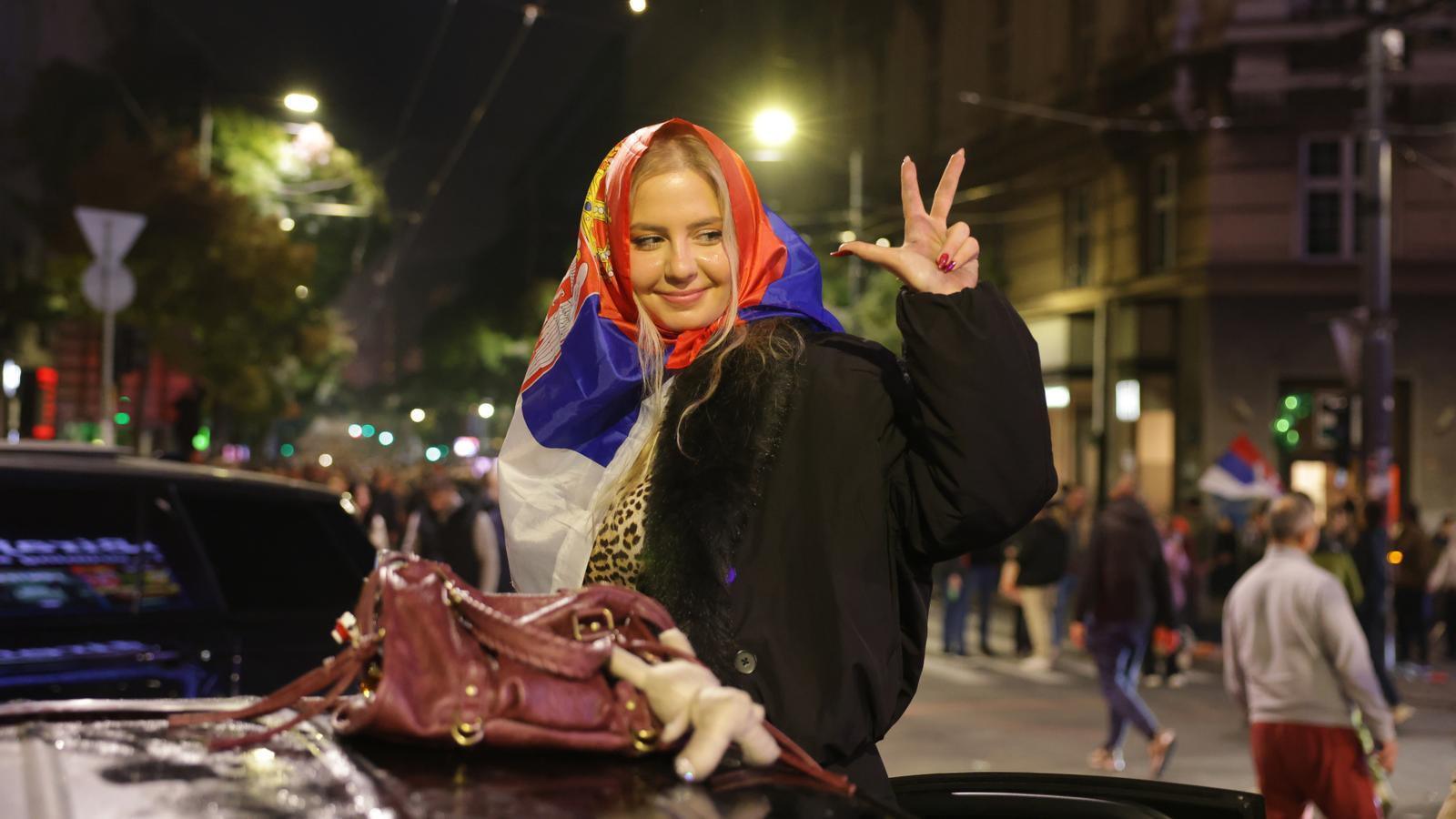

Serbia is today a democratic experiment that generates hope in the midst of a wave of autocratization and social unrest shaking half of Europe. After two years of uninterrupted mobilizations and unprecedented electoral participation, the list of Serbian students has managed to put an end to the Vucic era and its authoritarian model. It is the other side of this winter of discontent that is already igniting protest in France, Italy, Albania, Spain, Portugal, or Greece. A cross-cutting victory over a corrupt system, reinforced by its communicative megaphones and international supports that have propped it up until the end. The state capture, with Aleksandar Vucic's Serbian Progressive Party as the main facilitator, has been fueled by repression and the geopolitical competition between the European Union, China, and Russia to gain local influence.
The student movement has managed to prevail, precisely, with the promise of recovering democratic legitimacy, and it has done so under deeply unequal conditions: with the media and the tabloid press aligned with the ruling party and the abdication of regulatory bodies that could have acted as a counterweight; with the government using public funds and contracts as a mechanism of pressure on voters; and with the digital and physical persecution of dissent. Activists, students, and opposition politicians had denounced an increasingly authoritarian landscape, where critics were habitually threatened, freedom of the press was weakened, and corruption had gone, more and more, on the rise.
The digital rights defense organization Share Foundation denounced, last September, surveillance operations, with spyware, against members of the student movement and other prominent adversaries of Vucic. There have also been smear campaigns and threats against journalists and media outlets.
Share, which has also analyzed the digital front of these elections, confirmed the deep fracture of the communicative bubbles that polarize the Balkan country. According to a study by this foundation, on the X platform, the flow of content for a young student who supported the current government only coincided by 1% with that of a student committed to the student movement. In contrast, the coincidence between the content reaching a student who supported the government and a person over 65 years old, who was also a follower of Vucic, reached 26%, despite the great differences in their demographic profiles.
The analysis of the content, moreover, highlighted the strong political polarization of the information space, with two opposing narrative frameworks: on one hand, the student protests were presented as a legitimate civic resistance, while the authorities and institutions were described as repressive or corrupt; on the other, the authorities were shown as guarantors of stability and national interests, while the actors who protested or opposed the government were delegitimized, labeled as destabilizers, extremists, or linked to foreign interests.
In the 2026 World Press Freedom Index, produced by Reporters Without Borders, Serbia occupies the 104th place out of the 180 countries analyzed—the lowest position ever recorded—and is situated as the worst country in the Balkan region. It is the legacy of a model that has also brought Serbia to its lowest score in the last two decades in Transparency International's Corruption Perceptions Index.
The victory of the students over the Serbian Progressive Party also has a generational significance. It is the symbolic end of an unfinished transition. Vucic, who was Minister of Information for the then-president Slobodan Milosevic during the Kosovo war in the late 1990s, represents a calculated ambiguity of Serbian nationalism, self-interested Europeanism, and Russian loyalty, which had served him, until now, to build a custom model, modulating ideology, repression, and alliances according to needs.
Vucic's defeat is reminiscent, in a way, of the departure from power of the Hungarian Prime Minister, Viktor Orbán, six months ago, after 16 years of co-opting institutions, bending laws, and building a clientelist system intended to eliminate political dissent and media plurality. The ballot boxes have opened the door to a new generation of political representation and democratic participation in Serbia and Hungary, and have forced the end of leaderships and a system-capture model that seemed destined to perpetuate themselves. It is also a message for all that European mobilization up in arms against the lack of vital opportunities and institutional representation.
