"We have to be self-critical; we don't know how to sell our sport"
The current Spanish water polo coach analyzes how pressure is managed when success is achieved

-
CAT -
CAST
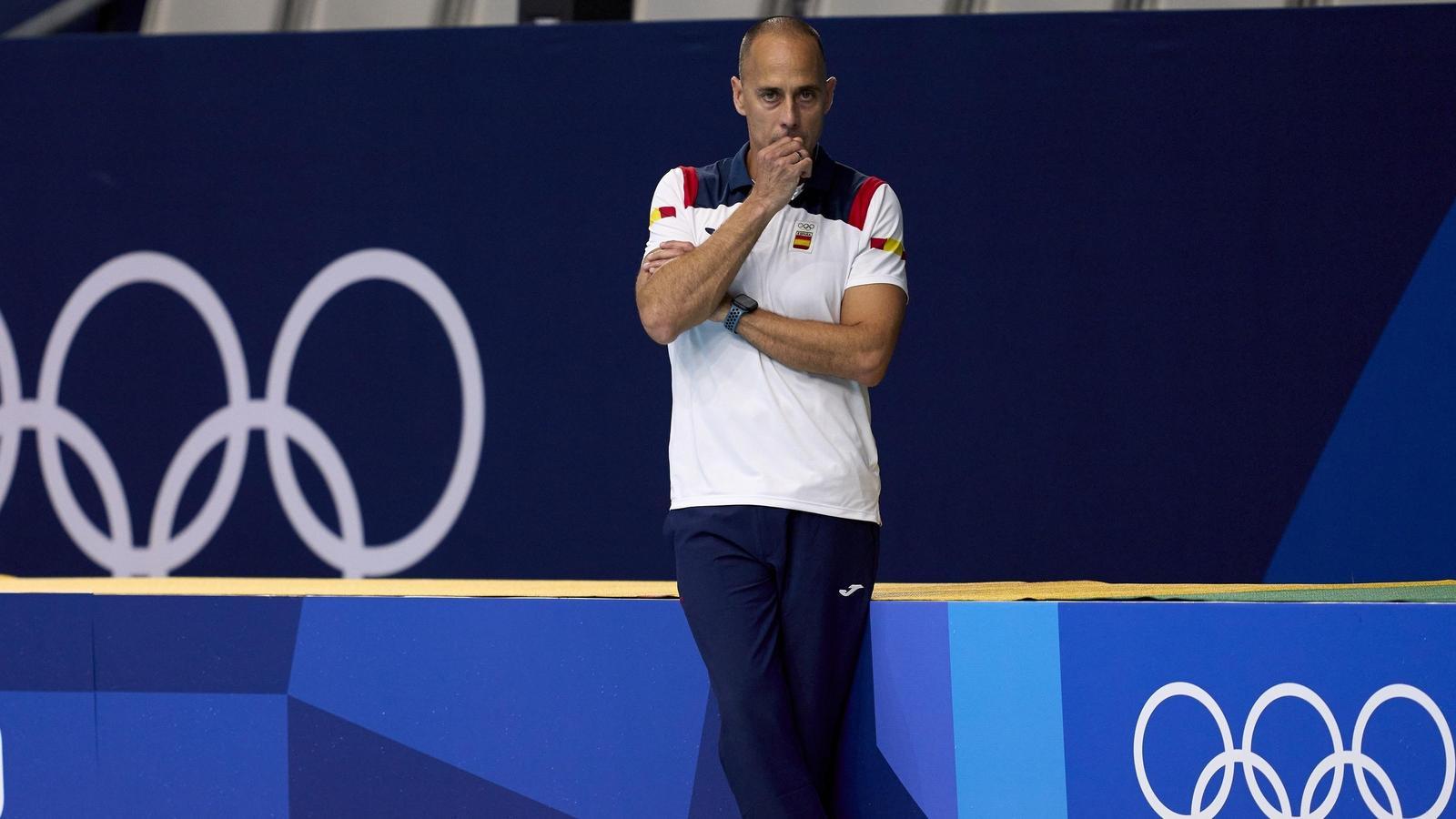
BarcelonaSuccesses are not synonymous with impact, a premise that Spanish water polo knows perfectly well. “We are a sport where when a major competition arrives, everyone sees an easy medal, but there isn't much follow-up during the season. We are a country where sports are very powerful and screen time is difficult to obtain, but I think we also have to do some internal self-criticism about why we don't know how to sell our sport more,” analyzes David Martín (Barcelona, 1977), the Spanish men's water polo coach since late 2016. The coach, however, emphasizes that it is not something that worries them. “The guys are clear that we don't train to have more impact, but for our dignity and our ambition.”
The Spanish team – which is experiencing a new golden era with two World Championships won and the achievement of the first European Championship in history – has qualified for the grand finals of the World Cup, which will take place in Sydney from July 22 to 26. “During the preliminary phase, teams take the opportunity to try out different players. We have come without our main center forwards. It is a difficult competition because it is in the middle of the season and you have practically no time to train, but it is very nice to play because players are coming who are eager to debut,” explains Martín. Despite all these successes, the coach highlights another objective achieved in recent years. “We have managed to put Spain back in the elite of water polo. It is very difficult that, for ten years, every time there is a championship, people consider Spain among the favorites for gold. Medals are very important, but this generation will be remembered for being very consistent.
Some triumphs that increase the pressure on the national team when it competes in championships. “This means we are doing things right. I always say blessed pressure. We are aware that it is very difficult to win every championship, but this creates competitiveness and ambition within the group that is very good. The new player who joins the national team already knows that they are joining a team that aspires to everything, and this carries over to training and day-to-day life,” he assures. High expectations that cannot always be met, as in the past European Championship. The national team came with the tag of world champion, but could not reach the semi-finals. “Sometimes it is also good not to reach it to realize how difficult it is to win medals in every championship. The most important thing is to give your best version,” admits the Catalan.
A David Martín who has experienced the role of player and coach. In his first years as national coach, he managed players who had been teammates in the locker room. “They understood that player-coach respect had to be paramount. It was an advantage because I knew what they were like on and off the water. They have helped me a lot and I am very grateful to them.” After nine years at the helm of the Spanish national team, he is clear about what is best and worst about this profession. “The most exciting thing is the month before the tournament and once it arrives, but often I miss the competition because there are many months when you are waiting for it to arrive,” he confesses.
One-club home
Before his time in the national team, Martín was also a player for the Club Natació Atlètic-Barceloneta, where years later he became part of the technical staff alongside his brother Chus Martín. “I saw it all, from fighting not to be relegated to the Second Division, to the transformation of the club with the arrival of legends like Manel Estiarte and Salva Chava Gómez”. The Catalan coach was able to experience a very special season at the Barcelona club. As an assistant to his brother Chus, they managed to win the Champions League in 2014. “It was also a very tough year for us because that’s when our father passed away. I have a very difficult and at the same time very beautiful memory –he recalls–. Sport makes you mature. I know what sacrifice, commitment, and teamwork are. I will always be grateful to my parents for signing me up for water polo. If I were to live and grow again, I would play water polo again”, he adds.
Atlètic-Barceloneta is an example of the good health of Catalan water polo. “The club structure that exists in Catalonia does not exist anywhere else in Spain. The rise of women's water polo has made the clubs very strong in both categories, but we would need a little more private investment, to have private sponsors. It is one of the handicaps we have in water polo,” concludes David Martín.

