Three clothing brands win their particular World Cup
Adidas, Nike and Puma dress three out of every four national teams, an alternation that repeats edition after edition and extends to European competitions
-
CAT -
CAST
BarcelonaAlthough this is the World Cup with the most participating teams in history, the kits continue to be concentrated in the hands of a few brands. In fact, despite this edition featuring the greatest diversity of manufacturers to date, with 13 brands represented, Adidas, Nike, and Puma maintain an overwhelming dominance: they dress 37 out of the 48 qualified teams, meaning three out of every four teams aspiring to the golden trophy.
In the last two decades, the variety of brands present on World Cup pitches has almost doubled. If in the 2006 World Cup in Germany only seven different manufacturers participated, today the figure reaches thirteen. However, between the 2006 and 2022 editions, the number of brands represented never exceeded ten. During this period, companies such as Joma, Lotto, Erreà or New Balance managed to find a place in the great international football event, but over the years they have been disappearing from the World Cup scene.
An hegemony that extends to clubs
The hegemony of Nike, Adidas, and Puma is not exclusive to national teams. It is also reproduced in major club competitions. In the Champions League, these three brands dressed 27 of the 36 teams that this season aspired to dethrone Paris Saint-Germain. Historically, the concentration had been even greater: in the 2013-14 edition, Nike and Adidas already equipped 28 of the 32 participants.
In the major European leagues, a similar trend is also observed. In the Spanish League, the number of brands present has decreased notably in recent years: from the 14 that coexisted in the 2011/12 season, we have gone to the current 9, with Nike and Adidas responsible for one out of every three First Division kits. A comparable situation occurs in the Premier League, the Bundesliga, and Ligue 1, where the market is divided among about ten manufacturers. The exception is the Italian Serie A, which maintains a higher diversity and managed to bring together up to 15 different brands during the 2024/25 season.
The key: long-term contracts
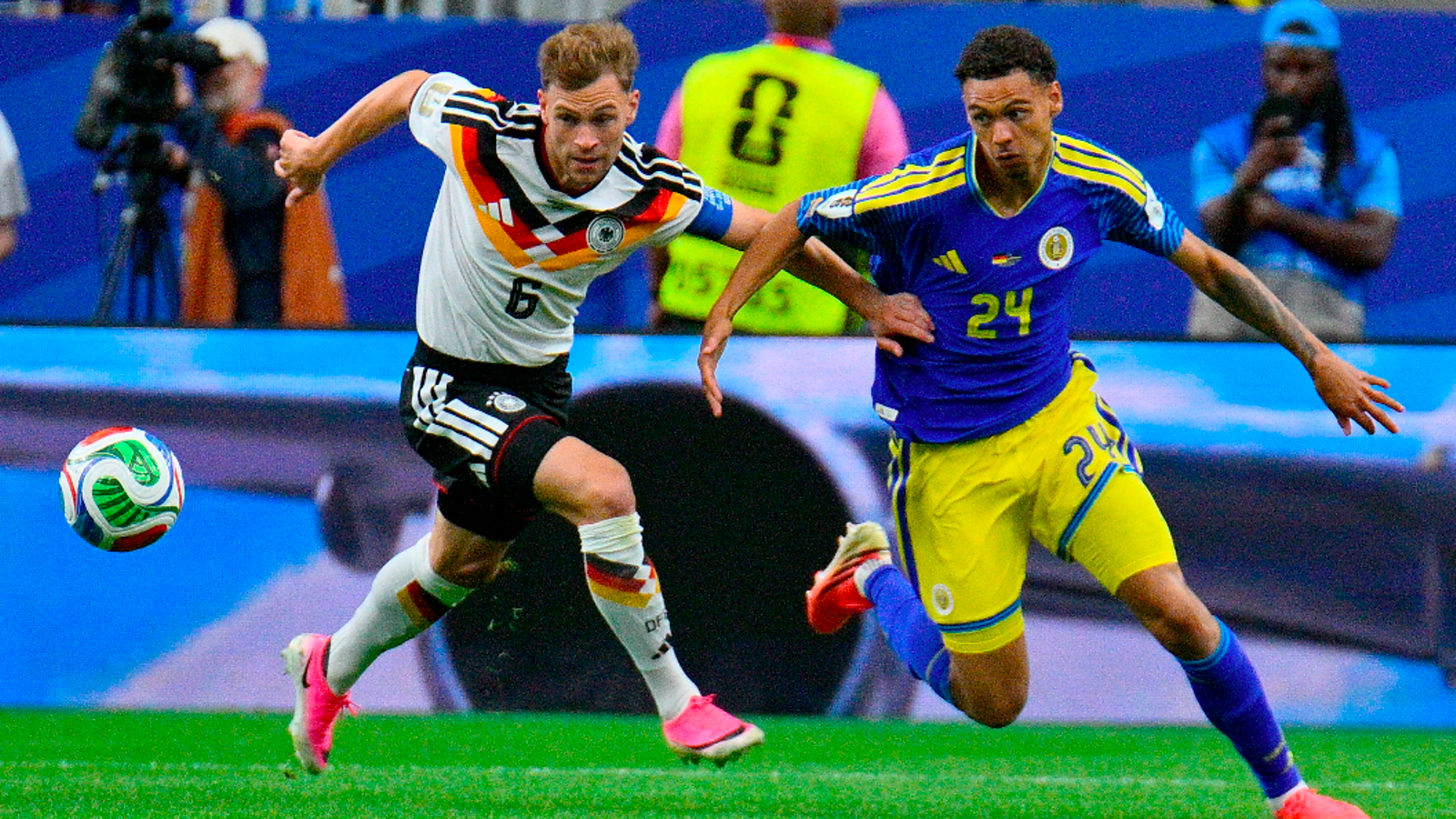
Although in recent years some historic national teams have changed or plan to change technical suppliers, long-term contracts continue to be a fundamental part of the strategy of major brands. Cases like Portugal, which in 2025 switched from Nike to Puma after almost three decades of association, or Germany, which in 2027 will wear Nike after more than seventy years associated with Adidas, highlight the importance of increasingly long and lucrative agreements.
The economic dimension of this competition is considerable. Nike will pay close to 100 million euros annually to become the new technical sponsor of the German Federation, one of the highest figures ever recorded in this sector. In comparison, the Argentine Football Association renewed its agreement with Adidas in 2024 until 2038 for about 15 million euros annually. The French Federation, for its part, extended its partnership with Nike that same year until 2034 in a contract also valued at close to 100 million per season.
The Spanish national team represents another example of contractual stability. Adidas has dressed the national teams since 1991 and the current agreement, extended until 2030, guarantees the RFEF fixed revenues of about 20 million euros annually, to which are added incentives linked to sporting results and sales.
The resistance of national brands
Beyond the domain of the three major brands, the World Cup also serves as a showcase for manufacturers with a much smaller presence in international football's elite. This is the case for Kelme, of Valencian origin, which outfits the national teams of Bosnia and Herzegovina and Jordan, or for local brands such as Majid (Iran), 7Saber (Uzbekistan), and Marathon (Ecuador).
The World Cup event also features the presence of historic brands that have lost prominence in the major European leagues, but which maintain ties with some national teams. This is the case of Umbro, supplier to the Democratic Republic of Congo, or Reebok, which returns to the international scene with Panama.

