Ayman Hussein, the enemy of the Islamic State who has qualified Iraq for the World Cup
The father of striker Ayman Hussein was killed by Al-Qaeda and his brother was kidnapped by ISIS
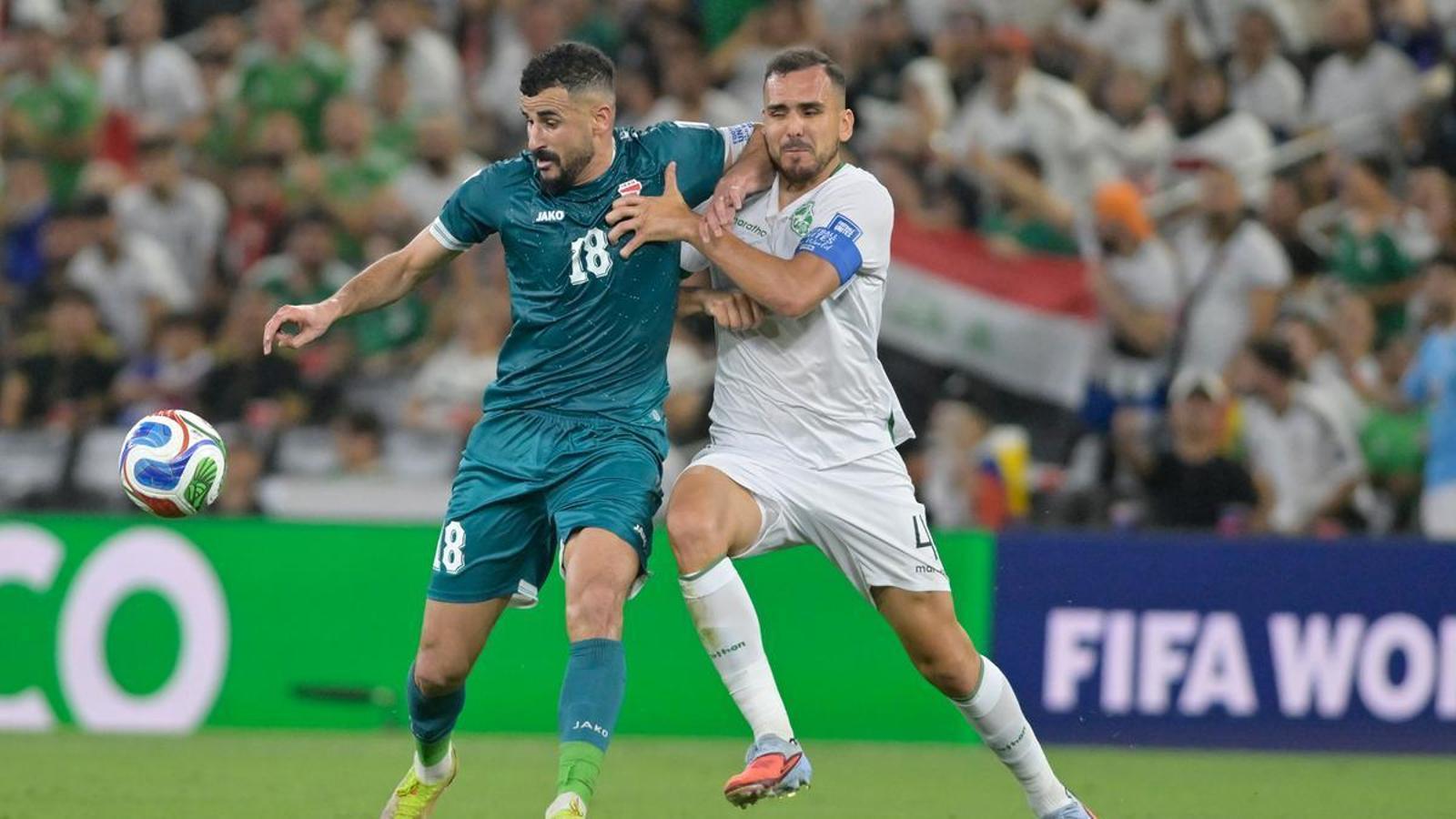

-
CAT -
CAST
BarcelonaIn 1986, Iraq qualified to play in a World Cup for the first time. It was the years of Saddam Hussein, the military leader who attached great importance to sports to promote his regime. Trained by a former Barça player, the Brazilian Evaristo de Macedo, Iraq lost all three matches played in Mexico by a narrow margin. One of the team's stars, Basil Gorgis, was sent off in the match against Belgium and upon returning to Baghdad, he was imprisoned for 10 days as punishment. Gorgis then only thought about fleeing, as he was from the Assyrian minority, an ancient nation that embraced Christianity and suffered repression in Saddam's times. In fact, Basil's sister, Mariam, had been kidnapped and executed in 1979, a fact that was not communicated to the Gorgis family until years later.
This 2026, Iraq returns to a World Cup for the second time. As fate would have it, they qualified by playing a play-off precisely in Mexico, where they had played in 1986, defeating the Bolivians 2-1. When the referee blew the final whistle, during the celebrations, players were seen with Kurdish and Assyrian flags on the pitch, a fact that would have been totally unimaginable in the past.
Between the Tigris and Euphrates rivers, in this Mesopotamia that has seen some of the most glorious civilizations rise and fall, football sometimes unites a complex country, where Arabs, Kurds, and Assyrians mingle. With Muslims divided between Shiites and Sunnis. And with many Christians. A country that does not find peace. It did not have it in Saddam's time and found it even less after the American intervention, which led the country towards a civil war with thousands of deaths and the emergence of new actors like the Islamic State. The fearsome ISIS.
As happened in 1986, current players have also suffered because of violence. The goal that qualified the national team for the final phase was scored by Ayman Hussein, an experienced 30-year-old striker. The man who caused thousands of people to take to the streets in euphoria hides a tragic story. Born in 1996 in a small village near Hawija, a town in the north with a Sunni Arab majority, he was the son of a soldier. As often happens in many poor areas, becoming a soldier or policeman is usually a way to get money. In 2008, his father was stationed in Baghdad when he died in an attack by the Islamist group Al-Qaeda.
Then Ayman already wanted to be a footballer and played in youth categories. The pain of his father's loss made him work even harder, and in 2015 he scored the goal that qualified Iraq for the Rio de Janeiro Olympic Games. He is a special player who, when he plays, always seems to be there, as has happened this year. While almost his entire family had become police officers or soldiers, he wore a player's uniform, standing out for his goal-scoring instinct, a fact that allowed him to go abroad, playing in Qatar and Morocco.
When he was in the Persian Gulf, Ayman received with concern the news that explained that the Islamic State, the new radical Islamist group that was gaining strength in northern Syria and Iraq, was one step away from conquering Hawija, where his family lived. And so it was. The city fell, and his relatives became part of the group of more than 18,000 people who fled the Islamists. For a few days, he knew nothing about them, until his mother communicated from a refugee camp in an area controlled by Kurdish troops.
But not all of them were there. One of his brothers, a police officer, had been kidnapped by ISIS. Nowadays they still don't know what happened to him. "Nobody knows the details, what exactly happened. It's not the first story in my family and, probably, it won't be the last," the player explained to AP. "If I leave football, nothing will change. I won't get back any of the things I've lost. Moreover, I thank God for my situation. In my house I have walls. Many displaced Iraqis live in tents," explained the player, who was received as a hero upon his return to Iraq.
Hussein has returned to the local league, playing for Al-Karma, a team from one of the cities most affected by violence in recent decades, near Fallujah, an area where American troops lost many soldiers. Although he had offers to play in Qatar, he preferred to return in the very year Iraq has qualified with this interethnic team. Back in 2007, the team had won the Asian Cup of Nations with a team where Shiites, Sunnis, Assyrians, and Kurds played together. 15 of the 23 internationals who were champions in 2007 explained that they had lost at least one family member due to violence. In the current squad, some admit to having received death threats from ISIS, as has happened to Hussein. His goal served to bring joy to a country that has truly suffered. A symbolic goal. The triumph of life over death.

