Twenty magical minutes for Spain to break the curse and present a World Cup bid
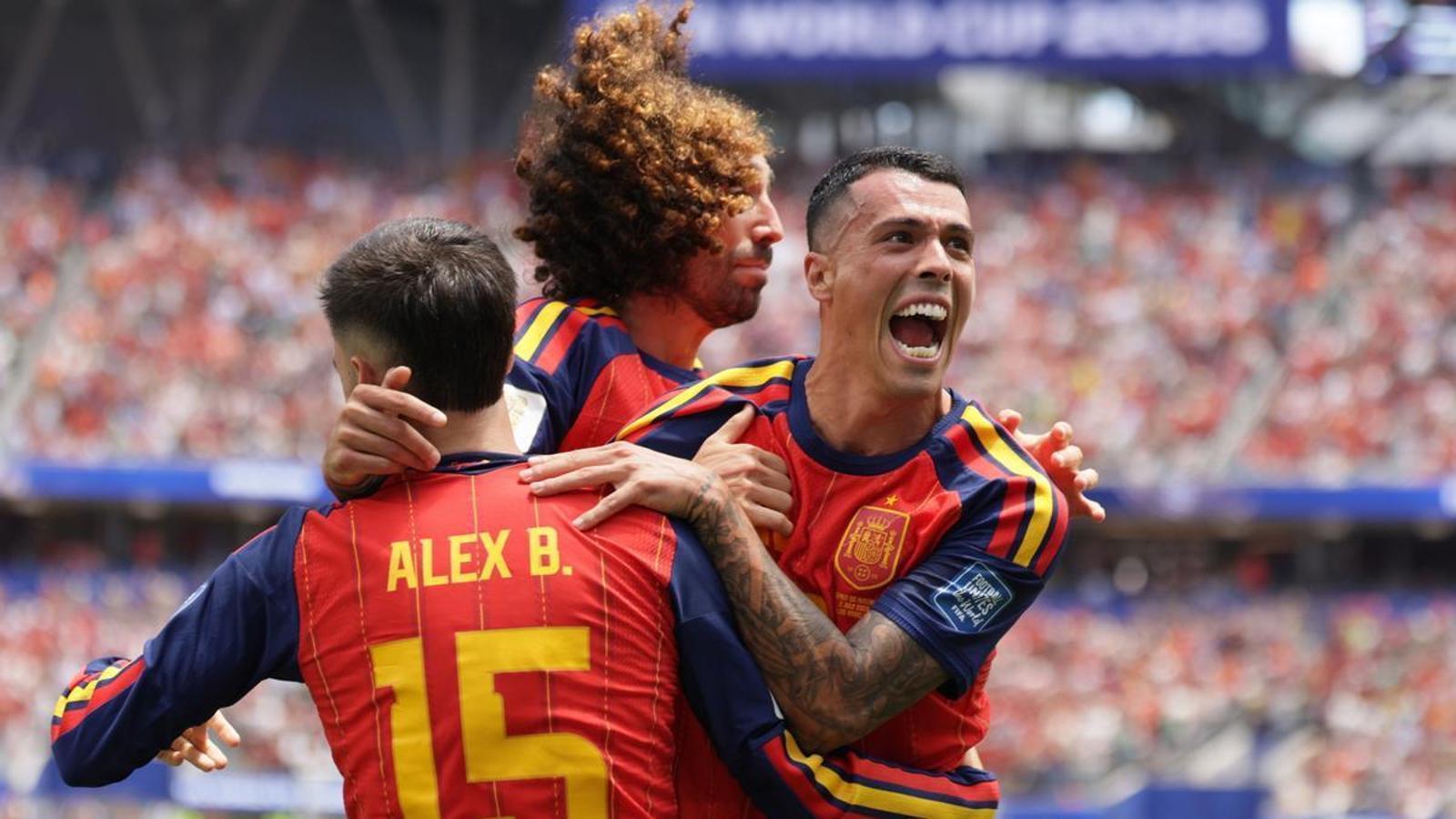
'The red' advances to the round of 16 after beating Austria with goals from Oyarzabal (2) and Pedro Porro

-
CAT -
CAST
BarcelonaThe last time the Spanish national team had overcome a World Cup knockout match was in 2010, the year they were proclaimed champions in South Africa. Since then, la roja had either fallen in the group stage or in the first knockout match. Sixteen years later, the Spanish national team broke the curse by defeating Austria (3-0) to reach the round of 16, where they will face Portugal. Oyarzabal around the half-hour mark, and Pedro Porro and – once again – Oyarzabal in the second half tipped the balance in favor of a team that played from less to more but ended up thrashing and dispelling the doubts they had shown at the start of the competition.

The hydration break, so criticized by spectators in this World Cup, was a godsend for a Spanish team that had started the match without many ideas. It was from the 25th minute that a more dynamic version of the red one was seen, with an inspired Lamine Yamal who did not hesitate to face his marker. Spain needed the best version of the Rocafonda winger to shake up a defense that had been very comfortable until then. It is evident that he is not yet at 100% and that he needs more game time after a two-month injury. But someone with so much quality and so brazen on the pitch can make a difference nonetheless. However, everything has its limits and the blaugrana player sinned excessively in individual actions, as if he were more concerned with scoring his goal than with collective play.

Indeed, Lamine, who played 85 minutes, did not score despite having a couple of very clear shots. But he did set the path for a very passive selection in the early stages, which got stuck against the more physical approach of the Austrian team and which required the intervention of Cubarsí, a defender who is having a luxury World Cup, to keep a clean sheet in the early stages. The state of the pitch, dry and a bit bumpy, did not help much, as it did not favor the ball moving quickly. Between this and the fact that most combinations were made far from the penalty area, Austria did not mind giving away possession because their defenders always had time to regroup and organize themselves. Until the 25th minute.

De la Fuente struck the right chord, which was basically to demand more dynamism from his men. With Lamine stuck to the right wing and attracting two or three players, Olmo usually found himself free in the attacking third. In fact, the Barcelona midfielder had the first truly dangerous chance when he turned around and could face the goalkeeper. A defender reacted in time, but it was the first warning that things had changed. Olmo opened the floodgates to a footballing storm that led to eight chances before halftime, a shot against the post, and a heroic save by Schlager. Cucurella scored a first goal, disallowed for a foul on the goalkeeper; but he was the protagonist in the goal that did count, by Oyarzabal, who finished completely alone at the penalty spot from a good low cross from Real Madrid's latest signing.
Ralf Ragnick, the Austrian coach, tried to shake up the team with two changes at halftime. Aware that he could no longer sit back, he tried his luck by changing the two holding midfielders to seek a more vertical, end-to-end game. A risky gamble, an all-or-nothing approach, reinforced later with the introduction of forwards Kalajdzic and Arnautovic, two giants who tried to catch the aerial balls their teammates served them, sometimes desperately. Spain never felt threatened despite no longer having as much possession, but they were very grateful for Pedro Porro's goal, who headed in a cross from Baena to score the second goal and avoid last-minute scares, such as a fall by Arnautovic for which Austria claimed a penalty or a shot by Chukwuemeka that went just wide.
Oyarzabal's brace
De la Fuente took time to make changes because he didn't see it clearly. And he risked little, maintaining solidity at the back and only changing the attackers. It didn't quite work out for him, as neither Ferran nor Mikel Merino shone in the twenty minutes they played. Spain didn't need them, but it's a warning for future rounds: if unit A fails, alternatives are scarce. With everything done and dusted, and with Austria making a last desperate attempt, Oyarzabal sealed the score by finishing off another cross from Cucurella. It's Oyarzabal's fourth goal in the World Cup and the 16th he has scored for Spain in the last 15 games. Brutal statistics.

