The president of Madrid shot by Franco whom the club ignores because he was a republican
An excavation will try to find the remains of the communist military man Antonio Ortega, president of Madrid from 1937 to 1938

-
CAT -
CAST
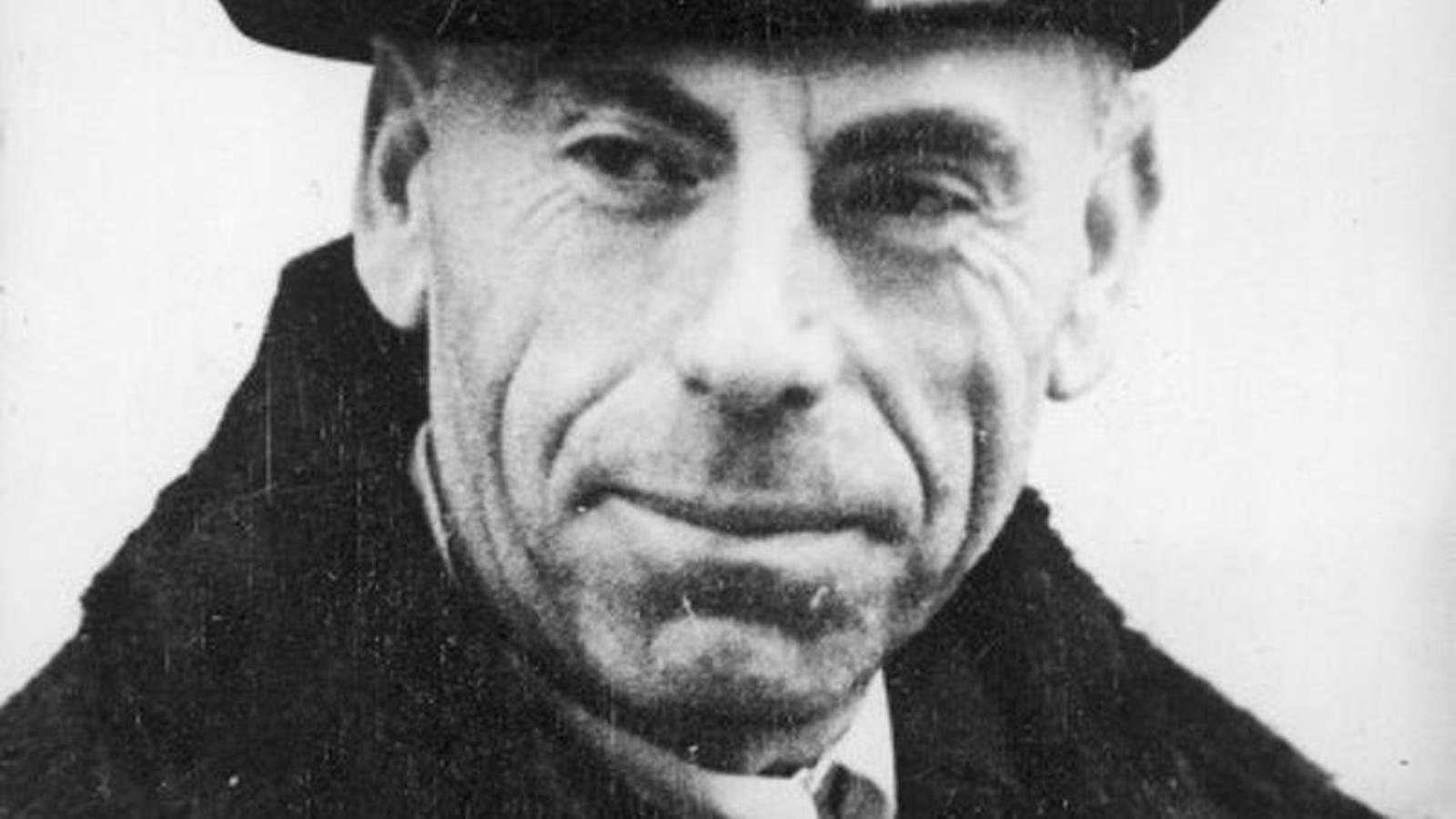
BarcelonaSpain is still full of mass graves with the bodies of Republican sympathizers. The cemetery of Alicante still has a very large one unexcavated. A cemetery that is like a time capsule to explain that era, in which the communist poet Miguel Hernández is buried near where the tomb of the leader of the Falange, José Antonio Primo de Rivera, was. The two Spains, very close. Primo de Rivera, the Francoists exhumed him to send him in procession to a tomb in Madrid with all honors. Tens of thousands of Republicans, on the other hand, remain in grave number 9 in Alicante. One of these people is Antonio Ortega, president of Real Madrid.

In the early morning of July 15, 1939, the president of the white club from 1937 to 1938 was shot along with other Republicans who had not managed to escape from Alicante, the last Republican stronghold. Ortega wrote a farewell letter stating that he died peacefully because he was innocent. Officially, he was shot accused of the death of National soldiers, but in reality, they did it because he had been a Republican and a Communist. And for being a Communist, Madrid wants nothing to do with him. Even today, he does not appear on the official list of presidents of the white club, which ignores him just days before the excavation of the mass grave where his remains are believed to be, thanks to a grant of 50,000 euros from the Ministry of Territorial Policy and Democratic Memory. His descendants, who mostly live in Mexico, anxiously await news.
Almost no one knew that Ortega had presided over Madrid until 2018, when Frederic Porta and Ramon Usall published a report in the magazine Sàpiens explaining the details. The investigation also made it clear that Madrid had no interest in claiming him. Quite the opposite. In general, the current white board of directors is not very interested in talking about the years of the Republic, when Madrid abandoned the title of "Real" and the crown on the crest. In the 1930s, Madrid would win titles, such as the 1936 Cup final against Barça, with a social base that would elect a Republican politician like Rafael Sánchez Guerra as president in 1935. A man who had flown the Republican flag on the balcony of Madrid City Hall on the day the monarchy fell.
Julián García Candau, historic sports journalist from Madrid.
Sàpiens Julián García Candau, a historic Madrid sports journalist.

But who was Antonio Ortega? He was a soldier born in Rabé de las Calzadas, Burgos, in 1888. He was stationed in the Basque Country, where the war caught him and he successfully led the defense of Irún by the national troops. Afterwards, he would march to the Madrid front leading the battalion Basque Antifascist Militias. Ortega, however, suffered a serious car accident in 1937 while supervising the front and, unable to be on the front lines, was appointed Director General of Security, a position he held right during the May events, when a conflict broke out in Barcelona that left hundreds dead among the anarchists and the POUM, a Trotskyist communist party, against the public order forces of the Generalitat de Catalunya, with the support of militiamen from the PSUC, the UGT, and Estat Català. Clashes that would be used by Soviet agents to pursue enemies of Stalin, such as the leader of the POUM, the Catalan Andreu Nin. Even today, historians debate Ortega's role in the disappearance of the Trotskyist politician, surely murdered on orders from the Soviets. According to Pedro Barruso, professor at the Universidad Complutense de Madrid, to the Efe agency, "Nin was murdered by the Soviet KGB, but they blamed Ortega, who was in Valencia at the time." Other historians like Hugh Thomas do accuse the soldier of having played a clear role in Nin's death, unjustly accused of working under the orders of the Nazis.
Dreaming of a great stadium
Be that as it may, the Nin case cost Ortega his post, and new positions were sought for him. He returned to commanding military battalions, but he was also given the presidency of Madrid. Ortega presided over the white club for a whole year, and organized friendly matches and proposed that Madrid could play in the Mediterranean League, which was held in the Republican zone with Catalan and Valencian clubs. Clubs like Barça opposed it. He created tournaments, where sometimes his daughters performed the honor service, he defended a popular sport where money was not important and he dreamed of a future that he would not have. In an interview in the magazine Blanco y Negro,"Pay good attention, soldiers. Long live the Republic!", "attributes": {"italic": true}}Once arrested, he was accused of having shot 13 soldiers in San Sebastián at the beginning of the war in an irregular trial, as the names of the executed do not match those cited in the proceedings. Everyone knew that it was about finding a reason, however it might be, to justify the execution. Not even the fact that Ortega had protected sympathizers of the Nationalist side from the persecution of anarchist militants in 1936 did any good. When the Falangist Juan Tellería, composer of Cara al Sol, asked for Ortega to be pardoned because he had saved his life, he was ignored. Franco wanted him dead.
Ortega was shot along with ten other people. According to his son, he shouted: "Aim well, soldiers. Long live the Republic!" before being shot. Part of the family remained in Madrid and others went to Mexico, where his daughter Amalia emigrated after falling in love with a Basque pelota player who had been offered to play there. The descendants, in fact, hope that thanks to DNA samples, the remains of the man who presided over a club that ignores him can be identified. His idea is that they rest in a family niche in Mexico next to his wife, Josefa. Far from Madrid and Chamartín.

