The game of Bayern's threats with the Musiala case
The Bavarian club turns back after publicly discussing the footballer's contract, who has just returned to play after a long absence due to neurological problems
-
CAT -
CAST
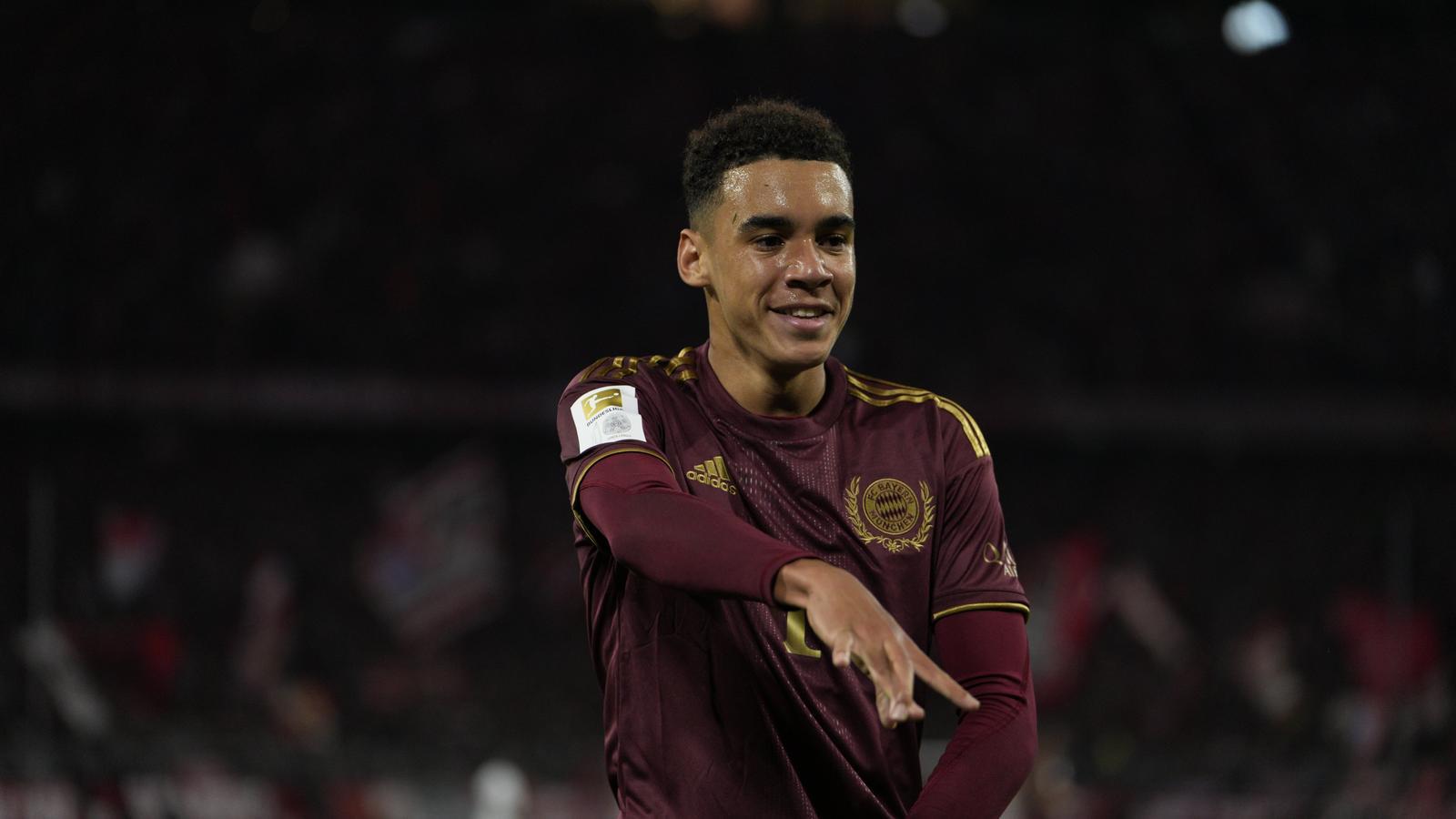
BarcelonaBayern Munich has turned Jamal Musiala's case into a debate that goes beyond his performance. The footballer, who recently extended his commitment to the club until 2030, has just returned after being out for almost two months due to a muscle injury, but he remains affected by the neurological problems he has suffered in recent months. In this context, Uli Hoeness, honorary president of Bayern, and Karl-Heinz Rummenigge, a former club executive, have publicly brought the player's contractual future to the table in the event that he fails to recover the level he had shown before his health problems.
FIFPRO reacted harshly and accused Bayern of having developed “a coordinated strategy to pressure Musiala” and his representatives. The union considers that an injury or a dip in performance does not justify a revision of the agreed terms. Bayern, on the other hand, has tried to lower the tension. Max Eberl, the club's sporting director, assured after meeting with the footballer's agents that the meeting had been “very constructive” and that money had not been discussed. While Eberl and Vincent Kompany –the coach– insist that the priority is helping Musiala recover, Hoeness and Rummenigge have publicly introduced the contractual future into the equation.
A case that clashes with the ‘Mia san Mia’
“It is one thing to consider a pay cut internally and another to express it publicly,” explains Juanma Romero, a sports journalist who lives in Germany and specializes in the Bundesliga, in statements to ARA. According to the journalist, the debate has generated a lot of noise because important figures at Bayern have made public a debate that until now had been kept internal. Romero differentiates this position from that of those who live with the footballer every day. “I remember Kompany saying that opinions are one thing and roles are something different.”
For the journalist, the most important thing is that the player is not overshadowed by the debate that has been generated around him. “The moment this internal core externalizes its opinion on the case, Musiala takes a back seat, which is what should not happen.” He understands that Bayern has sporting and financial concerns about the footballer's future, but considers that right now the priority should be to see how he evolves and to support him.
This idea connects with one of the traits that, according to Romero, define Bayern. TheMia san mia, which the Bavarians translate as “we are who we are,” also expresses a way of understanding the club and the relationship with its footballers. “If it turns out that he has to retire prematurely, Bayern should support him and keep him at least as a symbolic figure within the club,” he argues. For Romero, it is precisely this ability to take care of its own in difficult times that should mark Bayern’s response to the Musiala case.
How far can Bayern go?
The question that remains open is whether all this discussion could have consequences for Musiala's contract. “No. Categorically no. A reduction of the agreed contract cannot be made,” states Avelino Gómez Sarriá, a lawyer specializing in labor law, in statements to ARA. According to the lawyer, a sports contract establishes obligations that cannot be converted into a guarantee of performance. “A sports contract is a contract of means, not results.” Therefore, a drop in level would not allow Bayern to unilaterally reduce the salary.
One of the most delicate questions is the hypothetical gentlemen’s agreement between the club and the player's entourage. If such a pact really existed to review the contract in the event that Musiala did not recover his level, its value would depend on the content and the way in which it was formalized. “Both parties would have to sign the document or reach an agreement, as if it were an annex contract,” explains Gómez Sarriá. Nor does the fact that Bayern claims to have been unaware of the neurological problem before the renewal seem sufficient to alter the agreement. “The validity of a contract cannot be conditioned on a medical result,” maintains the lawyer.
The future of Musiala
This Tuesday, Bayern and Musiala's representatives held a conversation that the club describes as “constructive”. In a joint statement with 11WINS, the agency representing the footballer, both parties ensure that the player's health is above all else and that Musiala has full support in his recovery process. They have also agreed to continue the talks “in a climate of collaboration and confidentiality”.
The situation leaves the club facing a scenario in which the most logical path is to wait. “From my point of view, the most feasible option is to maintain the contract, because renegotiating it does not make sense for the club in the long term,” states Gómez Sarriá. A negotiated departure would be possible, but it would imply financial compensation for the footballer. With both parties committed to continue talking in private, the most likely scenario now involves letting Musiala recover and keeping the contractual debate in the background.
