The endearing "pain in the neck" from the outskirts of Terrassa who wants to make history with Morocco
Journey to the origins of Ismael Saibari, from Can Parellada to leading the attack of the best African team in the World Cup
-
CAT -
CAST
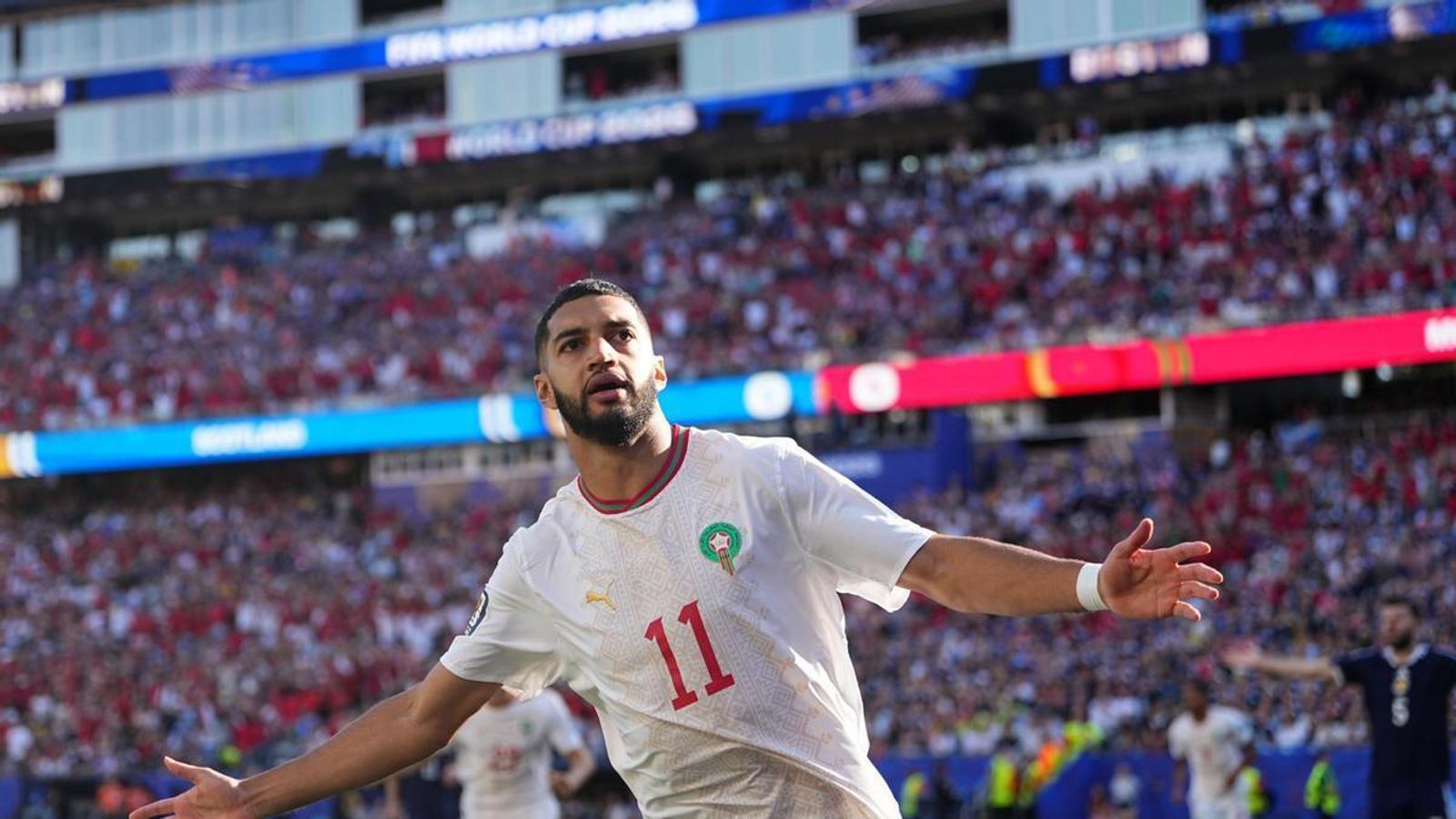
Terrassa"The other day a photo of him came up on Facebook and I told my wife: ‘This is the boy I was telling you about. He was here with us and look how far he’s come.’ For us it’s a pride, an immense joy. I remember when he used to arrive at the field with the ball under his arm,’ says Paco Garzón (Segovia, 1955) with a smile. For many years he was the president of Club Deportivo Can Parellada, the team from the Terrassa neighborhood that saw one of the protagonists of this World Cup grow up. It’s Ismael Saibari (Terrassa, 2001), scorer of Morocco’s two goals. He has been the MVP of the Eredivisie with PSV Eindhoven and his move to Bayern Munich for 50 million euros is already a done deal.
His parents arrived in Spain between the late 80s and early 90s. He has an older brother, Akram, born in 1995, who played with Damm’s Alevín A team in the 2006-2007 season. He was born on January 28, 2001, and also started at Can Parellada, like Albert Luque or Vicky Losada. It’s a working-class neighborhood that appeared on the outskirts of Terrassa with the migratory wave of the 60s and 70s of the last century, and the football club, founded in 1971, is the ‘meeting and union point’ that underpins daily life. ‘80% of us are immigrants, from the country or from abroad,’ assures Garzón, former player, former coach, and former president.

Saibari was a boy who was starting to stand out, the best on the team, but he didn't stay at the club for long because the economic crisis arrived in 2007. Some voices say that his father, Hassan, was a bricklayer. Others say that the family had a shop. In any case, Ismael and Akram's father found himself unemployed and the family decided to emigrate to Belgium to pursue a future.
The grassroots football coordinator for Can Parellada was Jonathan Oviedo (Terrassa, 1983). "Ismael was a boy who played everywhere: center-back, midfielder, winger. It didn't matter where you put him because he always did well. He had a good shot and he had goals. He was one of the best in the category at set pieces. You could see he had something special," he points out. "He spent all day at the field, from Monday to Sunday. He was the first to arrive and he watched all the matches. You'd arrive at the field on a Saturday and he might be playing on Sunday, but he was already there. Once, if a player was missing, I had told him to go get his kit from home. Since he lived nearby, he'd run off and come back to play," he adds.
He came and went home by himself. Some of the team's fathers would take him to away matches. Oviedo had scolded him more than once or twice because when they finished training, he would stay playing on the field and "bother" the other teams. "He was a bit of a pain because he wouldn't stop messing around with the ball, but he was a very good kid".
Saibari shared a team with Sergi Puertos (Terrassa, 2000). "The two brothers were very good. He was the typical kid you'd see and think: 'This kid knows what he's doing'. He was smaller, but very agile with the ball. It was street football," highlights Puertos, a teammate and also a neighbor from the neighborhood. "It's a humble neighborhood and he lived in the most humble area. It's a small neighborhood with some houses and many apartment buildings. He lived in the older ones. Life wasn't easy in the neighborhood," he points out.
Puertos still remembers the farewell snack they had when Saibari's family had to emigrate. "We ended up in Belgium through a friend of my mother's. We had to start from scratch again," explained the older brother, Akram, in 2013. The younger one went through top-tier academies like Anderlecht's or Genk's and in 2020 signed for PSV. He debuted with the first team replacing Mario Götze, executioner of Messi's Argentina in the final of the 2014 World Cup. In 2022, he received a call from Robert Martínez, then coach of Belgium, now at Portugal, to sign him. He also had the option of Spain, but playing with Morocco was his dream.
Morocco wants to go even further
He is a versatile offensive midfielder, technical, but also physical, who can play in any attacking position. Last season he scored 15 goals and 14 assists with PSV and this season he has established himself with 19 goals and nine assists and has earned the move to the European elite. But before flying to Munich, he wants to make history with Morocco.
In the last edition of the World Cup, the North Africans already became the first African country to reach the semifinals and now they want to go one step further. It is a team full of children of emigration like him. Only seven of the 26 players were born in Morocco, plus six in France and Spain, three in Belgium and the Netherlands, and one in Canada (Yassine Bounou). There is also a 21-year-old from Osona: Ayoube Amaimouni, a forward for Eintracht Frankfurt.
In this World Cup there are three players born in Terrassa, Dani Olmo, Marc Pubill and also Ismael Saibari, but Puertos explains that in the neighborhood they don't talk much about him because "few know that he lived here". "I saw the match against Brazil and I thought: 'This kid was here with us, in the neighborhood, at the very bottom'.

