A final to place La Masia at the centre of the world
Spain, with a game devised at La Masia, seeks its second star against the most beloved footballer to emerge from Barça, Lionel Messi

-
CAT -
CAST
BarcelonaWhen this Sunday the ball starts rolling in the World Cup final at the MetLife stadium on the outskirts of New York, the city that never sleeps, all eyes will be on two players trained in Barcelona, Lionel Messi and Lamine Yamal. The leaders of Argentina and Spain, the two finalist teams. It will be special for a group of people who, searching through old photos on their mobile phones, find some that show these two players when they were much younger: the coaches from La Masia who, in some way, helped them on both their paths to MetLife stadium.
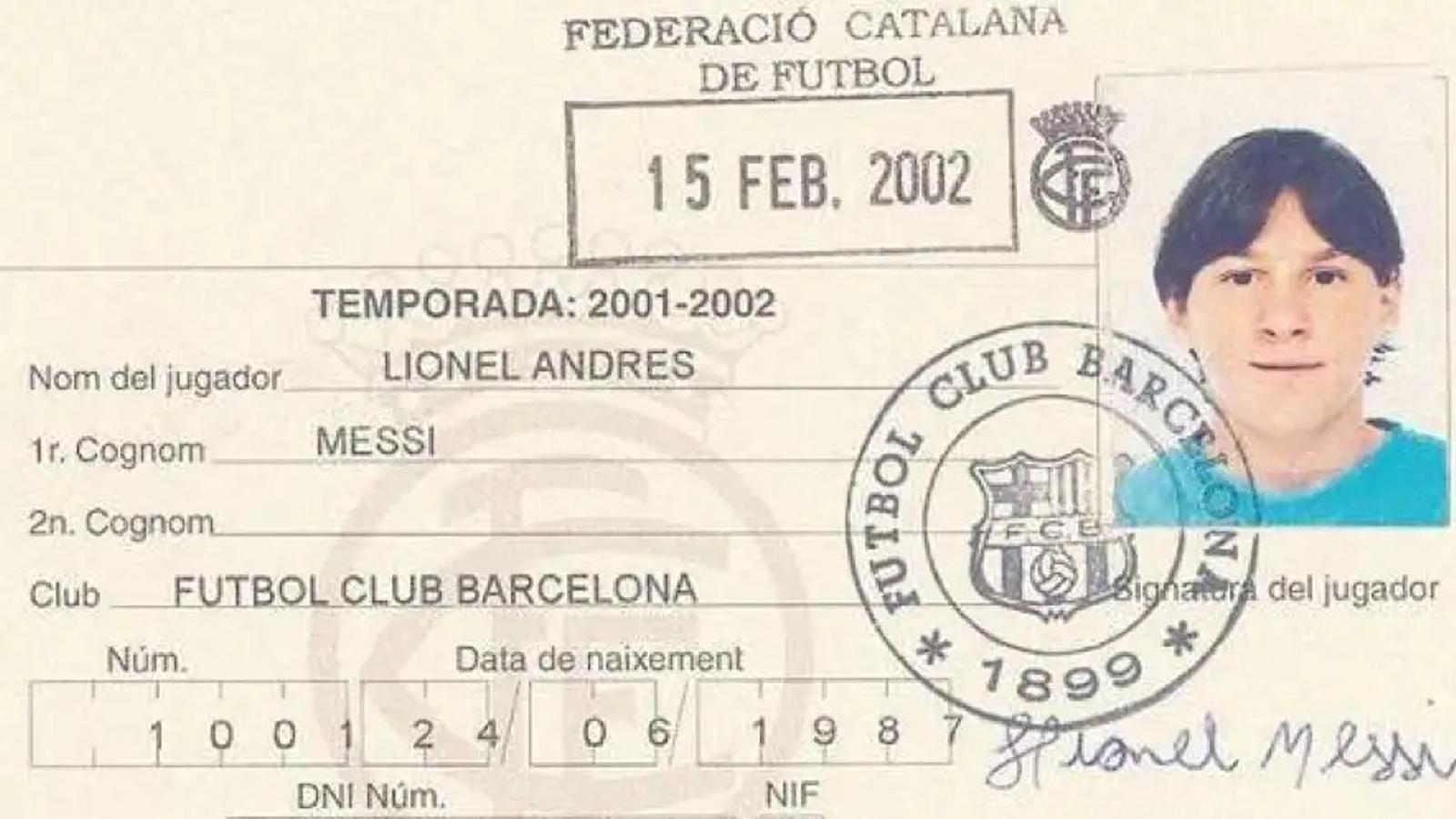
La Masia has already triumphed in this World Cup. Atlético de Madrid is proud, as it is the club with the most finalists, and Inter Milan says it has had a finalist in every final since 1982. But the style of the Spanish national team is the one that was developed in Barcelona, the style of La Masia, with the recipes of Cruyff and Guardiola. And Argentina revolves around Messi, that shy-faced kid who arrived in September 2000 in Catalonia to join La Masia, taking a first photo in room 546 of the Hotel Plaza. The first of many photographs in a Barça that would change him. “It is the club that I love and follow. The final is against a team where Barça players play, with a playing philosophy that they have been applying for many, many years,” said the Argentine before the final. Without La Masia, this final would be different. It probably wouldn't be played.
That Messi and Lamine Yamal face each other in the World Cup final is a gift from destiny. And that the old champion had cleaned out the young contender when he was a baby seems more fitting for Homeric tales than for sports pages. But Messi also has photos with Cubarsí or Olmo when they were children. For 20 years, he took photos with hundreds of La Masia players who wanted to be like him. Now, some face the genius from Rosario in a final that puts La Masia at the center of the world. A word as Catalan as "masia" is now used all over the planet, even though many people do not know its meaning. Surely they don't know that it originally referred to the farmhouse of Can Planes in Les Corts, an 18th-century building where olive fruits were first harvested and, centuries later, housed the bunk beds where future Barça stars dreamed. Neither Leo nor Lamine Yamal slept in the farmhouse of Can Planes, unlike, for example, Guardiola. But both are spokesmen for La Masia's football, the great winner of this final in which, in total, there will be nine students from the Barça youth academy, such as Pau Cubarsí, Eric Garcia, Dani Olmo, Gavi, Alejandro Grimaldo, Marc Cucurella, and Víctor Muñoz. Some stayed and others left. Nine La Masia players, as happened in the 2010 final, when Spain won. That year, the Ballon d'Or podium was made up of Messi, Xavi, and Iniesta. Back in 1950 in Brazil, players trained at Barça were at the World Cup. Now they dominate it.
Endowed with an almost supernatural individual talent, Messi and Lamine Yamal were recruited by the blaugrana youth academy, where they received key training to understand the concepts of a game that is never the work of a single player. Joan Vilà, director of methodology at La Masia for many years, explains that it is necessary to "unite the players' talent with a game idea. Talent cannot go alone. Talent must be worked on". An idea that has internally changed the tradition of the Spanish national team, more linked in the past to the Basque school. It would be Luis Aragonés first and Vicente del Bosque later, a man from Madrid and a man from Salamanca, who would understand that the best football was played in Barcelona thanks to this Masia that had grown with key figures such as Laureano Ruiz and Johan Cruyff in the 70s. "They were the ones who made it clear to us that we had to trust ourselves, the young players from home. That we had to be brave, that we want the ball. Laureano and Cruyff shape our game identity and are key to understanding that we don't need to look outside for what we already have at home", defends Vilà, who warns how the temptation not to value what you have doesn't quite disappear: "There were people who didn't want Messi, who doubted. You have to trust the players and have patience", he warns.
Understanding a philosophy
What is the secret of La Masia? A sum of factors, surely. “It is the great training center, in capital letters, where footballers and people are trained. We must also emphasize valuing and not just thinking about the sporting area,” defends former director Xavi Vilajoana, who played a key role in signing Lamine Yamal when Espanyol also wanted him. “We made an effort for him to join La Masia and be able to sleep there, when normally only players from outside Catalonia reside there. But he came from a complicated socio-economic background, so we wanted him at La Masia. It wasn't easy, but his parents finally accepted,” he recalls. Behind every La Masia player, there are conversations like this to understand their background, parents, and the players themselves. And once they join the Barça youth academy, they need to understand the Barça DNA. It doesn't always happen. “Players must understand their capabilities and be clear that no matter how much talent they have, they must work. Work is necessary, always. And our job was to help them work to improve, to understand that if they have natural talent and work on it, it multiplies positively,” defends Vilà.
And a bit of luck is also needed. And finding the key people who open the door for you. “Many talented players haven't been at the right moment, where they should have been. Sometimes, players from La Masia debuted because there was no money to sign anyone. It happened to me, several young players made the leap at the same time. And recently, it has happened again. A coach takes a chance, because they believe in them or because they can't sign from outside. And since you have talented young players, you play them. Players who were waiting for this opportunity,” says Carles Rexach. Some have to wait until they are 22 to make the definitive leap, as happened to Iniesta. Others, at 16, are already so eye-catching that “you even have to hold them back because it's dizzying to debut such a young kid,” admits Rexach, referring to Messi and Lamine Yamal. “They are so good that by watching them play for five minutes, you could see they were different,” says one of the first Barça coaches who understood that Messi needed to be signed when the Argentine arrived for a trial at 12 years old in 2000. “And with Lamine, it's the same, you see he's a different boy,” he adds. So much so that Xavi Hernández, one of La Masia's best players, made him debut in the First Division at 15 years and 9 months old, on April 29, 2023, against Betis. A few months earlier, on December 18, 2022, Lamine was playing a match with the Barça youth team against San Francisco at the Ciutat Esportiva at the same time Messi was playing the Qatar World Cup final, as explained by journalist Jaume Marcet, who was narrating that match for Barça TV. Four years later, he plays the World Cup final against the Argentine.
Messi, winner of eight Ballon d'Or awards and playing in his sixth World Cup, will embrace that child he first met as a baby. At 39 years old, he closes a career marked by that club he has tattooed on his leg in the form of a crest. Facing him, the genius from Rocafonda, who has just celebrated his 19th birthday. Everything to do, everything to write. Seeking his first Ballon d'Or, his first World Cup. The beginning of another story that, like Messi's case, has its roots in La Masia.
