Anna Casarramona: "I do my body a favor by putting an end to a career with so many joys"
Roller hockey player
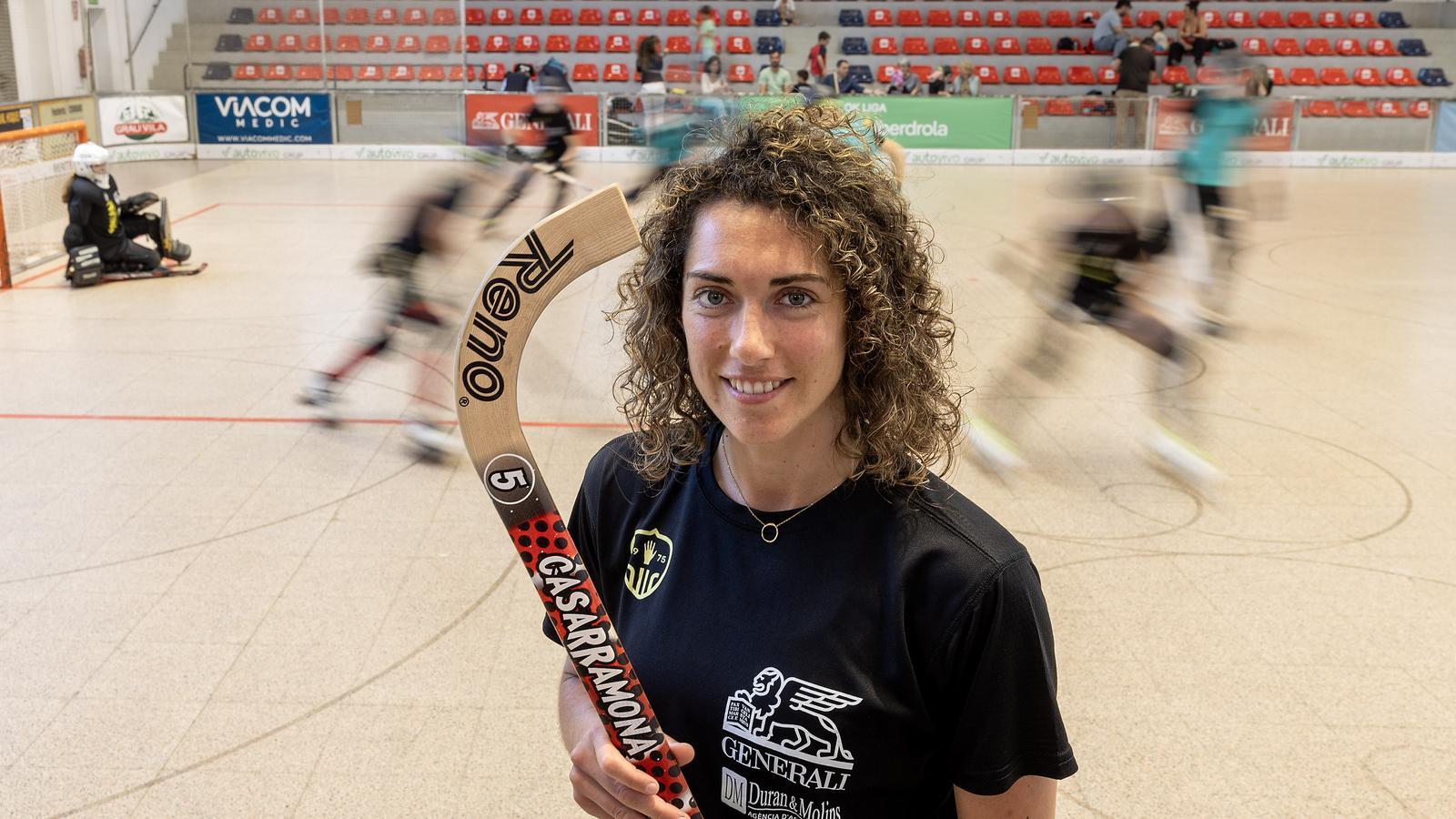
Palau-solità and PlegamansFour European Cups, four World Cups, 7 Leagues, 5 Cups..., the list of trophies won by Anna Casarramona i Vivas (Manlleu, 1994) seems endless. For 18 seasons, she has become one of the best Catalan athletes, leading the wave that changed women's roller hockey, and bringing it to the brink of professionalization. Now she is retiring, playing her last matches with HC Palau, which has become a model club, with hundreds of boys and girls on wheels and a top-tier changing room for the first women's team where Anna receives the ARA.
Is an athlete ready to retire?
— I'm excited. Very excited. The truth is I didn't think it would be so hard, and I've been working on it emotionally. Many things have happened in my life, but now I'm afraid to put an end to my athletic career. Because sport is something that makes me very happy. I am happy competing and now it's time to put an end to it. It's very difficult.
You talk about being afraid. Until now you never seemed like a fearful athlete.
— No, nothing. I have always had this forward-moving lifestyle. And now it's time for another lifestyle. I have always lived the weekend match with intensity and faced Monday thinking about preparing for the next one. Now we will have to look for other illusions and motivations.
—
If it weren't for this pain that a hernia causes you, would you continue competing?
— I think so, but not much. Maybe one more year, two at a stretch. I had surgery three years ago for a hernia and I already considered quitting hockey then. A physical trainer I had told me not to make any decisions during a recovery process. That I should decide after I recovered. And it was the right decision. I recovered, the offer from Palau came, and I was very excited. These past few years have been a gift, but the discomfort in my left leg has returned, in my toes, I have trouble moving them and my leg is a bit numb. And on top of that, sports force you into a very demanding lifestyle. I work as a physical education teacher in Vic, I'm an ESO tutor and I coach. And the pace of the League is getting faster and faster. Teams are becoming more professional all the time, and to give 100% you need to dedicate yourself fully. I'm already at an age and I'm at a different point. I'm doing my body a favor by putting an end to a career with so many joys.
In hockey, it is normal to see players with good careers leave young. Has it been strange to see younger players than you leave?
— It's strange, but that's how it is when you have to balance work and sport. And we are not professional athletes. You have to travel, ask for favors at work... It's complicated and very draining. You need to have a lot of enthusiasm, motivation, and energy to keep going.
Your story begins in Manlleu. Why did you want to play a sport that few girls practiced back then?
— I was the first girl, there weren't any. I signed up because my cousin was doing it. He signed up and I said I would too. My parents came from the world of basketball and were surprised by my choice. I played with a mixed team where I was the only girl until I was 15 years old. Then I signed for Voltregà, where the first year I played with a mixed youth team and then I made the leap to the first team where it was full of the players who were my role models: Natasha Lee, Carla Giudici or Mocha, Cristina Barceló. Carla was paving the way, they hadn't let her play in the boys' league. They were women who broke the mold.
Your case also broke the mold in Manlleu.
— A women's team was formed where older players signed up. My sister and lifelong friends went around schoolyards asking who wanted to join. My father coached them. And since we didn't have a court... they trained under the pavilion stairs, in a small space. I went, I helped.

You signed for Gijón, a club that has always been said to pay more, and you had an experience outside of Catalonia.
— I did it to see the world, to learn, because the club paid for the flat and what was needed to make ends meet, you didn't save anything at all. But my partner was already playing for Gijón and could do the teacher training master's degree in Oviedo. Many things came together. So I left my parents' house and had a very beautiful experience.
Throughout your career, the League has evolved a lot. Faster, better prepared. How have you managed to adapt and keep up the pace?
— Training a lot. But now I can't keep up this pace. I would have to dedicate myself exclusively and leave my job. And I can't. Now all teams have physical trainers. Gym work is done, more training... and some clubs can already do four training sessions a week, before they did two or three.
Wouldn't you have liked to be born later to be able to enjoy a better organized league now?
— It wouldn't have been bad (smile). No, I feel happy about what I've experienced. I am very happy to have followed the path of Carla, Laia, Tasha... We have continued playing because we like it. This connects us to the meaning of life. Doing things out of enthusiasm, motivation. The relationships we have formed within the locker rooms are very healthy and very good. And it is because we genuinely like to play, we don't do it for money.
The Palau has a good pavilion, but many clubs complain about problems with the facilities.
— Resources should be allocated to places where people play sports. We cannot focus solely on football or major events. It is full of places where sport builds community, where positive role models emerge.
Do you feel like a benchmark?
— Now yes, a little, because I'm a veteran.
How many players can be professionals nowadays?
— Perhaps Vila-sana, Fraga or Gijón can be more or less so. But we still have a lot of work to do. We have improved a lot, but there is still work to be done. In teams where there is a very big sponsor who puts in money, they are lucky. It doesn't always happen.
What milestones do you remember from your career?
— With the selection we won the World Cup held in Iquique, Chile, in 2016. It was special because in the previous one played in France we were thinking we would win and we came ninth. Argentina thrashed us 7-1. I don't forget it, I keep every match very present. So being able to eliminate the Argentinians in Chile was special, we had done a lot of work. At club level, I'll keep the Cup won in La Coruña with Manlleu, it cost us a lot. We used to always lose against Palau and the final was precisely that. Being able to win with the club from my town at a time when I had a sick aunt was nice. Regarding memories... as many as you want. The first Cup with Palau, a title that never came, a European Cup with Gijón against Benfica... I remember it all, including the defeats, as they allow you to improve. The capacity for self-improvement that sport has taught me is something I take with me.
Will you not remain involved in hockey?
— I don't know, it's the question everyone asks me. An referee the other day told me: "Start refereeing!" A mother I met told me: "Start as coordinator!" Others say I should coach. I'll consider it. Now I have to accept that I won't be a player and I think that will be difficult for me. I will listen to myself. I will try to go cycling, see the people I love, go to watch matches... I will see what I will do.

