Maria Anglada: "Here, even children in diapers know how to skate; we live for hockey."
Roller hockey player

-
CAT -
CAST
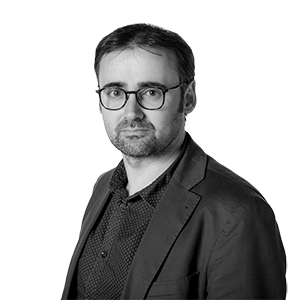
Saint Hippolytus of VoltregàMaria Anglada (San Hipólito de Voltregà, 2001) arrives at the Sant Hipòlit de Voltregà pavilion, greeting friends and family. Everyone knows her. But a fence blocks the entrance to the old pavilion, one of the temples of Catalan hockey, a facility about to be demolished due to structural problems. "I feel a pang in my heart when I see it," she explains, looking at the rink where she scored her first goals. She was once captain of the local women's team. At 24, Maria is retiring to finish her medical studies. She's retiring very young, but with her work done.
New year, new life. For the first time, you're not playing. How are you handling it?
— So far, so good. Since I've been running camps with the kids over Christmas, I don't miss it yet. When training resumes, I'll see how I manage, but I'd say I'm doing well, because I had it well thought out and prepared. I've received a lot of support since taking the plunge, but it's hard to leave this sport.
You're dropping out to focus on your studies. How could you announce it halfway through the semester?
— In August, before the season started, I already warned them. Studying medicine is demanding, and playing at the elite level is too. It's difficult to do both at the same time. Now exam time is coming up, an important moment, and I had to choose. When you have to travel to Mieres, Gijón, or Madrid... well, it makes a difference. So I informed the club and the coaches that I would be leaving in January.
And what did they tell you?
— They got along really well. They told me that if I missed a day of training, it wasn't a big deal. That if I couldn't make a long trip, they understood, and I could still play. But I would have felt bad if I hadn't. I was raised with values that emphasize the importance of doing things right. By doing them properly, I allow them to focus on the team, decide on signings, and have a clear plan. I didn't feel I had the heart to finish the season without missing a single day. I don't know how to do things halfway. There were days when I'd finish my classes and be late for video sessions, or I couldn't go to the gym... and I felt bad. And this frustrated me. I did my first year of university in Barcelona and quickly realized it was very tough, so I transferred to the University of Vic to be closer to home. But now that I'm in my fifth year, I had to choose. Think about it: one day I was late for training and I burst into tears. I felt like I wasn't doing things right. No one at the club said anything to me, but I felt like I wasn't competing at 100%. You're juggling training, classes... It was tough. Luckily, the club has already asked me to keep helping out, lending a hand with coaching the younger kids.
—
So, in hockey, is it impossible to combine studies and a career?
— It's very complicated. Because it requires maximum commitment, and we have a good club structure. But the reality is that we can't make a living from this. Then it depends on your studies, of course. But I knew all of this. My biggest idol was Carla Giudici, who retired to work as a teacher. In hockey, you debut young, you compete a lot, and sometimes you have to quit early. It's happened to some of the guys too. You can't keep up the pace of travel, training, and studying when you're going to bed at two in the morning to study.
How would you explain to people what this sport means in San Hipólito?
— It's hard to explain, isn't it? I think people from outside can't easily understand it; it's part of who we are. It's passed down from generation to generation. My father played, and so did I. Before, my plan every Saturday was to come to the sports hall and spend the whole day watching matches—boys', girls', men's, women's. That's why I had to stay connected to hockey somehow, because that club is my life. Here, they say you learn to skate before you learn to walk [smiles], and it's true that you have babies in diapers who are already skating. When you see the daycare... It's very exciting. I've been lucky enough to start alongside a generation who were my role models: Carla, Tasha Lee, Anna Romero, Motxa Barceló and Adriana Gutiérrez. I dreamed of being them and I've achieved it.
In 2019, you scored the winning goal in the Champions League final as one of the youngest players on the team. Was that the best moment of your career?
— It was special. It was my first year in the League and the Boss Rovira, whom I'm very fond of, put me in for a few crucial minutes of the final. In front of my home crowd. It's an image I'll never forget. I'm still not sure how that ball went in, but it was a magical moment, becoming European champion.
You played two years at Manlleu. What was it like leaving your club?
— I had many friends playing for Manlleu, so I took the plunge. It was nice, but it wasn't like being home. I missed my people and my team's colors; it was a good time to appreciate what I had back home. I had to go back.
How do you cope with the fact that the historic pavilion will be demolished?
— It's like a wound, isn't it? I remember the day we were on campus, playing a barbecue, when we got the news that they were going to demolish the sports hall. I didn't sleep that night; I couldn't believe it. I knew for sure that I would never again play in a hall that's part of our lives. Now we play next door, but it's not the same, even though people still come. More support is needed to maintain these facilities; in towns like Sant Hipòlit, they're meeting places, these clubs mean so much.
In recent years, strong new projects have emerged, such as Vila-sana and Fraga. What's your take on the state of the league?
— The difference between clubs that can afford to have professional players is very noticeable. Some teams have a youth academy but can't afford it, while others can afford it without having as much of a youth academy. These latter teams can train better, at convenient times, also because they don't have to share facilities with the youth teams. If you have a large youth academy, you can't have the younger players train at 10 or 11 at night, so you have to find a balance. I have friends in Vila-sana, and they can train very well there.
Did you ever consider leaving?
— The year after the European Cup, I received offers, they called... but I was clear about my goals: to study and play here. I'm a real homebody. And I knew I wanted to study medicine, even though my mother told me I shouldn't, that it was a demanding field of study. She studied medicine herself, she knew. She told me that because she saw me happy playing, but I've done what was necessary. I'm retiring now, with this record, with a lot of friends, and receiving so much love.

