Ancelotti's Brazil dreams and Germany's shipwreck against Paraguay
Ancelotti's team lifts a match that was losing at halftime and Paraguay breaks Germany's heart after a very tough match

-
CAT -
CAST
BarcelonaThe moment of truth has arrived at the World Cup. And the surprises are coming. Germany was eliminated by Paraguay after an epic duel where both teams gave their all, following different styles. Paraguay, returning to a World Cup for the first time in 16 years, knew how to suffer, reaching the penalty shootout alive, where they surprised as the Germans had never lost a penalty shootout in a World Cup final. In fact, until yesterday they had only missed a single penalty, in 1982. In a single day they missed three. Germany was the cross and Brazil, the face. Ancelotti's team did qualify, although they struggled greatly against Japan.
Ancelotti is making his way
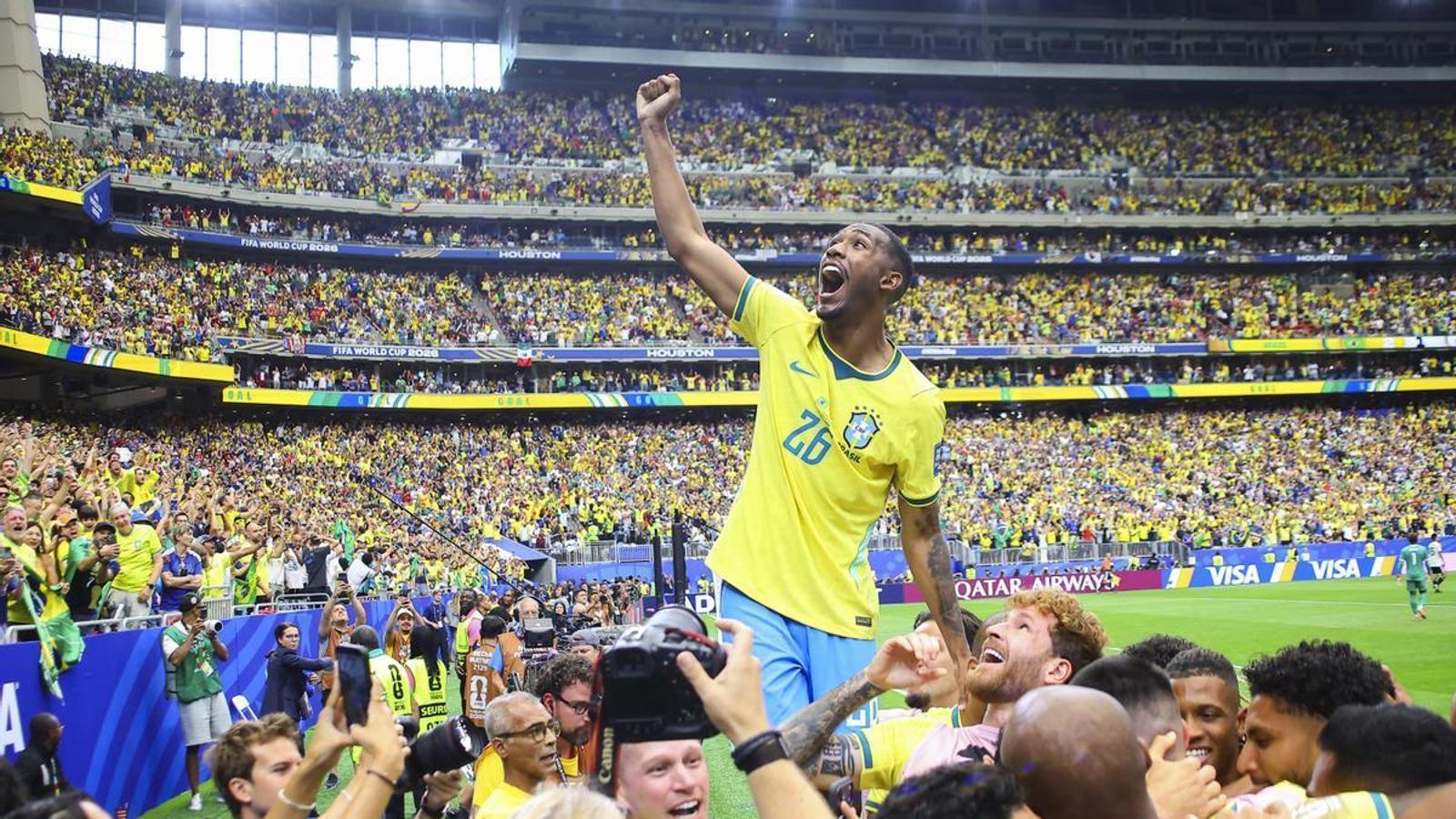
Brazil wants to believe it can win its sixth star, its sixth World Cup. For years, talking about a sixth world title has become a kind of forbidden dream. A pipe dream. Without the jogo bonito of the past, Brazil gets by by biting. These are not happy dreams with harmonic rhythms. They win by suffering and gritting their teeth, but Carlo Ancelotti seems to have managed to transmit part of his competitive gene to a fighting team that knows how to survive. In a very exciting match, the Brazilians overcame a Japanese team that, at times, seemed like it could write the most glorious page in its history. They were winning at halftime. But in the end, the weight of history fell upon them and they were just one step away from surprising the whole world. Brazil, dull and lost in the first half, lifted its head in the second half. They deserved to win and won with a saving goal from Martinelli just when it seemed like there would be extra time.
Japan falls with its head held high. The Japanese have been doing a good job for years. In the last World Cup, they defeated Spain and Germany in the group stage. And in the last friendlies before this World Cup, they had already beaten the Brazilians for the first time. Shortly after, they conquered the English temple of Wembley. Years and years of hard work, of losing many games and of learning. In fact, to understand Japanese football, you have to talk about Brazil. The Japanese have always admired them. The first World Cup broadcast in color on Japanese television was in 1970, when Pelé lifted the cup at the Azteca stadium. In the early eighties, a young teenager left home in Shizuoka to try his luck in Brazil, where he would go on to debut in the First Division with Santos. It was Kazu Miura, the first great idol of Japanese football, a man who celebrated goals by dancing a kind of samba and who was key in the birth of the Japanese professional league in the 90s. When the J-League was born, clubs went out of their way to sign Brazilian players and coaches, like the legendary Zico. And in the famous animated series Captain Tsubasa, inspired by the manga comic with Oliver and Benji, references to Brazil were constant. So much so that, to end the series, the comic's creator, Yōichi Takahashi, imagined a World Cup match between Japan and Brazil, where the Japanese, for the first time, felt they had a chance to defeat the canarinha.
The match imagined by a cartoonist became a reality in Houston. And Brazil, needless to say, was the favorite. It always tends to be. Those five stars on the crest on a yellow jersey carry a lot of weight, even if they've been a bit lost for years, with resounding defeats. In Brazil, this sport is part of the collective identity. It's part of the way Brazilians walk, think, and dance, who get excited every four years and, lately, end up heartbroken. Tired of bad times in recent years, this time for the first time they have handed over power during a World Cup to a foreign coach: the Italian Carlo Ancelotti. A pragmatic man who made it clear beforehand that it wasn't about playing well. It was about winning. The years of jogo bonito are long gone.
Brazil started dominating, but without joy. Predictable passes, slow actions, unable to find spaces against a very disciplined Japan. Vinícius was a shadow, surrounded by opponents who always managed to have more than one defender to watch the Real Madrid player. Brazil's game was poor, dull. None of the magic of Garrincha, Pelé, Zico, or Sócrates. A hardworking, physical, and too flat Brazil to surprise the Japanese, a team with different faces. Against inferior opponents, they attack; against big opponents, they defend and counter-attack. And that's how the first goal of the match came. They took advantage of a serious mistake in the midfield by the Brazilians. Kaishu Sano, a midfielder for Germany's Mainz, recovered the ball, slipped between two opponents, and with a dry long-range shot, put the blue samurais ahead. All of Brazil trembled.
All of Brazil suffered, because deep down everyone knew that losing to Japan in a World Cup was already a possibility. In 1998, when the Japanese debuted in the championship, Brazil was a footballing empire. Now they sit at the same table. Ancelotti, aware that he needed to be brave, substituted Paquetá at halftime and finally brought on Endrick, the young forward he had condemned to obscurity until then. And the change worked for Brazil, which began to pressure the Nippons and gave work to Zion Suzuki, Parma's magnificent goalkeeper, son of a Ghanaian and a Japanese woman.
But after two saves, he could no longer prevent the draw from a Brazilian team that was now biting. After a play in which the Japanese defense cleared the ball off the goal line, a cross from Gabriel Magalhaes was headed in by Casemiro. The former Madrid player, one of the most criticized for his game, took advantage of the fact that Japan struggles with crosses from the flank to score the equalizer. The match, perhaps too slow in the first half, was improving, with Japanese attacks occasionally puncturing Brazil, a team that, once it found itself in difficulties, improved its play with moves from Rayan and one from Vinícius that ended up hitting the post. Brazil was growing as the match progressed. Japan tried to maintain calm, ordered in defense, but sometimes, no matter how much you work, you can't change history. Brazil, orphaned of joy, maintained its competitive spirit and in almost the last play of the match Gabriel Martinelli avoided extra time with a cross shot that Suzuki was close to saving. When the ball entered the goal, the Brazilians began to take to the streets, happy. Their next opponent will be Norway or Ivory Coast. Another very tough match, but while it doesn't arrive, it's time to celebrate that their team is making its way. Without being brilliant, but winning. As Ancelotti likes it, the veteran Italian coach capable of always surprising. Who knows if he can give the Brazilians their sixth World Cup just now that he has film director Paolo Sorrentino with him making a documentary about him. It would be very cinematic if Brazil were to become champions again after so many criticisms and problems.
Germany is eliminated by Paraguay
After the Houston duel, the Boston match arrived. After two consecutive World Cups being eliminated in the group stage, Germany seemed to be on the right track under the young coach Julian Nagelsmann. But they faced Paraguay. And if there's one thing Paraguayan footballers enjoy doing, it's defending against theoretically superior opponents. Despite the absence of their defender Alderete, the team coached by Gustavo Alfaro managed to stop the attacks of a Germany that always had the ball, taking advantage of one of their few attacks to make it 0-1 thanks to Enciso.
In the second half, Germany took a step forward. Nagelsmann switched to a three-man defense, positioning Kimmich in midfield and playing at a higher tempo. When Havertz scored from a cross, it seemed the victory would be theirs. But Paraguay managed to hold on until extra time, where the match referee did not validate a goal by Tah, as there was a prior foul on the goalkeeper Orlando Gill. And it would be precisely Gill who would be one of the standout names in the penalty shootout, saving two. Germany, who until then had only missed one penalty in the World Cups in 1982, missed two. But Neuer kept the team alive with a key save that extended the shootout to the sixth penalty. And here Tah missed, and José Canale, a 29-year-old defender who had barely played for the national team before, converted his. Germany is the first major champion to fall in the World Cup. An event that promises more surprises.
