The 2026 budgets prioritize the quality of public services, housing, and investment
The new budgets increase resources to respond in a present and future key to the needs of the citizenry
-
CAT -
CAST
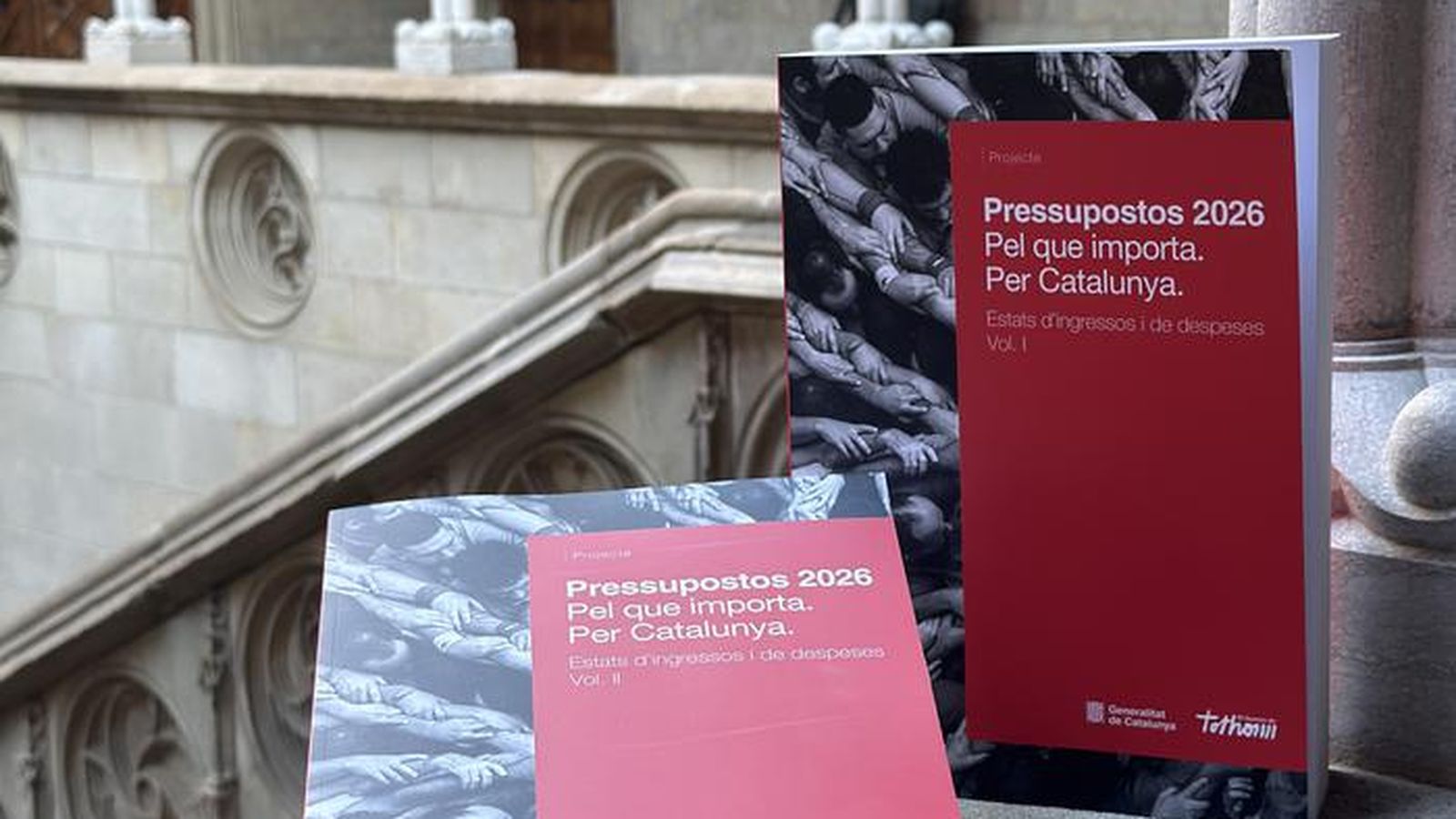
On July 2nd, Parliament definitively approved the Generalitat of Catalonia budget for 2026, which represents a historic increase compared to the last approved accounts, corresponding to 2023. This year, 49,162 million euros are allocated to improving the lives of Catalans, meaning 9,126 million euros more than in the budgets approved three years ago, which represents an increase of 22.8%.
The improvement of public services, access to housing, and the boost to investment are the main priorities of these budgets, which respond to a clear strategy: to address the immediate needs of citizens and, at the same time, transform Catalonia and prepare it to face future challenges.
The record spending planned allows three out of every four euros to be allocated to social policies, especially in the areas of health, education, and social rights. Specifically, the Department of Health accounts for 34% of the budget, while Education absorbs 20%. The most significant increases are also recorded in social rights matters, with 10% of the total.
Furthermore, the budgetary agreements reached with the parliamentary groups of Esquerra Republicana and Comuns, with an impact of nearly 4.7 billion euros during the 2026-2030 period, represent a significant boost in strategic areas such as social progress, territorial cohesion, self-government, housing policies, and the promotion and defense of Catalan.
Health, education, and social rights, at the forefront
“This is an ambitious bill that seeks to respond to the country's needs and serve everyone”, assured the Minister of Economy and Finance, Alícia Romero, after handing over the text to the President of the Parliament, Josep Rull. For the highest responsible for the finances of the Catalan executive, it is “the most important law that a Parliament approves during the year, the one that sets the Government's priorities, the black on white of the policies it wants to advance to face the challenges and opportunities that the country has”.
The Government allocates 13,840 million euros to Health, the equivalent of 34.3% of the departmental budget, 21.3% more than in 2023. In Education and Vocational Training, the allocation reaches 8,356 million euros (20.7%), which represents an increase of 24.5%. Regarding Social Rights and Inclusion, the budget rises to 4,248 million euros (10.5%), 28% more than in the last approved accounts.
In absolute terms, these three departments, together with the Department of Territory, Housing and Ecological Transition, are those that experience the largest budgetary increase compared to 2023: Health (+2,428 million euros), Education and Vocational Training (+1,642 million), Social Rights and Inclusion (+930 million) and Territory, Housing and Ecological Transition (+894 million).
Overall, departmental spending increases to 40,399 million euros, 24.9% more than in 2023. This budgetary effort will allow for actions such as the incorporation of 6,000 new professionals into the health system and an increase of €616 million in resources for Primary Care; the expansion of meal and transport grants for more than 265,000 children and the incorporation of 4,162 new teachers into the system; the construction of 15 new public residences and the creation of 1,000 new places; and the objective of reaching a stock of 50,000 public housing units for social use by 2030, among others.
More investment and prosperity
The Bill of Budgets for the year 2026 also includes other key aspects such as the acceleration of investment, which grows to €4,146 million and more than compensates for the completion of the European Next Generation program. Thus, excluding these funds, the investment planned in the 2026 accounts increases by 45% compared to the last budget, a figure that represents an additional injection of €1,257 million to boost the infrastructure and equipment necessary for the country, given the higher surplus achieved this year (€2,475 million).
The Executive has also taken into account in the budget execution calendar its continuity beyond December. Among the measures agreed with the political forces that support the budgets, and which have an execution horizon until 2030, is the launch of the Towns Plan (€400 million) to reactivate the urban centers of small municipalities; the record allocation of €2,500 million in housing policies (including €1,000 million in ICF loans), to increase HPO and facilitate access to affordable rent; or the Regenera program to rehabilitate the degraded residential stock throughout Catalonia.
The promotion and defense of Catalan also holds a prominent place and will have more than €90 million, and up to €481 million will be transferred to the ATC to strengthen its structure. In the investment chapter, €400 million will be allocated to the improvement of educational facilities, and sustainable mobility infrastructures such as the tram in Camp de Tarragona will be deployed.
Other relevant items include €194 million to maintain the T-Usual and T-Jove discounts; €355 million for Rodalies de Catalunya; €185 million from the Local Cooperation Fund; or approximately €48 million to consolidate the ICREA program for talent attraction and retention. The call for new positions for Mossos d’Esquadra, Bombers, and Agents Rurals is also planned, along with investments in fire stations, police stations, and judicial facilities in various cities.
Towards financial stability
The growth forecasts for the Catalan economy, with an increase of 2.1% in 2026 after registering a GDP increase of 2.7% in 2025, point to a progressive reduction in the debt-to-GDP ratio, a trend initiated in recent years that reinforces the sustainability of public finances. This scenario of financial stability also foresees a moderation of debt in 2026, which will be even higher if the cancellation of 20% of the Generalitat's debt with the FLA materializes. In this case, the debt-to-GDP ratio would stand at 22.2%, five percentage points below the current level.
At the same time, economic dynamism is expected to have a positive impact on the Generalitat's tax collection. Non-financial revenue this year amounts to 48,231 million euros, 27.9% more than in the last approved budgets, representing an increase of 10,527 million euros.
The majority of these revenues come from the financing model (32,894 million euros), from the collection of own and assigned taxes (6,481 million), and from earmarked resources (7,886 million).
