The communities will not vote on the new regional financing model until September
The Ministry of Finance postpones the CPFF scheduled for this Wednesday at the request of the PP regional governments

-
CAT -
CAST
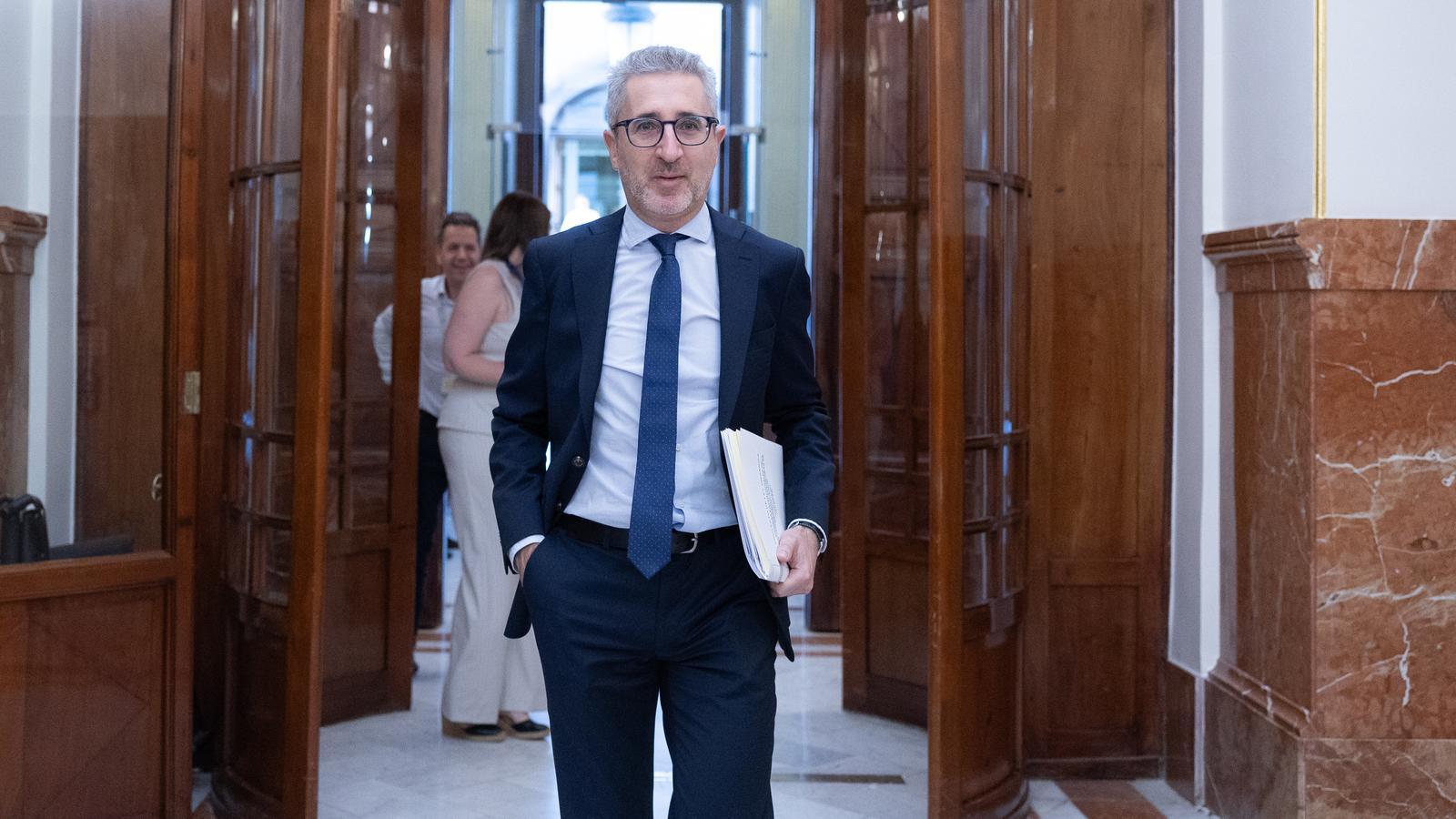
MadridThe autonomous communities will not discuss or vote on the new regional financing model until next September 4. This is the new date set by the Ministry of Finance to hold the Council of Fiscal and Financial Policy (CPFF) that was scheduled for this Wednesday. The Spanish government has decided to postpone the meeting with the autonomous governments where the reform of the model was to be debated, precisely, after the PP communities have asked for more time to study the proposal, which they have rejected for the moment.
"The Ministry of Finance has been offering channels of dialogue with the autonomous communities for some time to address the reform of the financing model. In June, it tried to establish technical meetings to analyze the reform in detail," they recall from the Ministry of Finance. But the PP autonomous governments closed the door to having these bilateral meetings.

The autonomies governed by the Popular Party, but also those of the PSOE that are part of the common regime, have rejected from the first minute the proposal that the Spanish government has put on the table and that the Ministry of Finance and ERC negotiated. Only the government of the Canary Islands, of Coalición Canaria and the PP, has changed its position in recent days; this Monday, and after a meeting between the Canary Islands government and the Ministry of Finance, Fernando Clavijo's government announced its support for the proposal. For this reason, sources from the ministry headed by Arcadi España see it as "surprising" that now, just after the Canary Islands have announced their favorable vote, some communities are demanding to postpone a CPFF that was announced at the beginning of the month. "In any case, the Treasury will not close the door to dialogue and accepts the request," defend the same sources, who assure that the decision to postpone the conclave is a reflection of the Spanish government's "good will" to reach a consensus.
The Minister of Finance has recalled that the proposal will allow autonomous communities to have an additional 20,975 million euros and, therefore, "more capacity to improve the public services that citizens receive."
The one who did not like the Treasury's decision is, precisely, ERC. "We are late – denounced the party leader, Oriol Junqueras, through his profile on the social network X–. We have been waiting 13 years for a new financing model. Catalonia cannot continue trapped in a 2009 system," he said. ERC and the Spanish government tied this reform of the financing model in the framework of the negotiation to invest Salvador Illa.
The Minister of Economy and Finance of the Generalitat, Alícia Romero, has also called for urgency, insisting that the CPFF should be held "as soon as possible", but also remarked that the Ministry of Finance has been "generous" with the PP's request. However, the minister also added: "The PP has asked for more time to debate and negotiate, and it already has it. It must be said that it had it and did not take advantage of it," the minister indicated at a press conference. In this regard, she recalled that none of the PP's communities have met with the Ministry of Finance in the bilateral meetings it convened to discuss the model and took the opportunity to once again ask them for "responsibility": "Let them study the model, let them put forward the proposals they consider, but let them not delay the start of the proceedings any further," Romero reiterated.
Homework for after the summer
With this Tuesday's move, the Spanish government will have to face, upon returning from the summer holidays, not only the debate with the regions on the reform of the financing model, but also the debate with political parties to move forward with a new package of housing measures. This week, Pedro Sánchez's executive has also decided to postpone a new housing decree until September after being unable to weave a consensus with the parties that were part of the investiture bloc and, therefore, secure votes for a vote in Congress. Once again, Sánchez has encountered the balancing acts he must perform in the face of demands from Podemos and Junts, which are often contradictory.
