It's hate, stop it! A campaign to combat extremist discourses
#ÉsOdi is a campaign by the Social Third Sector Table that warns of the normalization of hate speech and the far-right.
-
CAT -
CAST
Machismo, racism, xenophobia, aporophobia, anti-gypsyism, ableism, LGTBI-phobia and ageism are rooted in our society with hate speech that integrates into our daily lives. The campaign #ItHate is powered by the Table of entities of the Social Third Sector of Catalonia and aims to raise awareness of the effects of increasing polarization and the rise of discriminatory messages against vulnerable groups, less than a year before the municipal elections.
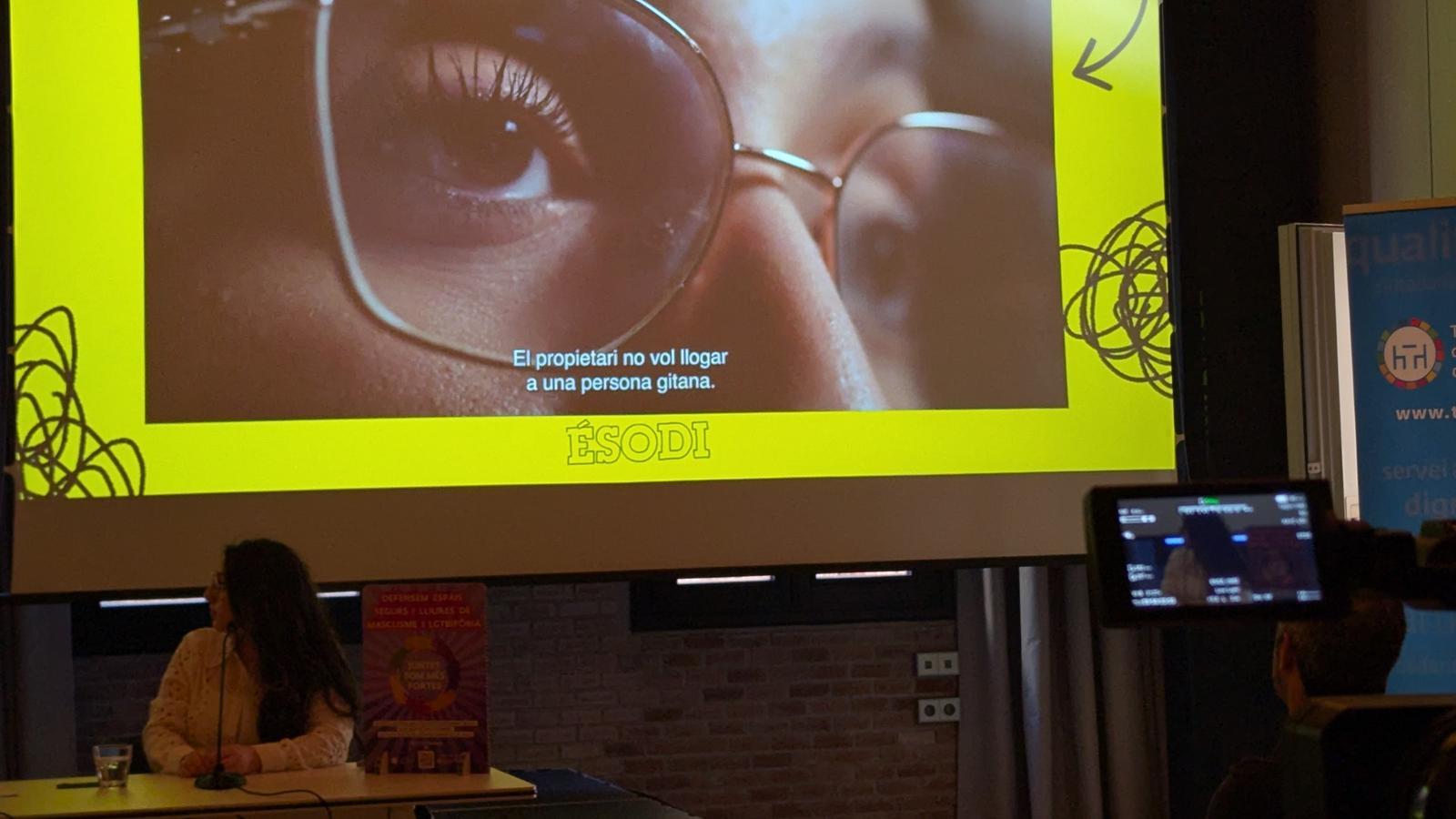
The campaign #IsHate focuses on an increasingly present phenomenon in the streets, on social media, in the media, and even in institutions: the normalization of hate speech. Through a spot produced by Quepo Cooperative, the campaign gives voice to real witnesses who highlight the harshness and consequences of these discriminatory attitudes, with the aim of raising public awareness and combating their normalization.
"All Moroccans steal. They take our jobs. As a trans person, you are seen as a monster. The landlord doesn't want to rent to a Roma person. This one, with a mental disorder, is violent. The elderly are alone..." These are some of the discourses that are collected and that highlight discriminatory behaviors. "In the workplace, many Roma people are not hired just because of their surnames or their photograph. In housing, many landlords decide not to rent to Roma people and, on social networks, behind fake accounts, clearly racist and anti-Roma messages are published such as "I hope Hitler comes and exterminates this race" or "they have to kill each other", exemplifies Sarai Fernández, gender equality technician at the Fundación Secretariado Gitano and one of the protagonists of the campaign, along with Pere, Hayat, Luca, Ismael, and Miguel Ángel.
Self-defense
The Taula recalls that these discourses are not new: they stem from discrimination that has existed for years. What has changed is the speed at which they spread, the megaphones they have, and their growing presence in public spaces. Furthermore, they not only target people based on their origin, identity, or situation, but also social entities that defend their rights, which are also subject to attacks for accompanying these groups. Many of these entities, moreover, are formed by or include people who have organized to defend their own rights.
"All people, absolutely all, are holders of rights. We have them and they must be guaranteed to us in equal opportunities and without discrimination. These discourses prevent people who are the object of hatred from accessing them and also make it difficult for the social entities that accompany them to do our work. But the effects of hate speech do not only affect people and entities; they end up harming society as a whole," defends Bárbara Díaz, co-coordinator of the working group on equality and inclusion policies of the Taula del Tercer Sector Social.
The pre-electoral context, a risk factor
The decision to align the campaign in a pre-election context like the current one is deliberate. "We are doing it now because we know there will be a significant increase in hate messages that blame migrated people or people in poverty situations," explains the president of the Table of the Social Third Sector, Xavier Trabado, who recalls that "these discourses simplify problems that are very complex," based on stereotypes and biased information that hinder coexistence.
Therefore, the #ÉsOdi campaign aims to strengthen citizens' critical capacity to identify these discourses and prevent their normalization, emphasizing the defense of human rights and social cohesion.
Objective: reach more citizens
In addition to the spot, the campaign includes a radio ad and the website esodi.cat where clear information is offered about what hate speech is, how it spreads, and what can be done to combat it. It also provides practical advice for acting in these situations. The goal is to reach a broad audience and provide tools, especially to young people, who are the most exposed to this content in the digital environment.
The first phase of the campaign was launched at the end of 2024 on social networks with the participation of content creators such as Wiz Problema, Miss Raisa and Ayoub Borbata, as well as the launch of the portal esodi.catas a space for information and resources. During 2025, the initiative was expanded with digital actions focused on disinformation as a driver of hate speech and on the anti-immigration narrative, one of the main narratives used by the far-right. New citizen awareness actions are planned for the autumn of this year.
