The Federation of Agrarian Cooperatives of Catalonia (FCAC) underlines the key role of cooperativism in managing these crises.Cooperatives have acted – and continue to act – as technical support for members, providing information, coordinating preventive measures, and adapting production. They also maintain constant dialogue with the Administration to defend technical criteria, protect markets, and claim fair compensation.These crises highlight that livestock farming cannot face challenges of this magnitude alone. Collective structures must be strengthened, comprehensive prevention strategies promoted, and more resources allocated to research into emerging diseases.At the same time, it is essential to raise biosecurity standards on all farms and intensify wild fauna control to prevent the spread of transboundary diseases.
Difficult times for Catalan livestock farming
Infectious diseases in the bovine, porcine, and avian sectors and the Asian hornet complicate economic sustainability
-
CAT -
CAST
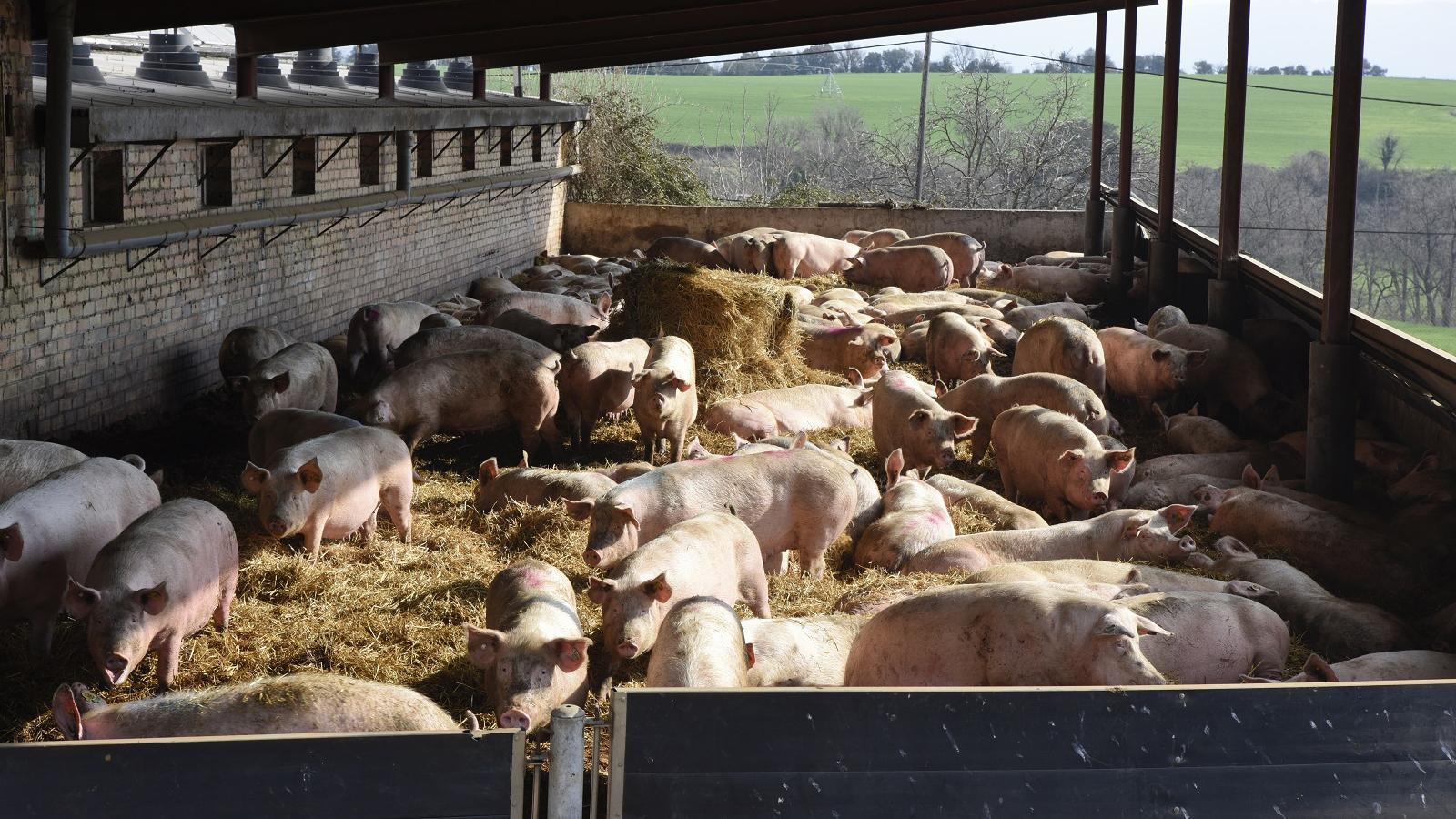
Rarely has Catalan livestock farming been subjected to such intense pressure as experienced throughout 2025 and these first months of 2026. When we look back, this period will stand out as one of the most complex and demanding in recent decades. The emergence of infectious diseases such as lumpy skin disease (LSD) in cattle, African swine fever (ASF) in wild boars, and avian influenza in poultry has strained the biosecurity, economic sustainability, and response capacity of many farms, especially family-run ones.This situation is compounded by the proliferation of the Asian hornet, which seriously threatens honeybees and, consequently, the balance of biodiversity. The consequences are already evident. In the case of pigs, the crisis has led to weekly losses of millions due to the collapse of prices at the Mercolleida market. The big unknown today is how long the sector can withstand this.Bovine dermatosisContagious nodular dermatosis, detected in L'Alt Empordà with 18 confirmed outbreaks, forced the activation of surveillance zones and the vaccination of hundreds of thousands of animals.Currently, the situation is considered controlled in Catalonia. However, mandatory vaccination is planned for all animals present on the farm, those being born, and those joining the farm who are not vaccinated. In parallel, the Department of Agriculture is finalizing an order to recover the productive potential of the affected farms, an essential measure for the sector.African swine fever in wild boarsIn parallel, the detection of ASF in wild boars in Collserola has led to restrictions in nearly a hundred municipalities and more than 250 confirmed cases, with direct impacts on marketing and prices.Faced with this situation, the Federation of Agrarian Cooperatives of Catalonia (FCAC) has repeatedly called for intensifying and streamlining control measures: from sanitary emptying to increasing the pace of captures and surveillance in affected areas.Despite the coordination of the bodies involved and the actions taken, more speed and effectiveness are needed to contain the spread of the disease and reduce its impact. It cannot be forgotten that Catalonia concentrates 20% of the state's pig production and almost half of the exports.Avian fluAvian influenza has also generated restrictions and additional costs for farms. Last April 1st, the mandatory confinement outside risk zones was lifted, while maintaining biosecurity measures. Despite this, limitations remain in force in high-risk areas, especially in the wetlands of the Delta de l’Ebre and Empordà, and in areas with current health restrictions.The Asian hornet, a growing threatThe beekeeping sector continues to await a shock plan to tackle the Asian hornet (Vespa velutina), an invasive species that preys on bees and compromises both honey production and pollination. The current proposal – based on the placement of 700 traps throughout Catalonia – is late and clearly insufficient. Action should have been taken in early March, as other autonomous communities have done.Among the measures proposed by the FCAC are queen trapping, specific training for beekeepers, and the authorization of attractant products, actions that could significantly reduce the impact of the pest. Added to all this is the increase in costs, especially fuel during the campaign. Unlike other agricultural sub-sectors, the beekeeping sector has been excluded from diesel aid, despite suffering increases of up to 30% in production costs.Furthermore, Varroa, adverse meteorological phenomena, forest fires, and the pressure of low-cost honey imports worsen the sector's situation.
- 91 municipalities and 252 wild boars positive for African swine fever in Catalonia
- 20% of the state's pig production and 49% of exports are concentrated in Catalonia
- 30% of Catalan livestock production is in the hands of cooperatives, with a turnover of approximately €1,000 million
- 30% increase in costs for apiaries due to the rise in fuel and other factors
