The United Kingdom will prohibit access to social networks to those under 16 years of age
A kind of technological curfew will restrict continuous browsing for minors under 18 years of age with a legal reform that aims to be in effect in the spring of 2027.

-
CAT -
CAST
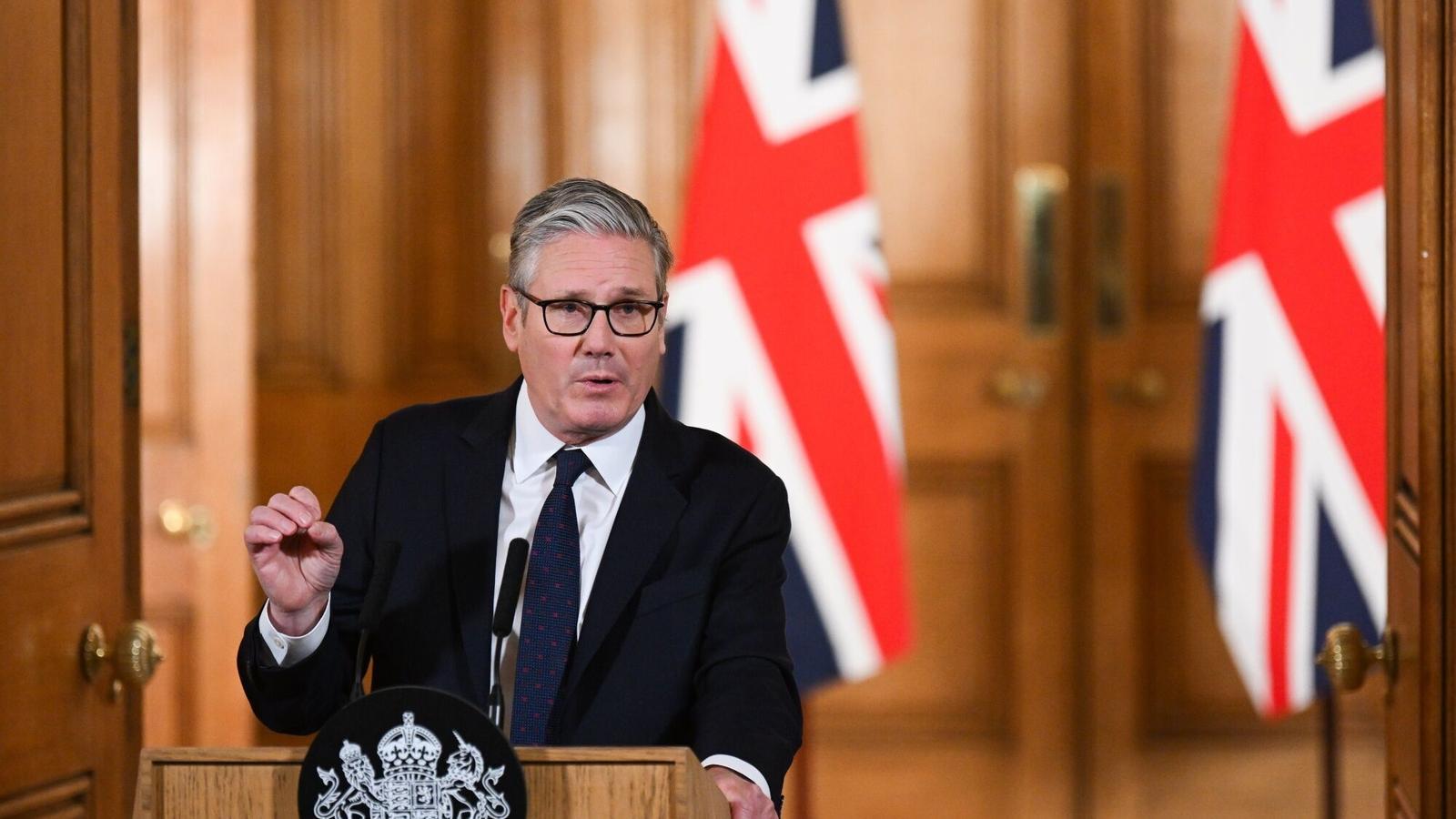
LondonThe impunity of big tech companies is over in the United Kingdom. Or at least that is what Prime Minister Keir Starmer intends, who this Monday made a 180-degree turn and announced the prohibition of access for minors under sixteen years of age to social networks. Furthermore, adolescents up to 18 years of age will also have their ability to continuously browse social networks until late at night restricted, in what has been compared to a kind of curfew, in this case, technological. The legislative reform also aims to go further with changes to video game and live streaming platforms, so that strangers cannot contact minors. Last week, Starmer already gave an "ultimatum to Google and Apple to activate mechanisms that prevent minors from sending, receiving, or making sexually explicit images from their mobile phones.
Starmer has stated that social networks "make children unhappy, facilitate harassment, can harm mental health, and are designed to be addictive". "It will be difficult to legislate, regulate, and enforce the ban, but it is worth pursuing because I am not willing to compromise children's safety," he said. Starmer assured that despite the resistance that big tech companies may offer, the government will remain firm: "We have the capacity to act, and we will," he assured. Starmer has established a "clear correlation" between the use of smartphones and a quasi-epidemic in the mental health of young people and adolescents in the United Kingdom, "which intensified especially during covid".
The responsibility for compliance with the new laws will fall on the big tech companies. The affected platforms will be Snapchat, TikTok, YouTube, Instagram, Facebook, and X, but not WhatsApp and Signal. Services such as YouTube Kids, Lego Play, and Classroom Google will be exempt.
For the moment, however, from the speech that Starmer delivered from Downing Street, very few details can be known about how the ban will be implemented and, above all, how compliance will be guaranteed. Regarding its entry into force, the prime minister said he is confident that the legislative process will be completed by next spring. The UK regulation thus joins the one that entered into force in Australia more than six months ago.
Australia's Experience
Australia, however, a pioneer in banning social networks for minors under 16, has found that implementing this ban is proving much more difficult than anticipated. Despite the measure coming into effect last December, young people claim they can bypass age controls in minutes, and data suggests that most teenagers remain active on the platforms.
the Spanish government's intention to ban social networks for minors under 16 years of ageAnd in Spain?
In the State, the Spanish president, Pedro Sánchez, also announced on February 3rd the intention of the Spanish government to ban social networks for minors under 16 years of age. An announcement that generated the direct reaction of the owner of X, Elon Musk, who called Sánchez a "tyrant" and a "traitor". In addition to the veto for minors under 16, Sánchez also explained that the Spanish executive wants to oblige platforms to implement "effective age verification systems" that go beyond simple formal declarations and guarantee real and effective barriers, they defend from the executive.
has promised to challenge the leadershipCultural change
From Starmer's words, it can be deduced that a generation of teenagers is practically considered lost, probably the older ones, already close to 16 years old. The "premier" admitted that some of these boys and girls "will find ways to circumvent the restrictions" but, in any case, said he is confident that "a very significant reduction in the presence of minors on social networks" will occur. And he insisted that it is the "first step," as what may be more relevant is the "cultural change" that the ban will foster. "It will take time, but it will spread the idea that our children can grow up in a different way and have a better and more enriching childhood," without being hooked on social networks. In a way, the Labour government hopes that the restrictions imposed on social networks will have the same long-term effect as the fight against tobacco decades ago.
Some specialists assure that the new legislative measures should cover not only social networks, but also video games and artificial intelligence tools, as young people spend increasingly more time in these digital environments, and less time on platforms like Facebook. Through a statement, YouTube's first reaction after the announcement was to say that "a ban of this type could push minors towards less safe services".
Keir Starmer's announcement takes place in a key week, in which a large part of the prime minister's political future is at stake. On Thursday, a by-election will be held in the Makerfield constituency, in northwest England, and if the Labour candidate and current mayor of Manchester, Andy Burnham, wins, he has promised to challenge the party leadership to take the keys to Downing Street. From this point of view, social network legislation could become one of the most relevant legacies of a "premier" who arrived in office less than two years ago, but who in recent weeks has lost all the credit he had achieved. Following the local and regional elections in early May, almost a hundred of his MPs asked him to step down.
