The topics of the educational debate: from teacher professionalism to inclusion and the responsibility of families
The conclusions will be known in the month of April of the year that comes

-
CAT -
CAST
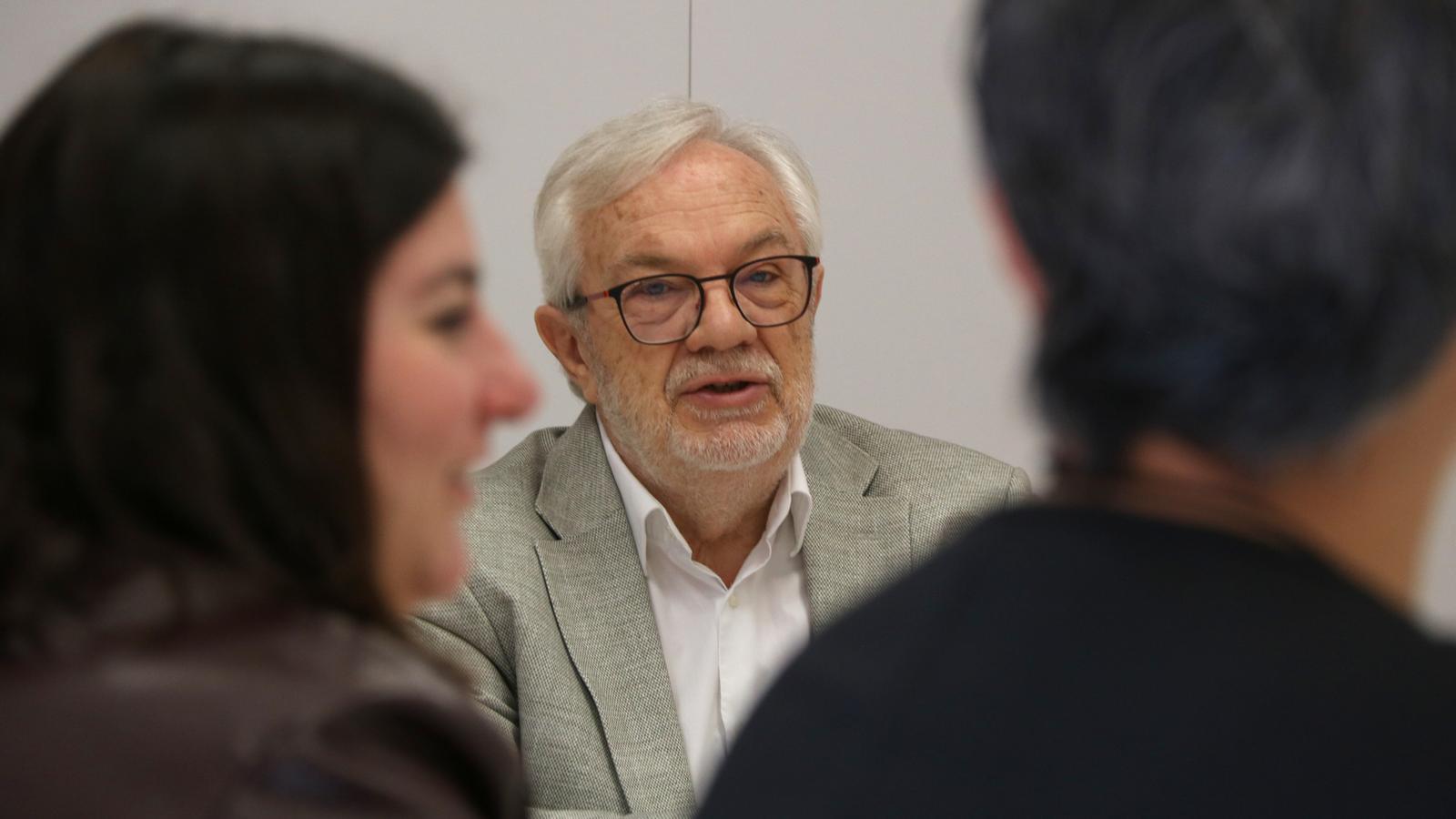
BarcelonaThis Friday, the topics that will form part of the national educational debate to improve academic results were made official. After meeting with the parliamentary groups, the president of the Education Council of Catalonia (CEC), Joan Manuel del Pozo, announced that the process will finally focus on five major issues: inclusion and non-segregation; teacher professionalism—especially initial training and throughout the career—; the co-responsibility of families; governance at the service of learning—both on a general scale and within educational centers—, and the co-responsibility of municipalities to decentralize the educational system and distribute it across the territory.
Regarding the co-responsibility of families, a topic that had not been brought to the table until now, Del Pozo warned that "there is a general level in society worldwide of many families shirking their responsibility" who believe that the school system will provide all the education for their children. "And that is not the case," warned the president of the CEC.

A three-phase process
The process will have an initial listening phase that will last until Christmas, followed by a second deliberation phase and a final conclusions phase. All debates will take place through 12 spaces and their school councils: the Barcelona Education Consortium and eleven territorial services. In each of these territorial spaces, there will be four sectoral groups –teachers, parents, students, and management– that will meet for three or four hours. "They will do so with the instruction to speak without any restriction on proposals and without the need to reach agreements. There is no need to reach agreements; therefore, there is no need to argue. Here, we must register propositions and proposals of all kinds," detailed Del Pozo.
Afterwards, the deliberation phase will proceed, in which the groups will be reduced to six and, then, the goal will indeed be to reach agreements. Between January and March of next year, groups of 20 people will deliberate based on the proposals received and will have to prepare a final conclusions document. Finally, in April, the possible proposals for agreement regarding the conclusions reached by each group and territory will be presented.
Del Pozo also states that the intention is to propose measures rather than diagnoses. "What falls to us as citizens involved in educational processes is to say how we are and what we want to do to be better," defended the president of the CEC.
