The regularization exceeds expectations: 257,000 applications in Catalonia
Social Security registers 159,000 of these migrants in the State who already have the provisional permit

-
CAT -
CAST
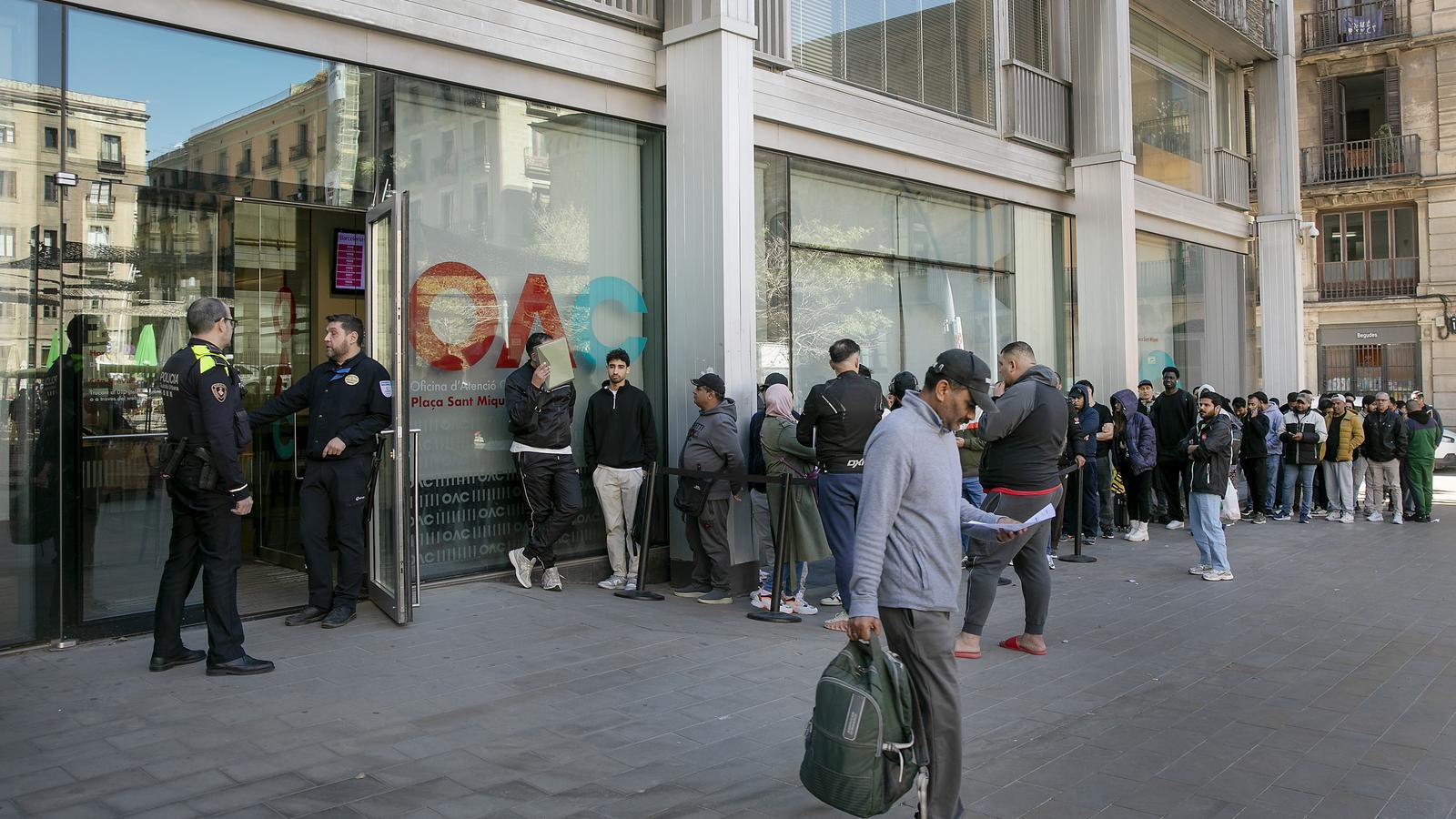
BarcelonaThe extraordinary regularization process for migrants has concluded with 1,174,978 applications to join the process throughout the State. The figure exceeds the half-million forecast made by Pedro Sánchez's executive when it announced the opening of the procedure, the seventh of its kind in democratic times and the first in 20 years. Of the total requests, more than 52% have already been admitted for processing, and therefore the beneficiaries now have a first temporary authorization to live and work in Spain. After admission, the government has three months to respond, but rejected applications have not been made public. Catalonia, with 257,000 —two out of every 10—, is the territory that has registered the most files, ahead of the Community of Madrid (202,000), the Valencian Country (167,000), and Andalusia (161,000).
All these people have resided in the State for a long time, but for various reasons they have never been able to complete the ordinary regularization process, which requires a minimum stay of two years with uninterrupted registration, a full-time job offer for one year, decent housing and, if they wish to reunite family members (partner, children and parents), to have sufficient income to support them. The process has made these criteria more flexible, and with the notification of admission to the process, beneficiaries have already been authorized to work legally, allowing many to thus exit the underground economy.
The effect of the process has already manifested in the figure record of registrations with Social Security this June. The regularization has added 159,000 new foreign workers to the State with the newly released provisional permit. Of these, 83% have registered in the general regime, while in agriculture there are 8% and 5% are self-employed. By labor sectors there are no surprises and one in four is employed in hospitality, 12% in commerce and 11% in construction. Significant is the very low figure of active personnel in care and domestic work, only 4% of the total.
Where do they come from? The majority of applicant migrants are Latin Americans, specifically 67%, of whom 27% are Colombians. Far behind are those originating from Morocco (13%), followed by Venezuela (11%) and Peru (8.8%), according to data presented this Thursday by officials from the Ministry of Migration, who emphasized that the process is still underway and that what is shown is a provisional snapshot that will be refined as cases are resolved. 57% of applicants are men and 43% are women.
They are mostly young people: 81% are under 45 years old, and the 25-34 age group is the largest (31%), while those over 65 are testimonial (2%). Regarding children under 15 years old, they represent 11% of applications. Furthermore, 20% of applicants are asylum seekers awaiting a resolution who have tried their luck with this new avenue, given that the international protection route is slow and has a high rejection rate.
Political squabble
The regularization has reached its final point amid furious attacks from the right and far-right on Moncloa's migration policy and amidst a legal battle in the Supreme Court. The high court, in fact, has expressed "doubts about the process's fit within European law" and is considering raising a preliminary question to the Court of Justice of the European Union (CJEU), based in Luxembourg. However, the "experts consulted by ARA agree that it is unlikely that these judicial moves will have immediate effects on the applications submitted.
In a video message, the Minister of Migration, Elma Saiz, has described the procedure as "successful" for being a "true milestone" in migration policy that should allow "hundreds of thousands of people who already reside in our country, but live in fear and without rights, to face the future with enthusiasm and hope."
The application period opened online on April 16 and closed last Tuesday, June 30, amid demands from the initiators of the measure, some social entities, and political parties such as Sumar or Podemos to extend this period, considering it insufficient due to bureaucratic hurdles encountered in requesting the vulnerability certificate, a requirement proposed days before the process began by the State Council.
The measure, approved by the Government in the form of a royal decree, arises from a popular legislative initiative (ILP) that reached Congress with the support of over 600,000 signatures, but was blocked in the lower house due to a lack of parliamentary agreement. All undocumented migrants residing in Spain before January 1 and who had been living in the country for at least five months could apply, as well as anyone who had applied for asylum before the same date, provided they had no criminal record.

