Ticking clock regularizations: "I have no other plan than to have papers"
The extraordinary process ends with almost a million applications, more than double those foreseen by the Spanish government
-
CAT -
CAST
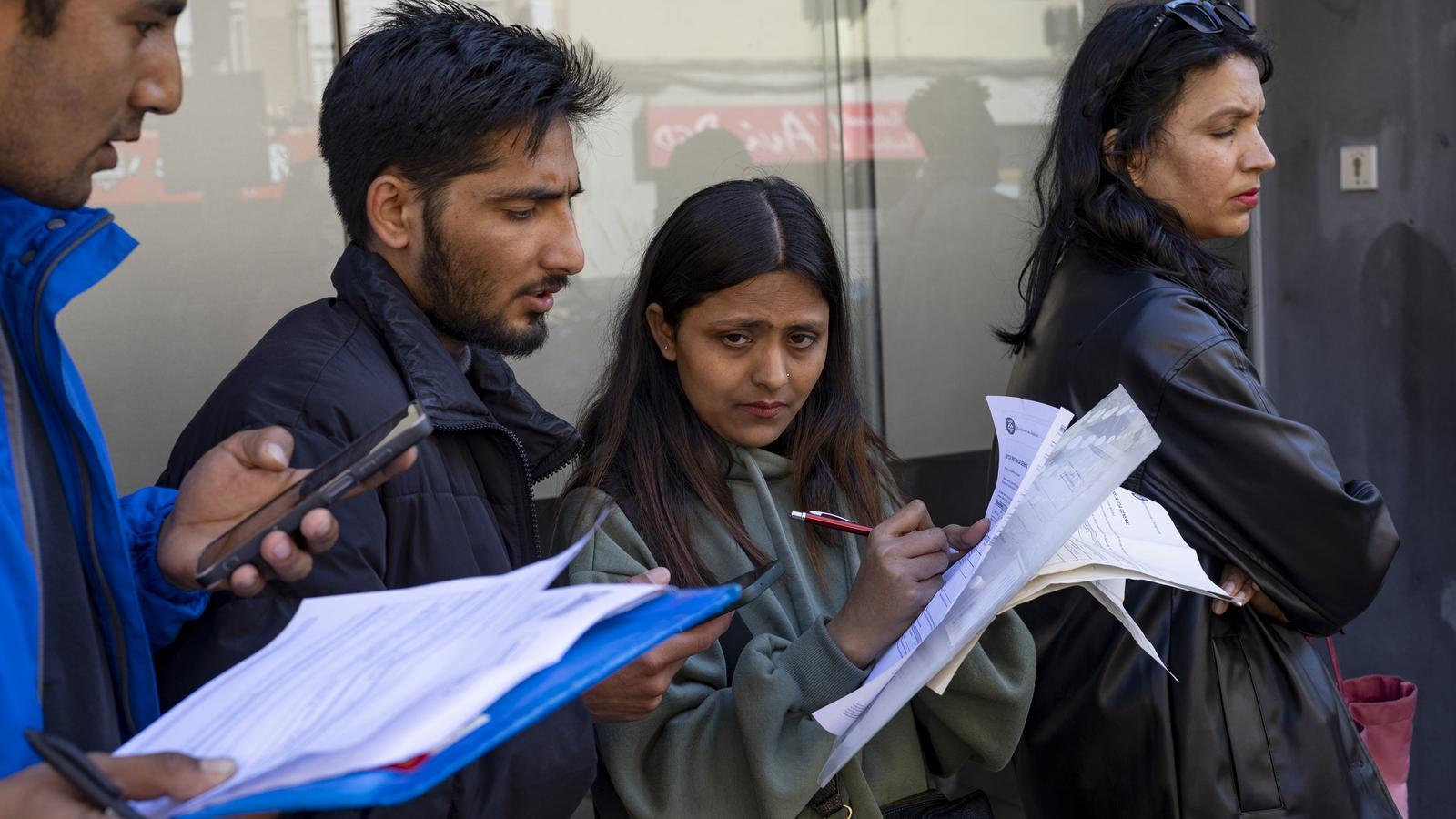
Barcelona / MadridThe day before the extraordinary regularization process for migrants ends, there are still those who submit their documentation. For Al Bilal, a Pakistani man in his forties, it has been "very" difficult to obtain all the papers, especially the criminal records from their country because they had only partially reached them to the point where they had considered completing the procedures without attaching the proof they had requested. Finally, the paper arrived last week, just in time "to avoid surprises," he says. On the contrary, it even includes the registration that is not required. Pending definitive data, the latest official figures from a couple of weeks ago indicated that 900,000 applications have been made, although journalistic reports increased the figures to 1.2 million cases, more than double the half a million predicted by the Spanish government.
Afzal is another Pakistani who has come to accompany Bilal and proudly shows his NIE, the identity document for non-EU citizens that certifies that the application he submitted the first week of the process has been accepted and, therefore, he is recognized as a resident of the State with the right to work. The "problem" – he says – is that, to make an employment contract, "companies only want the NIE", the permanent document which will still take a few days, so many of the beneficiaries will still have to wait to be able to work legally and have to maintain jobs without a contract or rights that have allowed them to stay and, even, in most cases, send money home.
Ramón and Angie are a young Salvadoran married couple who have been working "caring for the elderly, cleaning offices, and whatever else came up." They live in Santa Coloma de Gramenet and travel throughout the metropolitan area "to earn a euro," aware that the salary falls short when they account for the expenses of renting a room, food, transportation, and "transfers to El Salvador" to support their two young children. "Our biggest dream is to have the papers to see the children again," exclaim the couple. In 2022, they sold the small business they had and left El Salvador to flee "from violence and give a better life" to their children, explaining they echo the desire of those seeking to regularize their situation. "There is work in this country, a lot of work, but then employers don't want to get you the papers or wait for the procedures to finish," she complains.
Avoid queues
The Honduran Marisol holds a blue folder tightly against her chest. Inside, she keeps her criminal record certificate, the municipal register certificate sent by Barcelona City Council (another document that is not required, but has caused a headache for applicants); the vulnerability certificate issued by social services, and the plane ticket showing she landed in Madrid in January 2022. It has been difficult for her to gather the documentation because she has not paid for any legal advice services and has done it herself, and furthermore, as she works cleaning houses, she couldn't find the time to "waste time" at the queues from the first weeks of the regularization process. "A day you don't go to the house, a day you don't get paid and it can't be, the numbers don't add up," he says. She is completely confident that in the coming weeks she will receive notification that her claim has been positive. "I have no other plan than to get papers, be able to look for a job that pays better and be able to travel to my country to hug my daughter and my mother," she says emotionally.
Social entities, accredited by the Spanish government as collaborators for processing applications, have reported that the numerous obstacles in the circuit have not facilitated the process. For this reason, they asked, unsuccessfully, for the deadline to be extended by fifteen more days, until mid-July, so as not to exclude people who have not been able to gather all the documentation. However, with the provisional data, the regularization has brought to light a much larger than expected pool of people living and working without administrative authorization. "It's now or never or, at least, not for a very long time," Marisol even says.
Who will boast about the regularization process hours before it ends will be the Spanish president himself first thing this Tuesday. Pedro Sánchez will inaugurate the presentation of the Integration and Citizenship Plan and the campaign "Where do they come from? They come from building the country", in which they will join forces, precisely, with the regularization of immigrants and the positive impact for the State and will discredit, once again, the speeches of the right and the far-right against this process that from Moncloa they have always denounced as "dehumanizing". Although the deadline for submitting applications will not have ended and the official figures will not be known until Wednesday, government sources already anticipated this Monday that more than a million applications will have been submitted.
