The Public Prosecutor's Office requests to put Laiglesia on trial for the murder of Jubany and the judge will decide in three days
The investigated person questions the DNA evidence that incriminates him and requests the archiving of the case
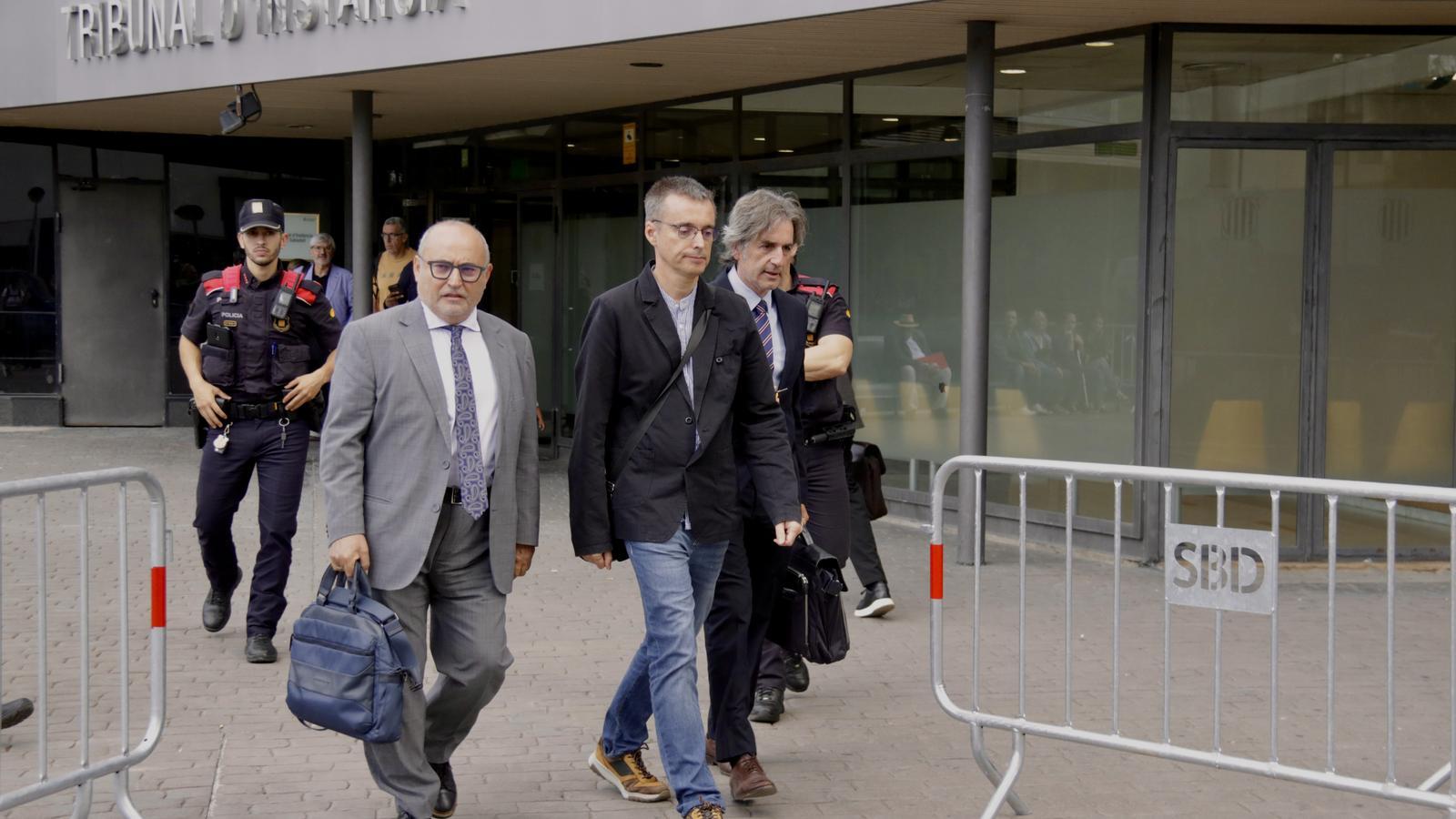
BarcelonaKey days for the outcome of the case regarding the murder of Helena Jubany, twenty-five years later. This Friday, a session was held at the Sabadell courts in which the Public Prosecutor's Office requested that the judge in the case send the only suspect to trial, with a popular jury, Santi Laiglesia, accused of having killed Jubany in 2001. In turn, the suspect's defense has requested that the case be dismissed, and has questioned the DNA evidence that incriminates him. Now the judge must decide within a maximum period of three days whether to send Laiglesia to trial, for whom the public prosecutor's office and the private prosecution, which represents the Jubany family, are requesting 26 years in prison.
In statements to journalists after the hearing collected by Efe, Joan Jubany, the victim's brother, said he hopes the trial will be held as soon as possible, "without further delays," and added that the family only seeks "to know the truth." This Friday's hearing was the final step to determine if the judge will send Laiglesia to trial, who is trying to defend himself by casting doubt on the very main pieces of evidence pointing to him: his DNA that was found on the sweater the victim was wearing the day she died. His defense maintains that the chain of custody for this item of clothing was not maintained and that there could have been indirect contamination.
Also in statements to Efe, Laiglesia's lawyer, Jaime Lapaz, explained that he has asked the judge to commission a report from the National Accreditation Entity (ENAC) to review the National Police report that incriminated the accused, as he considers it is not conclusive regarding his DNA remains. However, the judge has rejected the request.
Along the same lines, the defense has insisted on the fact that the chain of custody of Jubany's sweater is broken, as they claim it was not sealed correctly after the first analyses that were carried out after the crime, more than two decades ago. Furthermore, the defense proposes as a hypothesis that Laiglesia worked at the time in a law firm that could have had access to the sweater, which is why indirect and involuntary contamination could have occurred then.
"Active participation"
Conversely, the Public Prosecutor's Office, like the private prosecution, has ratified its indictment, in which it requests 26 years of imprisonment for Laiglesia in a trial by jury. The public prosecution attributes an "active participation" in the crime to the suspect: it maintains that one or several people supplied narcotics to Jubany in the early hours of December 2, 2001, and, taking advantage of her "absolute inability" to defend herself and flee, they moved her to a rooftop, from where they threw her into the void.

In 2005, the case was provisionally archived due to a lack of evidence, but the victim's family litigated in the courts until they managed to get the case reopened, shortly before its statute of limitations. At that time, the court ordered new biological analyses, which with current technology, which is more advanced, have allowed unpublished evidence to be brought to light.
Since 2001, there have been four people investigated in the case: Montse Careta –who committed suicide in prison–, Santi Laiglesia, Xavi Jiménez, and Ana Echaguibel. In mid-2022, it emerged that forensic police had found DNA samples from at least two people on the sweater the victim was wearing on the day she was murdered, one of which matched Laiglesia. The other sample could not be identified and does not match the DNA of the other people who had been investigated in the past.
