The former Government official accused in the Montcada cement plant case denies preferential treatment
The Public Prosecutor's Office maintains its request for two years in prison in the last session of the trial
-
CAT -
CAST
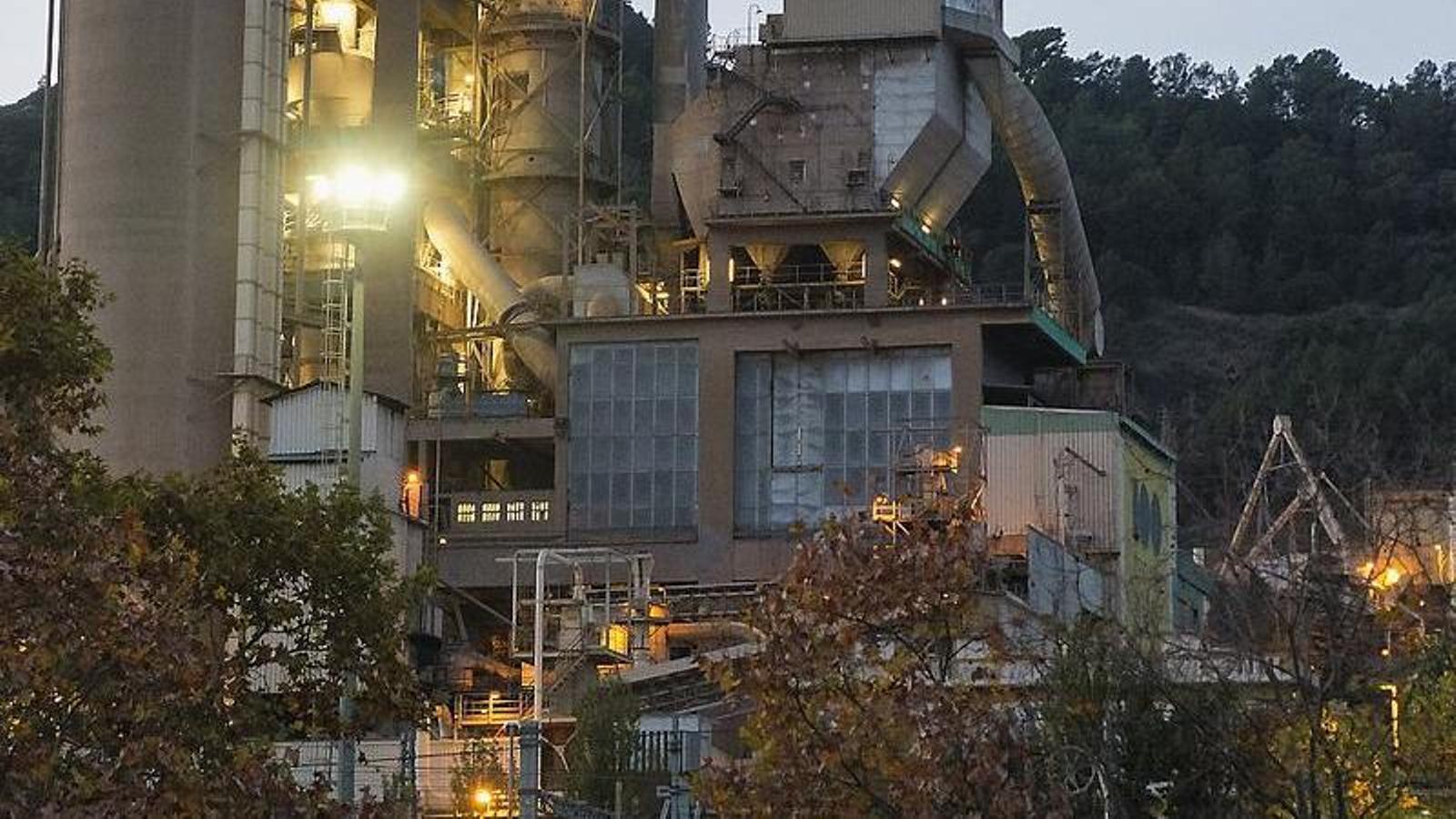
BarcelonaSecond and final session of the Montcada cement plant trial at the Barcelona Provincial Court. Former Generalitat official Emili Dragone, accused of granting irregular environmental authorizations to the Lafarge cement plant, based in the Vallès Occidental, has denied giving preferential treatment to the company: he asserted that he never issued favorable environmental reports, because it was not his job.
The former head of the prevention services of the General Directorate of Environmental Quality and Climate Change testified this Thursday as a defendant, and the Prosecutor's Office has maintained the request for two years in prison for Dragone, to whom it attributes a crime against natural resources and the environment. The case has its origin in a complaint by the public prosecutor against Dragone for, allegedly, having once again granted environmental authorization to Lafarge in 2015 based on a 2008 license that the justice system had already declared void for not having followed the necessary procedures to obtain it. Specifically, he did not publicize its environmental impact statement (EIS) so that those affected could present allegations.
In response to questions from his lawyer—the only ones he answered—, Dragone said that the Generalitat “absolutely” did not give preferential treatment to the cement plant. The defendant, secretary of the Environmental Commission in charge of approving the companies' EIS, said that he never voted in this body because he did not have the right to do so and that his only function was to “merge” the reports prepared by the technical units to transfer them to the Commission, where environmental authorizations were approved by unanimity before being published in the Official Gazette of the Generalitat of Catalonia (DOGC).
In this sense, Dragone assured that he “never” issued any favorable report for the granting of environmental authorizations to the cement plant. "It was not my job," he insisted. Regarding the fact of granting the environmental authorization in accordance with a void license, Dragone explained that at the time they considered that the ruling with which the High Court of Justice of Catalonia (TSJC) overturned the license—also ratified by the Supreme Court—did not declare it void, but rather presented a “case of annulment” that could be “repaired”.
In moving forward with the 2015 license, the accusations point out, Dragone allegedly omitted the environmental requirements introduced by the European Union in 2010, as well as Spanish regulatory changes since 2009. Furthermore, he allegedly did not assess the state of the existing atmospheric pollution at that time in the area of the cement plant. The accused, however, has defended that the activity of the cement plant was "the same" as that which had been previously authorized, without any substantial change having occurred that would require carrying out a new EIA. In this regard, he concluded that the environmental authorizations were "not at all" "unjust".
The conclusions of the parties
In its conclusions, the Prosecutor's Office noted that the licenses were granted with "celerity," sometimes in an "urgent and extraordinary" manner, and knowing that administrative law was being contravened. The private prosecution, exercised by the residents of Montcada, pointed out that in the rulings regarding the licenses "it was clear that it spoke of nullity, and not of annullability," but that this similarity was "seized upon" by Dragone to grant the authorizations "at any price".
The defendant's counsel, for their part, has requested his acquittal, considering that there is no manifest illegality and that, in the event that the court considered otherwise, the responsibilities could not be attributed to Dragone.
