The eviction that puts face to face two vulnerable women
The tenant, a victim of sexist violence, was asking for an alternative to leave the property, owned by an elderly woman also at risk of losing the apartment where she lives

-
CAT -
CAST
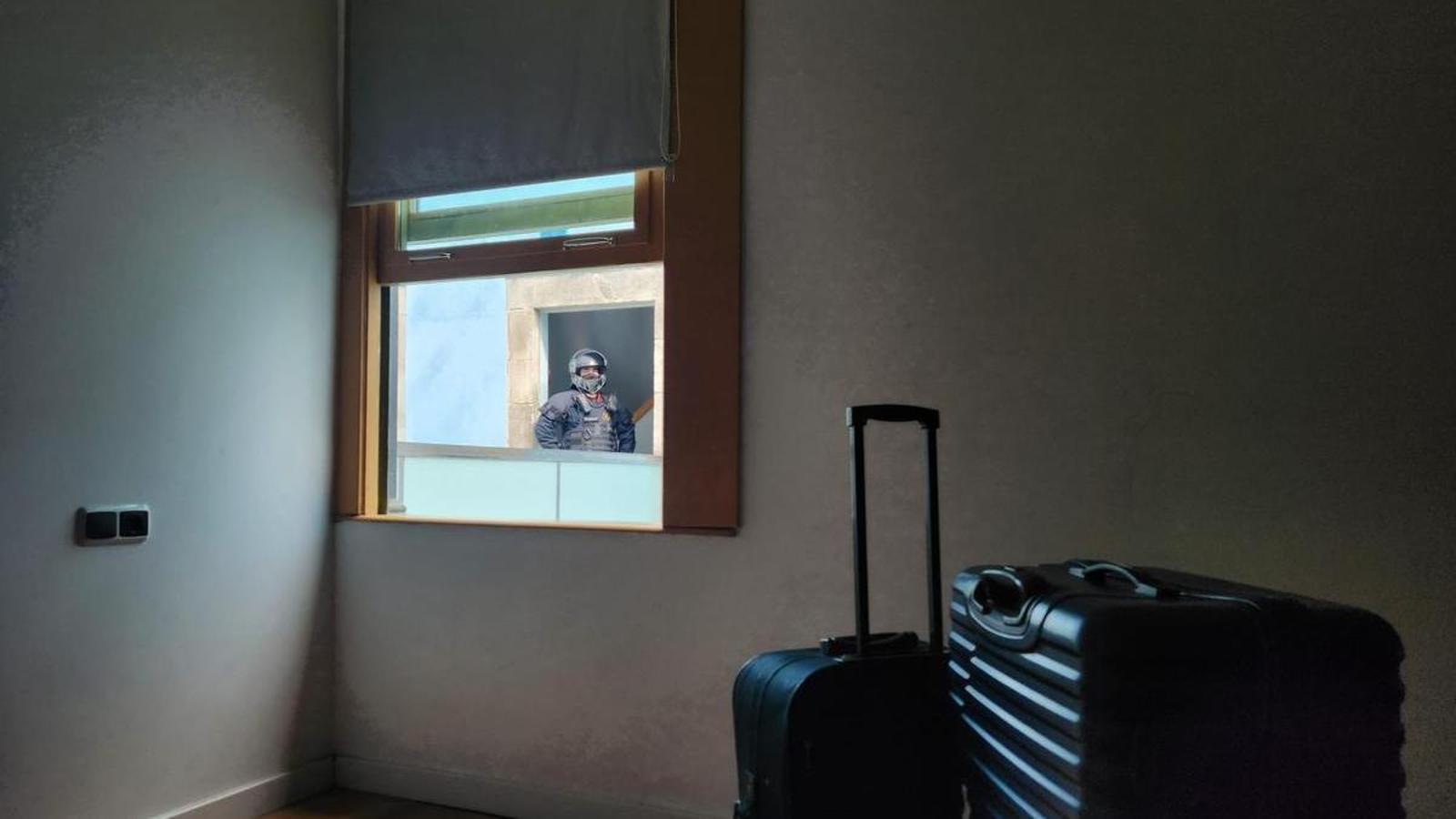
BarcelonaThe housing crisis continues to prey on the most vulnerable. Since this morning, Natalia and her children, a family that has lived in the center of Barcelona for the last few years, have no home. She is a victim of gender-based violence, receives the minimum vital income (IMV), and has two children aged 14 and 3 in her care. Furthermore, both her eldest child and she have serious mental health problems. She has proven vulnerability, but the new mechanisms intended to prevent the eviction of people like them have not protected them because, on the other side of the story, there is also a case of vulnerability. The owner is an elderly woman, already retired, who pays the mortgage on the apartment where she lives and could also end up on the street if she continues not to collect the rent. Although Natalia has requested it on several occasions, no alternative has been offered to her beyond being able to spend the night in a shelter: in Barcelona, there are not enough resources available for the current emergency situation.
Before starting the interview, Natalia received the worst possible call. "There will be an eviction," she confirms. The apartment is already empty, her belongings are in a temporary storage unit, and they have their suitcases packed to leave, but until the last moment, they clung to the hope that the new decree would prevent their eviction. With what she earns, it is not enough for the rent, which they have not paid since the end of 2024. They understand that they have to leave. But alone, with two children, she laments that the only solution offered to them is to spend the night at the Barcelona Emergency Social Services Center (CUESB), which opens its doors from eight in the evening until eight in the morning. "It is not a place for a family with minors," maintains Julia, who is a friend of the family and is helping them out at this time.
The owner of the apartment is a woman who is also at risk of vulnerability, according to the High Court of Justice of Catalonia (TSJC). She is an elderly woman, already retired, who has two properties, but she has not finished paying for the apartment where she lives and needs the rent money that Natalia has not paid her since the end of 2024 to pay for her own home. In other words: she is also at risk of ending up on the street if she does not rent or sell the apartment where the single-parent family has lived for the last few years.
In this case, therefore, the decree that came into force this Thursday and which temporarily suspends evictions for vulnerable families cannot be applied: due to the vulnerability of the owner and because she is not a large property holder or a vulture fund.
Refugee from Putin's Russia
Natalia is Russian and fled Moscow four years ago for political reasons, as she has Ukrainian family and denounced the invasion of her country through social media, as reported by El País. She arrived in Barcelona with her husband and their son Ivan; they had good salaries and did not apply for asylum because at that time they did not need financial support. Over time, however, problems arose. He began using drugs and abused her, which caused their son to fall into a depression. Eventually, he abandoned them. Furthermore, he left them in an irregular situation, as none of them were on the lease agreement and she was no longer working at that time. Since the end of 2024, they stopped paying because they could not afford it, and since then they have requested an alternative that has never arrived, despite having their vulnerability more than proven.
This Thursday, Natalia and her children will sleep in a shelter. They tried until the very last moment and managed to get it written in the record drawn up by the judicial delegation for the eviction that they had not been offered a residential alternative. "Who is the person occupying the dwelling?" the delegation asked, once the Mossos d'Esquadra had removed the dozens of people who were trying to prevent the eviction at the building's entrance and had reached the apartment doors. "A mother and her two children live here, and we will leave calmly once we place on record that we have not been offered any solution," they replied. "We have already called the court, but a judge decides that; there is nothing we can do," the delegation responded.
The family insists that they did not want to stay in the apartment and they denounce the lack of options that have existed throughout the entire process. They understand the owner's situation, but they wonder why they have not been offered anything beyond one night in a shelter and why there are no more alternatives at a time of housing crisis like the current one. For now, Natalia and her children will have to go to the CUESB, but they are still knocking on every door to find a way out that allows them to live with dignity.
