"A small airport": this is how the new Barcelona Nord bus station has turned out
The City Council calculates that demand on interurban buses will grow another 30% by 2030

-
CAT -
CAST
BarcelonaIn the last five years alone, demand at Estació del Nord in Barcelona has grown by 50%. And data suggests the trend will continue to rise: the City Council estimates that demand will increase by another 30% by 2030. This was explained by the Deputy Mayor and Councilor for Urbanism and Mobility, Laia Bonet, during the presentation of the renovation of this historic station in the Catalan capital, which hosts buses for international routes, between Catalonia and the rest of Spain, as well as intercity and private services.
The renovation of Estació del Nord responds precisely to this sustained increase in coach travel, "a key mode of transport due to its territorial capillarity," assured the mayor of Barcelona, Jaume Collboni, during the presentation. "It comes at a time when we are studying new corridors and the need for new services, especially after the Rodalies crisis," admitted Collboni.
The fact is that, since January, the pressure on the bus service – which is presented as an alternative to the Rodalies chaos – has pushed some points in the city to the limit, such as Fabra i Puig station and the metro station of the same name, and also some points on Gran Via. The coincidence of long-standing routes with alternative plans or reinforcements due to works or railway problems has ended up collapsing a system that was already quite saturated. "The bus is a real, possible, and economical public transport alternative that for a long time had been a secondary and unprioritized system – the mayor continued–. This renovation demonstrates a shift towards having a well-ordered, organized, and quality bus service.

What is the new station
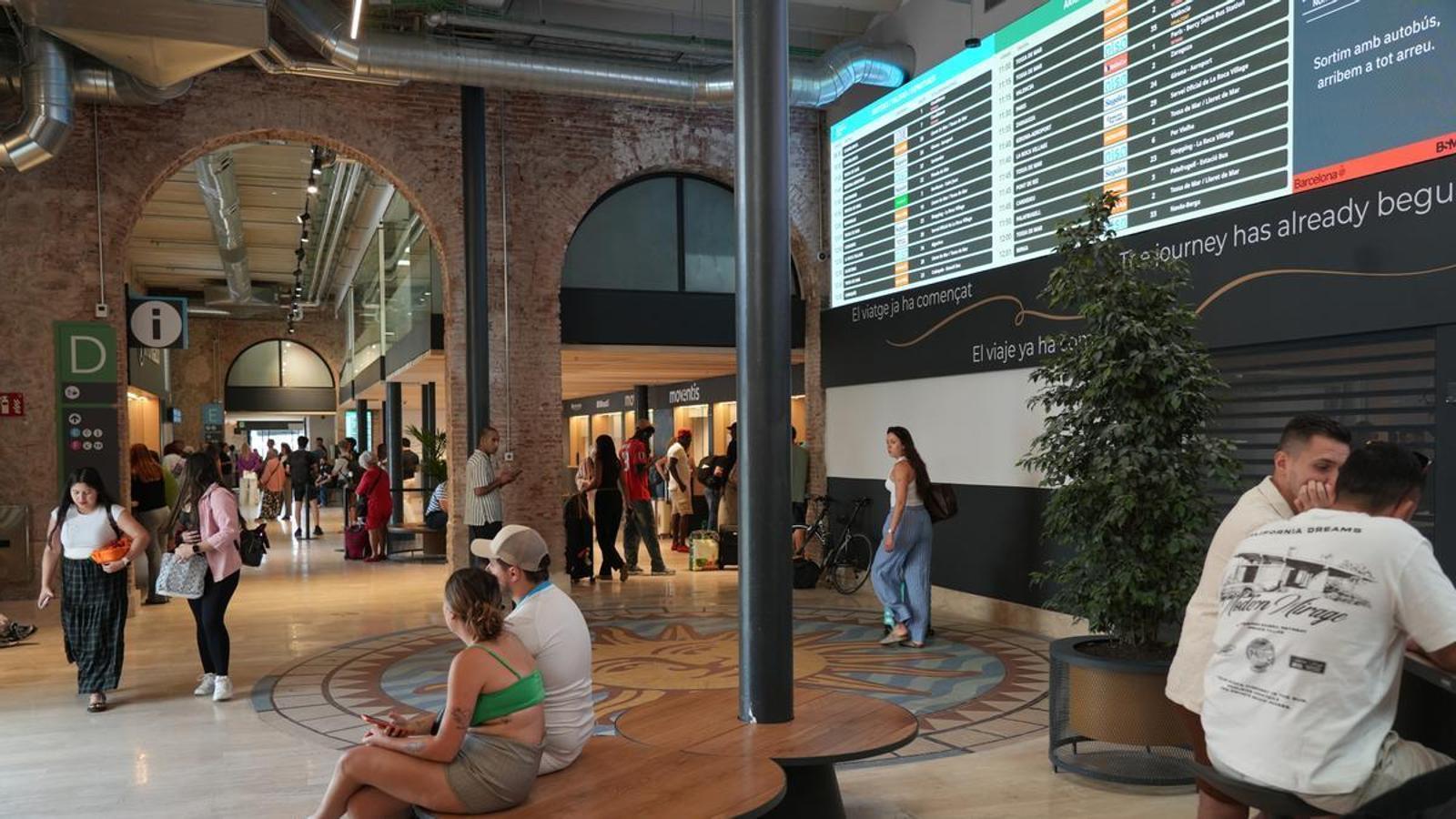
The renovation of Estació del Nord –renamed Barcelona Nord– has cost 14 million euros (of which 4.8 come from the European Next Generation funds and 9.2 from the municipal company BSM) and has concentrated all services on a single floor (previously there were two and multiple stairs and accesses). It is 1,550 m2 on which attempts have been made to simplify routes and optimize internal flows. Thus, the new station structure has a single entry and exit point from the station, on the side of Carrer Nàpols.

The stands have been renovated and also the catering offer, with a new central cafeteria, and in the future there will also be a new restaurant. Regarding passenger information, all the screens in the new station are digital and large format, and the waiting areas have also been renovated to improve the user experience. "It is the model of the bus station of the future. It follows the logic of a small airport, with all the services," Collboni summarized.
In addition, the removal of the central staircase has made it possible to recover and complete the restoration of a large mosaic on the ground, titled Helios and the lunar phases, by the artist Armand Olivè Milian, which had remained partially hidden until now.
Mayor Collboni stressed that the remodeling has also served to include new security elements, one of the most common complaints from residents of the area, who claimed that the atmosphere, especially at night, was problematic. According to Bonet, it is now possible to control what happens inside and outside the station more adequately, "which will have a positive impact on the environment".

