Spain and France have 50% more days conducive to suffering devastating fires
Sánchez ends the "national emergency" decreed by the fires in Madrid and Ávila
-
CAT -
CAST
BarcelonaThe fact that both Spain and France have experienced the worst fires in their history – that of the Community of Madrid and Ávila, and Bordeaux, respectively – has a scientific explanation. The meteorological conditions that favor large fires have intensified by up to 50% in these two countries over the last decade, according to the conclusions of the study published this Thursday in the journal Nature. The article comes to light the same day that the Spanish Prime Minister, Pedro Sánchez, has ended the "national emergency" due to fires in the center of the State, which have already burned more than 75,000 hectares.
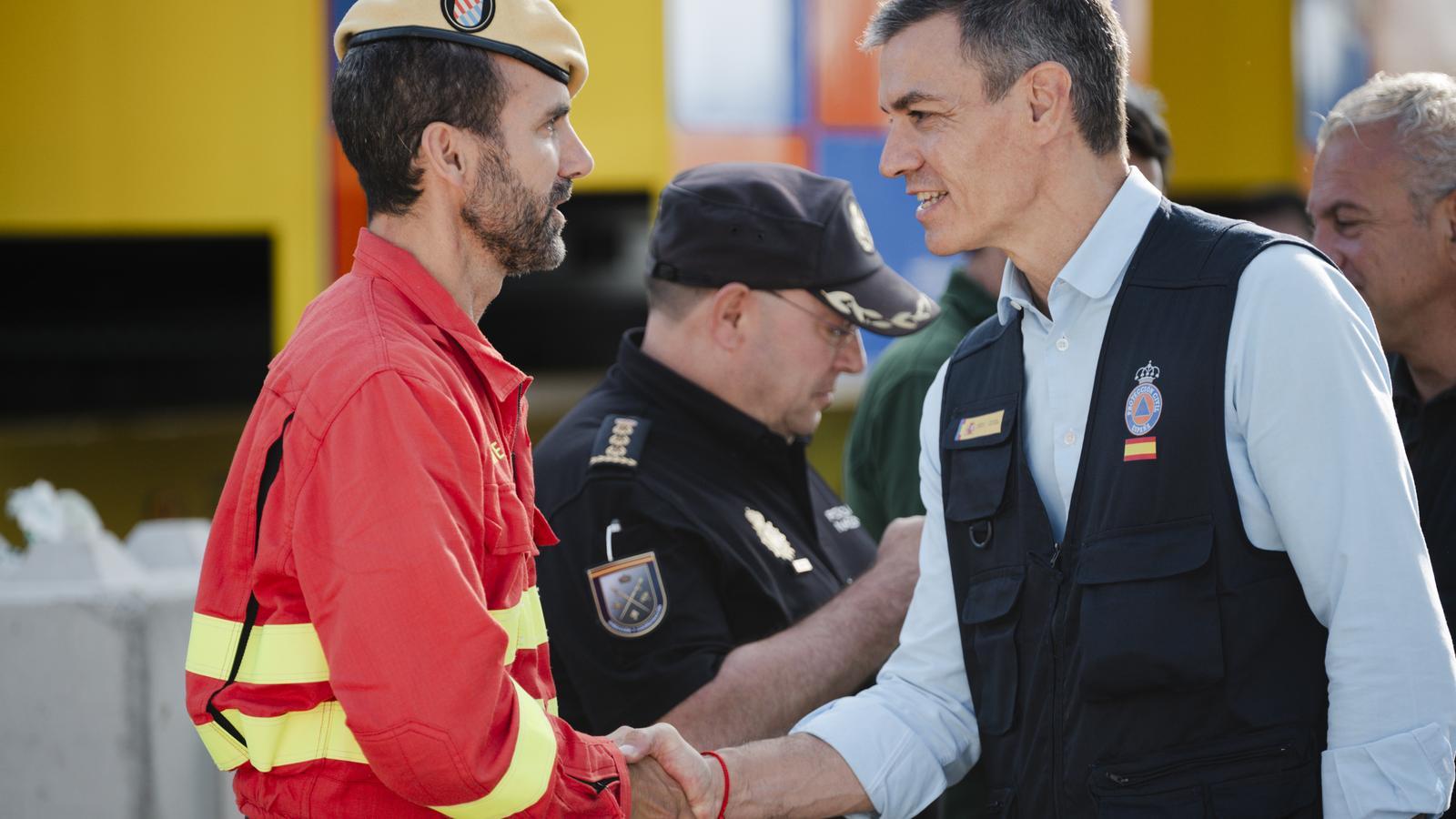
Speaking from the Navaluenga (Ávila) command post, from where the Spanish government has taken charge of fire management, and after the flames were declared stabilized this Wednesday, the head of the state executive has initiated the "de-escalation". In this regard, he confirmed that, after listening to the proposals of the involved administrations and technical criteria, it has been decided to lower the operational level to 2. "It is very good news, which is reassuring," Sánchez valued, while affirming that, in the midst of the fourth heatwave of the summer, the "alert" continues.
The Spanish Prime Minister has guaranteed, in this sense, that the presence of the Military Emergencies Unit (UME) and the rest of the state forces will be maintained in the two regions. "The neighbors must be calm because the operational command is changing, but the presence of all the capacities of the UME and the National Civil Protection System will be here," he stated. Just before his speech, the president of Castilla y León, the popular Alfonso Fernández Mañueco, confirmed the stabilization of the fire and the favorable evolution of the last night, but made it clear that the guard will not be lowered: "We will remain vigilant because the circumstances demand it." Likewise, he asked for "maximum precaution", especially with the current heat levels, to prevent new fires from breaking out.

Mañueco has promised that work will continue "hand in hand" with all the administrations involved and Sánchez has claimed the "reasonable success" and the "effective response" of the state command in the face of the magnitude of the fire in Ávila and Madrid, which ended up being one. "More than 150 consecutive hours of tireless work by all operational units," he remarked, and thanked all the affected local and regional governments for having worked as "a single team." "The response has been exemplary," he added.
However, the Spanish president did not fail to once again call on all parties, and especially the PP – although he did not mention it – to join the state pact for the climate emergency. "We must be united in the response, but also in prevention and reconstruction," he argued, and reiterated his government's "outstretched hand" to "achieve the agreement that the country needs, surely the most important one," he stressed.
The risk continues to rise
The fires of recent weeks, both in Madrid and Ávila and in Vall d'Uixó, Castelló, have burned an area of more than 80,000 hectares, the equivalent of ten Collserola natural parks, larger than the island of Menorca and almost eight times the city of Barcelona. They have done so in a context of extreme heat, drought, and wind that the scientific community identifies as increasingly favorable to large fires.
The study published this Thursday in the journal Nature, prepared by an international team with Spanish participation, concludes that the intensity of meteorological conditions that favor fires – heat, drought, and wind – has increased by up to 50% between 2016 and 2025 compared to the period 1981-2010 in some areas of Spain and France. The research – based on data from Spain, Portugal, France, Italy, and Greece between 1981 and 2025 – also detects an increase in days with a high meteorological risk of fire. Despite this, the authors point out that the annual number of fires has decreased in the five countries combined during the last decade; an evolution they attribute mainly to improvements in prevention and stricter regulations that have reduced human-caused fires.
Given this scenario, the Pau Costa Foundation has called this Thursday for five state commitments to reduce the risk of large forest fires and place prevention and land management at the center of public policies. Among the measures, it proposes managing at least 1% of the Spanish forest area annually, ensuring a stable investment of at least 1 billion euros annually, strengthening sustainable forest management and activities that keep rural life alive, improving the protection and preparedness of inhabited areas against fires, and reinforcing coordination between administrations with scientific, technical, and local criteria. The entity has also launched a signature collection campaign to support these proposals.
