The Ministry of Childhood appeals to the solidarity of the communities with minors: "The transfer is urgent"
The Generalitat opens up to collaborate "to the maximum" to find a solution for the children in Ceuta
-
CAT -
CAST
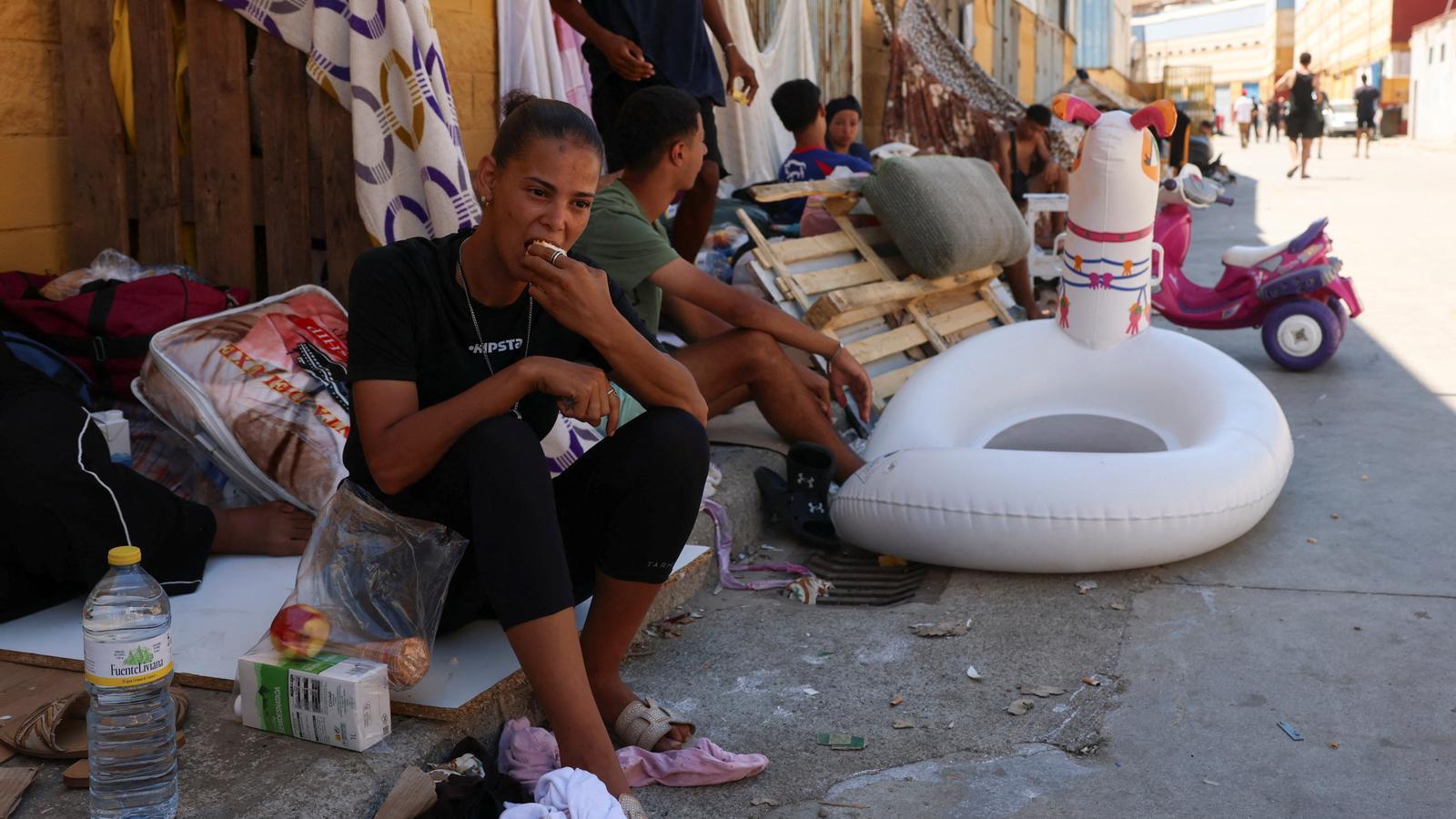
Madrid / BarcelonaThe Spanish government and the autonomous communities have agreed to give the green light to an extraordinary 25 million euros to strengthen Ceuta's resources for the reception of unaccompanied migrant minors. This was unanimously voted by the Ministers of Childhood and Youth at the sectoral conference held this Thursday. However, the communities in which Vox holds these responsibilities after agreements with the PP were not present; that is, Aragon, Castile and León, and Extremadura. In fact, the Minister of Childhood and Youth, Sira Rego, explained that they not only failed to attend the meeting but also communicated in writing that they were against the extra budgetary allocation.
However, this was not the thorny issue of the day. The great challenge is to address the situation of unaccompanied minors in Ceuta and their distribution among the autonomous communities. The PP, which has to balance with Vox, vetoed discussing it at a meeting prior to this Thursday's and, although the ministry wanted to try to raise it, it was ultimately not addressed. The ministry has anticipated that it will try again at another sectoral conference.
700 unaccompanied girls in Ceuta
Rego confirmed this Thursday that there are about 1,500 unaccompanied migrant minors registered, 700 of whom are girls. The ministry recalls that the profile is different compared to other migratory crises: "There is a high number of girls and many children under 13 years of age," the minister said at a press conference, after the meeting. Again, the proposal to return them to Morocco en masse has been censured. "It is illegal," Rego warned.
Beyond the fact that the law requires studying case by case before considering family reunification – which is always the first option –, the ministry warns that the "complexity [of the profile of minors in Ceuta] is extraordinary". "There are girls who have suffered violence, children who lived in a state of homelessness in Morocco...", Rego exemplified. And she even recalled that Morocco still has to respond to "600 files" of unaccompanied minors who have been in the State since before July 30, that is, before the mass entry.
In this context, Rego appealed to the "solidarity" of the autonomous communities and warns that the transfer to the Peninsula to continue with individual procedures is "urgent". In fact, the ministry is already studying the possibility of transferring 500 girls through direct agreements with private entities. Other mechanisms are direct agreements between Ceuta and an autonomous community or the family foster care route, although it is more complicated. Finally, Rego acknowledged that there are "improvable situations". "I understand the criticism, but the solution [for the children] takes time," she said.
Collaboration of the Generalitat
On behalf of the Generalitat, the Minister of Social Rights, Raúl Moreno, has already said that they are open to "collaborating to the fullest" with the Spanish government to find a solution. "Beyond the statements of other political forces, we know what the problem in Ceuta is and we will be supportive in finding a solution," he said. And he criticized those who "dehumanize" children.
The right and the far-right have declared war against the distribution, although it is mandatory by law, which has forced the Popular Party to lower their tone as the days go by. Also due to the cry for help from the president of Ceuta, Juan Jesús Vivas (PP). In any case, both the government of Ceuta and the PP maintain that the way forward must be the return of all immigrants to Morocco, including unaccompanied children. The approach, however, clashes with the immigration law.

This Thursday, the State Attorney General, Teresa Peramato, also visited Ceuta, providing figures on the increase in sexual assaults. She reported 16 sexual assaults with 17 victims, the majority of whom were minors, which, she said, highlights the "vulnerability" of migrant minors in the context of the crisis in Ceuta.
Reinforcements for the return to El Tarajal
On the other hand, the Spanish government has announced a reinforcement of material resources and personnel from Immigration, scientific police, and citizen security at the center where procedures are carried out to register immigrants and decide their future in Spanish territory. For example, the resolution of deportation files, verification of whether they are minors or adults, asylum applications (a team of eleven people has been added exclusively for this purpose), and care for pregnant women, among others. The definitive launch will be on September 4, with all "lines of work." The Ministry of the Interior had been finalizing it for days to have it in "dignified" conditions. The place is a warehouse near the El Tarajal border, 1,179 square meters, for 400 places, with showers and toilets.
