Death to the Good Shepherd: "Whether Pepe acted in self-defense or not will be the star issue of the trial"
This penal figure that claims the defendant's environment can reduce their sentence or acquit them
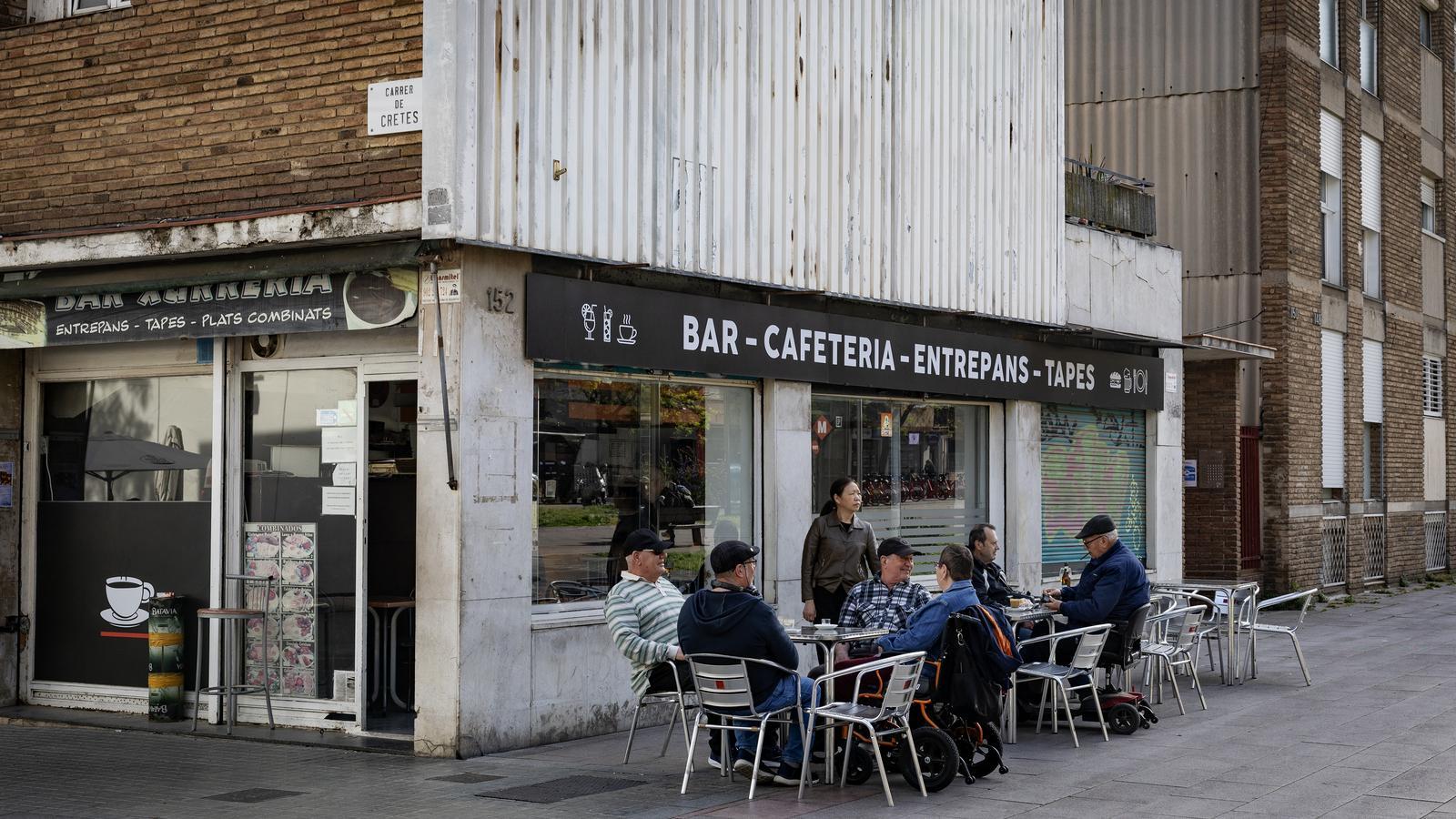
BarcelonaA few hours after the jailing of Pepe, the man in a wheelchair who killed another when he tried to rob him, some neighbors of the Bon Pastor neighborhood in Barcelona claimed that he should be released and justified that he had only defended himself. Pending the investigation's progress to clarify what exactly happened, legal experts consulted by ARA agree on the complexity of applying the criminal figure of self-defense, which can eliminate all responsibility in a homicide. "Whether Pepe acted in self-defense or not will be the star topic of the trial, which will be held with a popular jury," anticipates criminal lawyer Olga Arderiu.
Prosecutor's Office sources consulted by ARA explain that self-defense can, depending on the case, entail an extenuating circumstance that reduces the sentence or, even, an exemption from criminal responsibility. To define it, three factors are taken into account: that there was an "illegitimate aggression", that there was a "rational necessity" to use the tools or means employed to respond to the aggression, and that before being attacked, he had not provoked the aggressor.
Proportional response
In the case of the events in Bon Pastor, the defendant plunged a bladed weapon into the chest of the man who was trying to steal a chain he was wearing around his neck. Lawyer and professor at UB and UOC Cristian Carci values that proportionality in response to aggression is usually the most complicated point to clarify and where "urban legend usually fails more" regarding the figure of self-defense. "If I am attacked with a sword, I cannot respond with a shot," he summarizes. In fact, the criminal lawyer warns that jurisprudence regarding self-defense is "very restrictive": "Otherwise, everyone would claim it".

Carci also explains that, depending on the weapon with which someone defends themselves, a new crime could be incurred. For example, if someone carries a pistol without having a license or if the dimensions of the knife – which in Pepe's case was small, but the exact measurement has not been disclosed – make it considered a weapon.
Regarding the type of attack, judicial sources comment on the "personal involvement" necessary to kill someone with a bladed weapon compared to the "emotional distance that can exist in a gunshot, even though it is questionable that he had a pistol". For his part, Arderiu believes that it must be taken into account that the defendant's disability conditioned the response he could give to the attempted robbery and that he did not have the same options to respond in a milder way, for example with a punch.
Intention to kill
Another element that will likely focus the debate in this case is whether Pepe acted with the intention of killing the young man who was trying to rob him. "In self-defense, you know you are killing that person, but you do it to defend yourself," explains Arderiu. On the other hand, when there is no intentionality, it means that the person did not want to kill and could not even imagine that their actions could lead to the death of the other. "The two could be combined, recklessness and self-defense: that is, you attack them to defend yourself thinking you will only injure them, but they end up dying," Arderiu continues.
These nuances will be relevant in clarifying what penalty Pepe may face. While murder is punished with up to 25 years in prison, intentional homicide carries between 10 and 15 years, and a reckless one, between one and four. Apart from that, there may be mitigating circumstances not only related to self-defense but also to confession, having compensated the victim's family, or possible delays in the processing of the case.
Provisional detention
Both Arderiu and Carci agree in questioning the decision to send the defendant to provisional prison. "No matter how serious the crime, if there is no risk of flight or recidivism and the person has no prior record, it should not be applied," says Carci. He adds that in these cases the justification is usually that the possibility of a high sentence increases the risk of flight, but then he believes that other elements must be considered: "If this person has family, a home, is elderly, uses a wheelchair... There are measures that are not as severe as deprivation of liberty," and gives as an example the withdrawal of the passport and the obligation to appear in court while the investigation lasts.
In any case, Carci emphasizes that provisional prison "can never be seen as an advance of the sentence," but rather its function is to ensure that the investigated person does not flee before the trial. Arderiu agrees, lamenting "a very significant abuse" of preventive detention to the detriment of other precautionary measures, even when there is a possibility that the sentence may end up being low.
On the other hand, judicial sources insist that the most common thing when someone kills another person is that they go to provisional prison. Although "other circumstances" may be clarified during the investigation, in the first instance "the only indisputable fact is that there is a violent death and a suspect." In Pepe's case, his family was the one who alerted the police and he himself explained what had happened. When he was arrested, the Prosecutor's Office requested that he be sent to prison, but in the coming days another judge will review the situation. In the meantime, the public ministry has commissioned a vulnerability report of the defendant to assess whether to request that he remain incarcerated or be released.
